

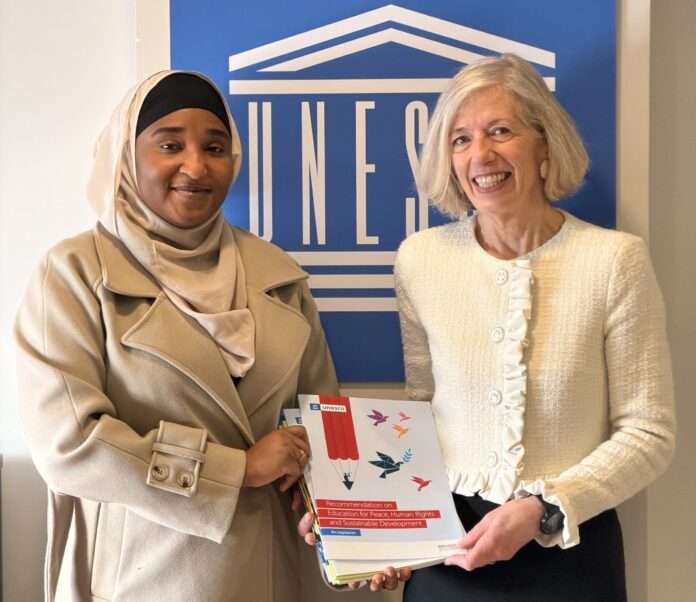
Nigeria has reaffirmed its commitment to deeper continental cooperation in education and cultural exchange following high-level discussions at the headquarters of the United Nations Educational, Scientific and Cultural Organization (UNESCO) in Paris.
The engagement took place during a consultation visit to UNESCO and involved the Honourable Minister of State for Education, Nigeria’s Permanent Representative to UNESCO, and the South African Permanent Representative to UNESCO. The talks focused on strengthening collaboration among African countries in education development and cultural exchange.
Discussions centred on the importance of African nations taking ownership of their education priorities by designing credible, context-appropriate programmes that reflect local realities. Participants stressed that meaningful education reforms must be informed by reliable data to ensure policies are effective, targeted and sustainable.
Key areas highlighted included the need to improve teacher quality, strengthen communication between schools, parents and communities, and better align education policies with conditions on the ground. The participants agreed that reforms disconnected from classroom realities and community contexts often fail to deliver the desired outcomes.
The consultation also underscored the value of sustained relationship-building and shared learning among African countries. By exchanging experiences and lessons across diverse education systems, African nations can accelerate progress and avoid repeating costly policy mistakes.
The engagement reinforced the importance of presenting a common African voice in multilateral education spaces, particularly within global institutions such as UNESCO. Participants noted that collective advocacy enhances Africa’s influence in shaping global education agendas while ensuring that continental priorities remain visible and well-articulated.
The meeting concluded with a shared commitment to continued dialogue and cooperation, aimed at improving education outcomes for children across Africa through collaboration, mutual understanding and evidence-based policymaking.


