

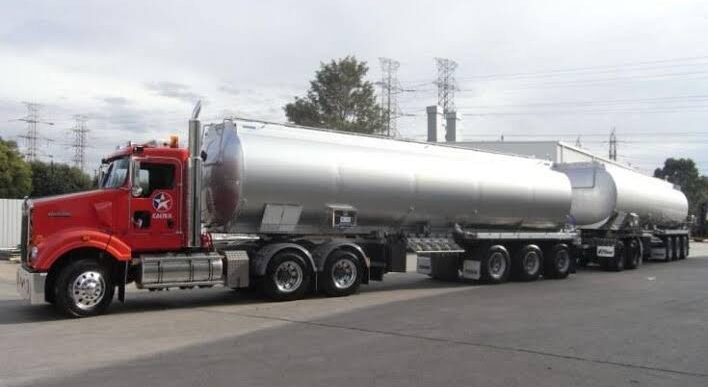
The ban on 60,000-litre fuel tankers in Nigeria takes effect today, raising concerns about job losses and possible fuel shortages.
The Nigerian Midstream and Downstream Petroleum Regulatory Authority (NMDPRA) announced the ban on these large fuel tankers two weeks ago, citing safety concerns.
The decision aims to reduce accidents involving fuel trucks, which have caused deadly fires in the past. Additionally, by the fourth quarter of 2025, no truck exceeding 45,000 litres will be allowed to load petroleum products.
However, the National Association of Road Transport Owners (NARTO) has expressed concerns that the ban will negatively impact investors who have spent over N300 billion on 60,000-litre trucks.
Ahead of the ban’s implementation, many truck owners fear it may lead to Premium Motor Spirit (PMS) shortages. NARTO’s Executive Secretary, Aloga Ogbogo, said the organization is waiting to see how the situation unfolds before making any official comments.
Some NARTO members, speaking anonymously, criticized the ban, arguing that truck drivers are not the main cause of road accidents. One truck owner questioned why the NMDPRA allowed the importation of these trucks in the first place only to ban them later.
Alhassan Gambo, a tanker driver with over 11 years of experience, said the ban might not cause fuel shortages but could lead to higher fuel prices. Since the quantity of fuel transported will decrease, but transportation costs remain the same, an increase in price is likely.
Another driver, Usman Small, disagreed, warning that the ban could cause a shortage of petroleum products because fewer tankers will be available to transport fuel.
In Borno State, Alhaji Mustapha Zarma, a petrol station owner in Maiduguri, argued that road conditions and vehicle maintenance are bigger factors in truck accidents than fuel tanker size.
Similarly, Ali Shuaibu, manager of A.A. Kankani filling station in Jigawa State, believes the ban will not cause fuel shortages. However, other fuel station owners in Yobe State urged the government to focus on repairing bad roads to prevent further accidents.
As the ban takes effect, industry stakeholders are calling for government intervention to address concerns over investment losses, fuel supply disruptions, and road infrastructure improvements.


