

The night the national grid failed again, most of Nigeria followed a familiar script. Candles appeared. Phones dimmed. Generators coughed awake. Businesses quietly calculated losses before morning.
But somewhere in the Southeast, the lights stayed on.
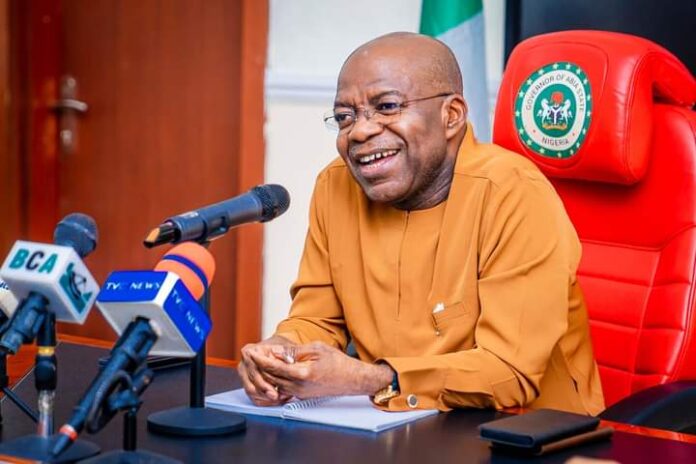
In Abia State, factories continued production, streetlights remained steady, and the expected disruption never came. Not because the grid suddenly improved—but because reliance on it had been deliberately reduced.
That difference matters.
Nigeria’s national grid has collapsed repeatedly over the past decade, imposing huge economic costs and normalising dysfunction. What is less discussed is how this instability has shaped political behaviour: citizens learn endurance, leaders manage outrage, and systems remain unchanged.
Abia interrupted that pattern—not with protest, but with planning.
From a research standpoint, this aligns with global evidence. Emerging economies that decentralise power generation at sub-national levels reduce exposure to national infrastructure shocks and improve investor confidence. Electricity reliability consistently ranks among the top drivers of manufacturing growth and SME stability. Power, in other words, is not just technical—it is political.
This is where the regional question becomes unavoidable.
The Southeast is one of Nigeria’s most economically active regions, driven by dense trade networks, high SME concentration, and strong community enterprise. Yet politically, the region has often relied more on reaction than coordination. Abia’s experience suggests a different pathway: systems politics over protest politics.
If one state can reduce its exposure to darkness through planning, there is nothing structurally preventing a region from doing the same—except the absence of coordinated design.
Regional energy alignment is not rebellion. It is competence. It means linking power planning to industrial clusters, logistics corridors, and community markets—the same discipline the region’s traders have applied for decades, now translated into governance.
This is how economic strength actually forms: not through declarations, but through reliability.
Politically, Nigeria is entering a new phase. Citizens are increasingly persuaded not by slogans, but by comparison. The dangerous questions are no longer loud; they are analytical: Why does it work there? What was designed differently?
The future of leadership will not belong to those who only speak well, but to those who design well. Modern politics is infrastructure literacy, data awareness, narrative clarity, and trust—woven into lived experience.
Abia did not just keep the lights on. It illuminated a question Nigeria can no longer avoid:
If regions can rise through design rather than protest, what kind of political movement is intellectually prepared to lead that transition?
History rarely announces turning points loudly. Sometimes, it simply leaves the lights on.
And those who understand what that means tend to shape what comes next.
Linus Anagboso
(#D-BIGPEN).
National Coordinator, South East Emerging Leaders for Awakening( SELA PROJECT).
— Inspiring Impact Through Words & Innovation.
Tel: 08026387711.


