

Power in Nigeria is intoxicating. It flatters, insulates and deceives its holders into believing it is permanent. But history keeps proving otherwise.
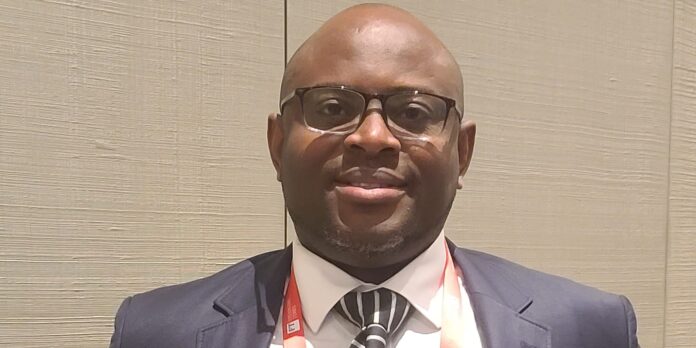
Mohammed Bello Adoke (SAN) once stood at the very centre of power. As Attorney-General and Minister of Justice under President Goodluck Jonathan, he served for five years as one of the most influential figures in government. The president hardly takes any decisions without first consulting him. While other ministers could only access the president during Federal Executive Council (FEC) meetings, Adoke enjoyed unrestricted access — even private dinners. Former Senate President David Mark famously described him as “all powerful Attorney-General”.
Yet less than two years after leaving office, this same man contemplated ending his life. Adoke would later recount how he attempted to jump from a semi-detached maisonette in The Hague, Netherlands. In his words:
“A wave of sadness swept through my soul and my heart was struggling to pump blood. Life tasted like sand. There was no longer any meaning or colour to it. What was there to live for again?”
Those words appear in Burden of Service, Adoke’s memoir, which I had the opportunity to read last week in London. The book is unsettling, revealing and deeply political. It exposes the emotional cost of power, the brutality of Nigeria’s justice system, and the moral compromises of governance at the highest level.
After stepping back from the brink, Adoke said he came to his senses, describing suicide as cowardly, choosing life instead — and choosing to tell his story.
That story includes his arrest on December 19, 2019 by the Economic and Financial Crimes Commission (EFCC), after returning to Nigeria from four years in exile. He writes that he sought to clear his name over multiple charges, including those connected to the Malabu Oil scandal. The EFCC alleged that in August 2013, Adoke, “accepted from Aliyu Abubakar for yourself a gratification of US dollars equivalent of N300m other than lawful remuneration as a motive for facilitating and negotiating the Block 245 resolution agreement with Shell Nigeria Ultra Deep Limited, and Shell Nigeria Exploration and Production Limited.”
In the book, Adoke makes damning claims about the anti-graft agency’s media strategy. On page 70, he describes Sahara Reporters as a
“news website which is unofficially affiliated to the EFCC and which serves as the media trial arm of the agency”.
On page 72, he goes further, alleging that an official of the Ministry of Justice demanded a bribe of $3 million from him to gain access to former Vice-President Yemi Osinbajo. According to Adoke, this was a standard extortion method used against ministers who served under the Jonathan administration.
Perhaps the most troubling admissions in Burden of Service concern selective justice. Adoke sheds light on his role in the Halliburton and Siemens bribery scandals. He writes on page 170:
“While we could get Julius Berger and five other companies, including Halliburton itself, to pay fines of over $200 million, it was difficult prosecuting the individuals that were named.
There wasn’t enough evidence to charge them to court. What the police had on them was not sufficient for a robust prosecution. We still managed to charge a couple of individuals to court but we could not touch the big masquerades. It was not as if we were not empowered by the law to do so, but the political situation in Nigeria at the time desperately needed stability. Two of the former leaders that were named were playing the lead role in stabilising the country. Caution was common sense”.
This raises a fundamental question: can an Attorney-General who prosecutes “small masquerades” but shields “big masquerades” over the same offence claim to have served justice creditably? Stability may be desirable, but justice selectively applied ceases to be justice.
Adoke also confirms what many associates of former Delta State Governor, Chief James Ibori, long believed — that Ibori’s prosecution in the United Kingdom was politically motivated. On page 18, Adoke recounts attempts to block his own nomination:
“Another attempt to stop my nomination was spearheaded by Chief Edwin Clark, the Ijaw leader. Chief Clark was not a member of the government but saw himself as the power and protector behind the ‘throne’. He was surrounded by a group of younger guys who saw Jonathan’s ascendancy as an opportunity to have a say on how Nigeria should be run, on who should serve in the government and on who should benefit from their kinsman’s presidency. So many shocking things were said about me, most of them utter fabrications.
One major complaint was that I acted as Chief James Ibori’s lawyer. Clark was a mortal enemy of Ibori, the former governor of Delta state, his home state. Ibori, himself, was perceived as having taken advantage of his closeness to President Yar’Adua to antagonise Jonathan when he was Vice-President. Ibori was obviously not in the good books of the new powerbrokers in Aso Rock”.
Chief Edwin Clark is now deceased. History will judge the roles played by all actors involved.
What makes Adoke’s story even more relevant today is its eerie repetition. Yesterday, it was Adoke. Today, it is his successor, Abubakar Malami.
Malami, who served as Attorney-General between 2015 and 2023 under President Muhammadu Buhari, is currently under intense scrutiny. The EFCC has arrested him over allegations that he conspired with his wife, Asabe, and their son to conceal proceeds of unlawful activities valued at about N8.7 billion. According to the agency, the alleged offences involved multiple corporate entities, bank accounts, and high-value real estate transactions in Abuja and elsewhere.
One cannot help but wonder: is Malami also preparing to tell his own version of events?
There are sobering lessons here for ministers currently serving under President Bola Tinubu, especially those wielding power with arrogance and impunity. Political power expires. Influence evaporates. Allies disappear.
Adoke had wealth, access and authority — yet life “tasted like sand”, and he nearly chose death. He claimed he was persecuted and hounded by the Buhari administration for serving Nigeria creditably well as Minister. The question is: Was he the only Minister in the cabinet? Did respectable figures such as Akinwunmi Adesina, Ngozi Okonjo-Iweala, Bolaji Abdullahi and other ministers also not serve as ministers alongside him in the cabinet and left with clean, impeccable records?
The warning is timeless. As Jesus Christ admonished in Mark 8:36: “For what will it profit a man if he gains the whole world, and loses his own soul?”.
Akinsuyi, former group politics editor of the Daily Independent, writes from Abuja. He can be reached at shabydayo@gmail.com


