

The Engineering Imprint of Governor Abdullahi Sule’s Administration
Does the profession of a governor influence the way he governs?
It is a simple question, but an interesting one. We often notice the difference when a doctor becomes a governor, or when an economist or educationist takes charge of a state. Their professional experiences may influence the way they see problems and set priorities. So, what happens when an engineer becomes governor?
Nasarawa State under Governor Abdullahi A. Sule offers an interesting case.
This is not to suggest that being an engineer automatically makes someone a better governor. It would also be unfair to attribute every policy decision of the administration to his profession. But it is reasonable to ask whether years of engineering and industrial experience have influenced the way Governor Sule approaches governance.
Thomas R. Dye’s famous definition of public policy—“whatever governments choose to do or not to do”—is useful here. At the end of the day, governance is about choices. What gets attention? What gets funded? What is done first? And what is left for another day?
Look around Nasarawa and one of the clearest answers is infrastructure.
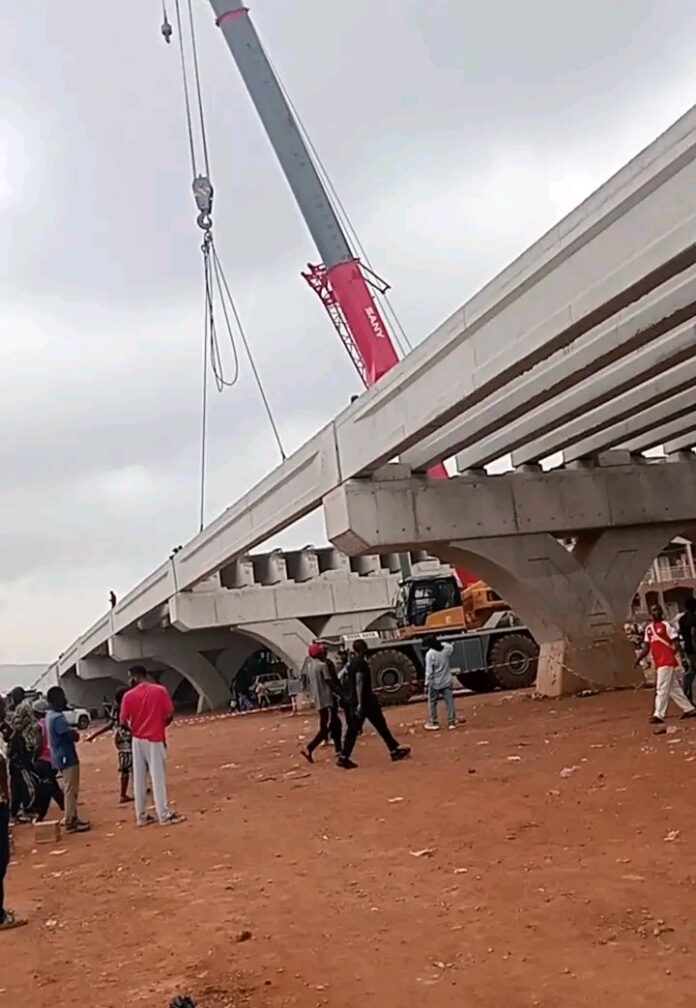
Roads, bridges, flyovers, drainage and other construction projects have become highly visible under the Sule administration. The Mararaba-Nyanya corridor, in particular, has become a major symbol of the administration’s infrastructure ambition.
The 2026 budget also tells part of the story, with about ₦145 billion allocated to infrastructure, compared with roughly ₦94 billion for education, ₦37 billion for health and ₦31 billion for agriculture and water resources.
These numbers do not prove that Governor Sule’s engineering background caused the emphasis on infrastructure. But they make the question worth asking.
Sometimes, the way a leader was trained can be seen in the way he chooses to solve problems.
Interestingly, the engineering imprint does not stop at roads and bridges. It can also be seen in the administration’s growing attention to mining and mineral processing.
Nasarawa has significant deposits of minerals such as lithium, tin and gold. The Sule administration has increasingly focused on attracting investment into the sector and, importantly, encouraging processing and value addition rather than simply taking minerals out of the ground and sending them away.
Federal Minister of Solid Minerals Development Dele Alake has publicly commended Governor Sule’s support for the mining sector and linked his understanding of the industry to his background as an engineer.
The state’s growing lithium-processing industry makes this particularly interesting. The commissioning of the Diamond New Energy lithium mining and processing facility in 2026 points towards a larger ambition: turning Nasarawa’s mineral wealth into industrial activity, investment and jobs.
That is an important distinction.
There is a big difference between having minerals and building an economy around those minerals.
The real wealth is not simply what comes out of the ground. It is what the people can build around it.
But mining also brings responsibilities. Investors need clear rules. Host communities need to benefit. The environment needs protection. Government must guard against illegal mining and ensure that mineral development does not create new social and environmental problems.
So the question should not simply be: How much can Nasarawa extract?
It should be: How much lasting prosperity can Nasarawa create from what it extracts?
The same thinking applies to infrastructure.
A flyover is useful if it actually reduces traffic. A road matters if it connects people and businesses to opportunities. A processing plant matters if it creates sustainable jobs and develops local skills. A mining project matters if its benefits reach beyond the company itself.
Projects are not the final destination. They are supposed to make people’s lives better.
And this is where a little criticism is necessary.
Nasarawa is not only a construction site, and it cannot become simply a mining field. People still need good schools, functioning hospitals, security, jobs and opportunities for their children.
A Premium Times analysis of the state’s 2026 education budget reported that Nasarawa did not meet the 26 per cent education benchmark and also reported a 25.4 per cent prevalence of out-of-school children. That does not mean infrastructure or mining investments are wrong. It simply reminds us that development has to be bigger than physical projects.
There is also the question of what happens after the ribbon-cutting ceremonies.
Who will maintain the roads and flyovers? Who will monitor mining operations? Who will protect host communities? How much of the wealth generated will remain in Nasarawa? What happens when revenue conditions become less favourable?
Building something is one thing. Sustaining it is another.
And we should not make the mistake of giving the governor credit for everything. Government is bigger than one man. Engineers, geologists, contractors, civil servants, investors, legislators and communities all contribute to development.
The governor provides leadership, but institutions and professionals turn that leadership into results.
Ultimately, Governor Sule’s engineering background should neither be worshipped nor ignored. There is a reasonable case that it has influenced his interest in infrastructure, technical projects and mineral-based industrial development.
But profession alone does not determine whether a government succeeds.
Revenue matters. Competence matters. Institutions matter. Accountability matters. And results matter most.
In the end, the people of Nasarawa will not judge the administration simply by counting roads, bridges, flyovers, mines or processing plants.
They will judge it by what those things changed in their everyday lives.
Did they create jobs? Did they reduce travel time? Did they help businesses? Did they improve public services? Did they create opportunities for young people? Did they make ordinary families better off?
Those are the questions that will outlive political speeches and commissioning ceremonies.
And perhaps that is the simplest way to describe the engineering imprint of Governor Abdullahi Sule’s administration:
An engineer may build the bridge and understand what lies beneath the ground. But good governance is about making sure that both the bridge and the wealth beneath it lead the people somewhere better.


