

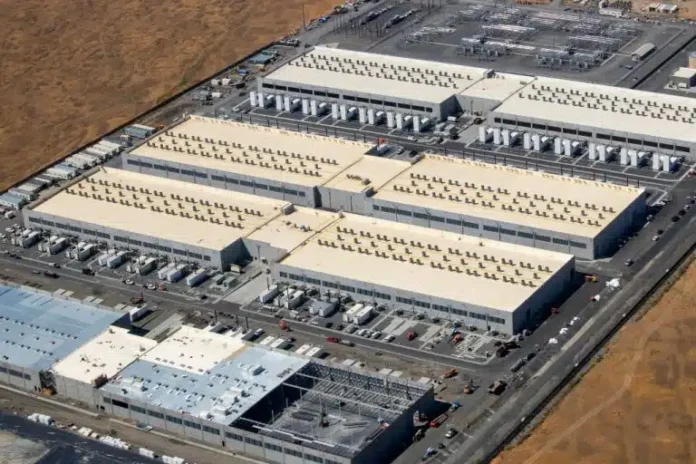
Artificial intelligence is becoming part of everyday life. Millions of people use AI tools to write emails, answer questions, generate images, edit videos, and help with work. But as AI use grows, researchers say the infrastructure behind it is placing increasing demands on electricity, water and land.
A new report from the United Nations University Institute for Water, Environment and Health says global data centers could consume 945 terawatt-hours of electricity each year by 2030, more than double current levels. Researchers estimate that annual water consumption linked to data centers could reach 9.3 trillion liters by the end of the decade.
To put that figure into perspective, the report says the amount of water involved would be enough to meet the basic yearly household needs of about 1.3 billion people.
“The public debate still often treats AI as software, but AI is also physical infrastructure,” said Kaveh Madani, Director of the United Nations University Institute for Water, Environment and Health and lead author of the report.
He noted that AI depends on data centers, power generation systems, cooling equipment, transmission networks, computer chips, minerals, land and water.
The report found that while many people focus on the energy required to train advanced AI models, most of the environmental impact comes from daily use. Researchers estimate that 80% to 90% of AI-related energy demand comes from regular use of AI services, including text generation, image creation and video production.
Some AI tasks require far more computing power than others. Generating images and videos, for example, consumes significantly more energy than simple text-based requests.
The study also projects that annual carbon emissions linked to data centers could more than double by 2030. Meanwhile, electronic waste from AI hardware could reach 2.5 million tonnes per year.
However, the report does not argue against AI itself. Instead, researchers are calling for better planning, greater transparency from technology companies and policies that consider the environmental impact of AI infrastructure before expansion accelerates further.
“AI will not simply run out of water or electricity worldwide,” Madani said. “But in specific places, poorly planned data center expansion could collide with existing resource pressures.”
The report quickly sparked debate online:
Some users argued that water should take priority over AI development.
“We can live without AI. We cannot live without water,” wrote one X user in a post that attracted thousands of views.
Others expressed concern that technology companies are expanding AI services without fully considering environmental consequences.
One commenter argued that governments should place limits on AI growth, while another claimed that technology executives are prioritizing profits over long-term sustainability.
“We will have to compete with robots for the water we need to survive,” he said, while another claimed that technology billionaires would “kill the whole planet for an extra few billion.”
Not everyone agreed with the report’s framing.
Many users pointed out that water used in cooling systems does not simply disappear.
“Cooling servers doesn’t magically destroy water,” one commenter wrote.
Another user questioned whether the public was being given the full picture, arguing that most data-center cooling systems recycle water or return it to the environment after treatment.
Several people also noted that agriculture, manufacturing, and traditional power generation consume far more water than data centers.
“This is fear-mongering,” one user wrote. “Many other industries use water at a much higher rate, yet nobody talks about them.”
A common misunderstanding online is the belief that researchers are claiming AI will cause the world to run out of water.
That is not what the report says.
Water is constantly moving through the natural water cycle, and most cooling systems do not destroy water. The concern raised by researchers is that large data centers can increase freshwater demand in specific regions where supplies are already under pressure from drought, population growth, or existing industrial activity.
In other words, the issue is not whether there is enough water on Earth. The question is whether enough freshwater is available in the places where new AI infrastructure is being built.


