

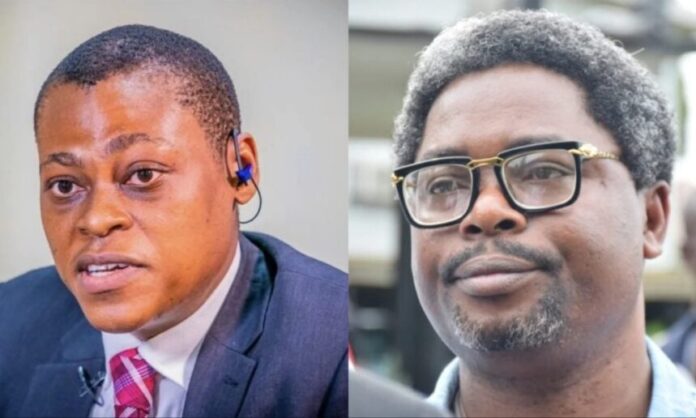
There is a clear distinction between an interview and an argument, just as there is between robust journalism and a street-corner quarrel. The recent encounter involving Lere Olayinka and Rufai Oseni on Arise TV’s The Morning Show highlights how easily political communication can devolve into an adversarial spectacle when professionalism is compromised. My verdict is simple: thumb down for Lere Olayinka.
This is not to suggest journalists are infallible. They can ask poorly framed questions, adopt combative tones, make provocative remarks, or cross boundaries. When that occurs, they should be challenged. But there is a proper way for a guest to respond to an interviewer whose conduct they find objectionable. Refusing to answer a specific question is one thing; refusing to engage with the programme entirely is another. That, in my view, is where Olayinka erred.
Reports of the September 4 incident indicate that Olayinka, a media aide to FCT Minister Nyesom Wike, had already responded to questions from other anchors before Rufai Oseni’s turn. When Oseni raised issues about the inclusion of Betta Edu in the presidential campaign council despite corruption allegations, Olayinka declined to answer. Instead, he objected to Oseni’s previous use of the term “Gbewudani,” and declared he did not want to answer any further questions from the anchor, insisting he wanted the conversation to be among “reasonable human beings.” This marked the end of what was supposed to be an interview.
This is where the term “bolekaja” is relevant. In Nigerian popular usage, “bolekaja” evokes the unruly atmosphere of a motor park, where everyone talks at once, tempers flare, insults fly, and the loudest voice seems to dominate. But journalism, especially broadcast journalism, is not a motor park. It is not a contest to see who can shout louder or who can shout the loudest. It is not a political rally where supporters cheer the most devastating verbal punch. And it certainly should not be a platform where a guest unilaterally decides which journalist is “reasonable” enough to deserve an answer.
Olayinka is an experienced communicator who understands the media. As a spokesperson, he knows that accepting an invitation to a major television programme obligates him to engage with questions, including uncomfortable ones. That does not mean surrendering his right to challenge. It means understanding the rules of engagement.
If Olayinka believed Oseni’s language or questions were offensive, he could have addressed it directly. He could have objected, asked for clarification, demanded an explanation, or stated that he found the remark unacceptable. Instead, he personalized the disagreement by refusing to answer altogether. This is problematic.
Moreover, a guest does not get to redesign the programme in real time. If Olayinka was invited to speak to all three anchors, he should have engaged with them all, not just selectively respond. Ayo Mairo-Ese’s reminder that Olayinka was invited to speak to the entire panel underscores this point. He could have criticized the premise of the question, answered politically, or explained that he lacked certain information. But choosing to ignore the questions altogether was unprofessional.
A media aide’s role is not merely to defend or promote their principal; it is to communicate. Effective communication involves explaining, defending, contextualizing, and sometimes rebutting. It requires resilience under pressure. Difficult interviews are part of the territory. When a spokesperson seeks only friendly questions, they are conducting a monologue rather than meaningful dialogue. Nigeria’s democracy needs accountability, not political monologues.
As the country approaches another election cycle, political actors and their spokespersons will appear across media platforms. The temptation will be to treat journalists as friends or enemies based on questions asked. This is dangerous. Asking tough questions does not make a journalist an enemy; refusing to answer or engaging in hostility does not make a spokesperson a hero.
The problem is also with the style of Nigerian broadcast journalism. There is a growing culture of confrontational interviewing, where journalists seem more interested in defeating their guests than in extracting meaningful information. They interrupt, challenge, raise their voice, and press relentlessly, turning interviews into contests of wills. While some viewers may find this style appealing because it reflects their sentiments, journalism should not be judged by viral clips alone. The ultimate goal should be informing the public.
A tough interview can be an opportunity. It can be a platform to clarify positions, dismantle false premises, or rebut accusations calmly and convincingly. Winning political communication is not about trading insults or declaring the interviewer unreasonable. It is about maintaining professionalism and turning adversarial moments into opportunities for clarity and accountability. Turning an interview into a street fight, what “bolekaja” symbolizes, undermines the purpose of democratic discourse.
Arise TV’s decision to end the interview was understandable. Once a guest refuses to answer a particular anchor’s questions, continuing becomes difficult. Some may argue the station sided with Oseni, but I believe they had a duty to protect the integrity of the programme. If a guest can unilaterally decide which anchor to respond to, it compromises editorial control. Both sides, journalists and guests, must uphold standards of professionalism.
The broader lesson is that accountability journalism is vital to democracy. Politicians and their spokespersons can demand fair treatment and challenge questions they dislike, but they must accept that journalists are entitled to ask tough questions. Democracy weakens when officials only engage with media outlets that agree with them. Conversely, journalism weakens when toughness degenerates into hostility. Both sides need boundaries.
Adversarial journalism, when necessary, must remain professional. Political spokespersons should defend their principals vigorously but within the discipline of public communication. There is nothing wrong with a fiery exchange; what is wrong is turning it into a street fight. The Olayinka-Oseni incident should not be celebrated merely because one person “won” verbally. The real losers are the viewers, whose political questions are overshadowed by personalities.
Most importantly, a journalist’s microphone is not a weapon. A politician’s temper is not an argument. And a television studio is not a motor park. Media interviews are serious democratic engagements, platforms where journalists scrutinize power and public figures explain themselves to the public.
Olayinka had every right to challenge Rufai Oseni or object to offensive language. He had the right to defend Nyesom Wike and his political stance. But he did not need to turn the interview into a confrontation or decide which anchor should ask questions. He could have answered, challenged, rebutted, or exposed biases. Instead, he allowed the interviewer to become the story, which merits a thumb down.
The key lesson for both journalists and politicians is that strength in an interview is not about shouting the loudest but remaining composed enough to make the strongest argument.


