

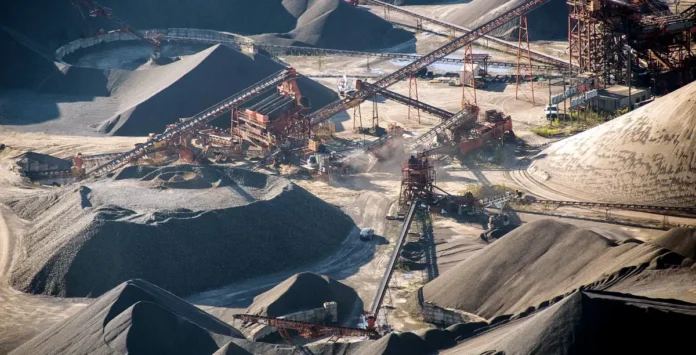
The world may soon find itself scraping the bottom of the barrel as sand and gravel are being consumed at a pace far quicker than nature can replace them, the United Nations has warned.
The caution came in a fresh report released by the United Nations Environment Programme titled “Sand and Sustainability: An Essential Resource for Nature and Development.”
According to the report, the relentless appetite for sand, fuelled by population explosion, rapid urbanisation, economic expansion and massive infrastructure projects, is stretching sustainable supplies to breaking point and placing ecosystems and livelihoods in the firing line.
Painting a grim picture of the growing crisis, UNEP stated that humanity’s dependence on sand cuts across both construction and environmental systems.
“We depend on ‘dead’ sand for infrastructure and ‘alive’ sand for natural services,” the agency said.
The report revealed that demand for sand used in construction is projected to jump by 45 percent by 2060, prompting fears that the planet could eventually run short of the resource.
“Sand is extracted for various infrastructure needs that underpin modern society and development,” UNEP said.
“It took nature hundreds of thousands of years to generate sand through gradual, geological erosion processes.
“Yet we are using sand at the staggering rate of 50 billion tonnes per year; its use for buildings alone is projected to rise by up to 45 per cent by 2060.”
The study identified population growth and accelerating urban development as major engines driving the rising demand curve.
“We have seen that particularly in Asia and Southeast Asia where the economy was booming.
“But we will see it now in Africa because the population is going to double from now to 2050,” said Pascal Peduzzi.
“That’s plus 1.27 billion people. All of them will need homes and schools and infrastructures,” he added.
The report further disclosed that sand extraction activities are increasingly creeping into vulnerable rivers, lakes, coastlines and protected marine zones, threatening fragile natural habitats.
Climate change, it noted, is also pouring fuel on the fire as more sand is required for projects such as sea walls designed to shield communities from rising sea levels.
While stressing that sand remains indispensable for economic growth, UNEP warned that it is equally critical for biodiversity, water security and human livelihoods.
The agency faulted many governments for continuing to treat sand as a cheap construction commodity instead of recognising it as a strategic natural resource tied to climate resilience and ecological stability.
In response, UNEP urged authorities and industries across the globe to embrace more sustainable methods of sand extraction and consumption.
The report noted that some countries are already exploring alternatives, including the growing use of “ore-sand,” a mineral-processing by-product capable of easing pressure on rivers and coastal ecosystems traditionally mined for sand.
UNEP also called for tighter environmental monitoring, improved transparency in extraction permits and an end to cut-price sourcing practices that ignore long-term environmental consequences.
As part of the search for substitutes, the agency highlighted compressed straw as another durable and energy-efficient building material that could help reduce dependence on natural sand reserves.


