

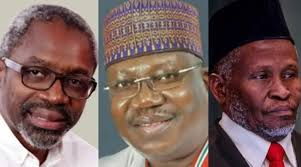
The justice system in any democracy is premised on the conception that the rich and poor are treated equally. But today, in Nigeria especially, access to justice is based on how much a person can pay, who they know and selective justice.
Nigerian people must not allow the Judiciary, the supreme court especially to become caught up in the psychology of judicial activism especially on a negative level. As it could lead to undemocratic conducts, allow judges and justices to become judicial activists. Judicial activism also relates to pursuing personal bias, subjective thinking, and going along with other private, social, and political agendas.
I remember in a criminal law class my professor said the courts for the most part can avoid the negatives of judicial activism if it exercises mainly its judicial powers.
This means that justices and judges may interpret the law only through the resolution of real legal disputes, meaning a court cannot attempt to correct a problem on its own initiative unless it has to do with the rules governing the court systems.
When the supreme court justices are invoking their own interpretations of what the law is, it shows lack of judicial restraint.
On a positive note, if the court should become involved in judicial activism as it relates to the criminal justice agencies, it should be to allow Law enforcement bodies like EFCC investigate and prosecute not just the average Nigerian but equally investigate persons in authority.
No judge or justice should be injecting his or her own preferences into legal proceedings by saying what type of financial crime or bribe should be investigated.
No jurist should be allowed to tell criminal investigative agencies like EFCC, who and where one can be probed and prosecuted for bribery.
I always thought no body is above the law and that we are all equal before the law. Nigeria cannot be different and remain dusting in backwardness.
Let’s discuss the current tug of war between the EFCC and the judiciary in terms of the supreme court’s over stretching its power.
In 2018, a Lagos State High Court found Dr. Joseph Nwobike, a Senior Advocate of Nigeria (SAN), guilty for paying money to judges and exchanging telephone messages with court officials to influence the assignment and hearing of his cases. The case was upheld by an appeal court in Lagos state but now the Supreme Court nullified the conviction of Nwobike on the grounds that the Lagos State criminal law on which charges were made against him, did not clearly define what constitutes attempt to pervert the course of justice.
Well, from the angle of public morality and legal psychology, deliberately bribing public officials like judges is perverting the course of justice, and by common sense and the legislative mandate given the Economic and Financial Crimes Commission (EFCC), it clearly has a role across the country to pursue interstate and intra state public officials or private contractors involved in financial wrongdoings.
The panel of five Supreme court justices told the EFCC to focus on what I call ‘Atlantic Ocean’ type financial crimes as captured by the UN convention on fighting corruption, to prevent illicit financial outflow from Nigeria. Really?
This type of adverse judicial activism by the supreme court, calls for the need for the judiciary to be totally overhauled in terms letting it know its limits.
Now let’s look as to how the real criminal justice works from the angle of law enforcement.
I still remember in April of 2009, when United States Attorney Johnny Sutton announced that El Paso Criminal District Court Judge Manuel Joseph Barraza, has been indicted by a federal grand jury in El Paso, Texas, on five counts of wire fraud and the deprivation of honest services, mail fraud and the deprivation of honest services and making false statements.
I still recall when in April 2013, Malcolm Anthony Smith, a New York Senator was arrested on federal corruption charges followed by a conviction.
I still giggle over a North Carolina Superior Court Judge Arnold Ogden Jones II who was charged with trying to bribe an FBI agent to collect text messages, in the indictment Jones is alleged to have offered “a couple of cases of beer” to the FBI agent in return for the text messages.
There is the case of an embattled City Court judge Leticia Astacio who in 2017 in New York was charged with drunken-driving and was escorted from judicial chambers in handcuffs.
In 2018, a Texas state district court judge Rodolfo “Rudy” Delgado was arrested on allegations he accepted approximately $6,000 in cash bribes.
Just this November, a Michigan Oakland County’s chief probate judge, Kathleen Ryan, was charged with one count of domestic assault and battery.
Well, the last time I looked at the Nigerian Constitution, although defective, and imposed on the people by the armed forces, it is an American-styled constitution. And the law enforcement agencies that arrested bad American public officials are akin to Nigerian law enforcement agencies, for example, the Economic and Financial Crimes Commission (EFCC). That generally functions like the American Federal Bureau of Investigation (FBI).
Today, in Nigeria, we see adverse type judicial activism and policymaking at its worse from the supreme bench of Nigeria.
For far too long, the Nigerian judiciary keep aborting the democratic process by violating the separation of powers.
Members of the supreme court are now acting as unelected legislators who are imposing legislation on the people. In the case of EFCC.
The judicial attitude exhibited by the supreme court, in terms of the speaking on functions of law enforcement bodies like the EFCC and Corrupt Practices and Other Related Offences Commission (ICPC) remain odd.
The EFCC, like the FBI has different functions to the public. These functions include areas such as tackling bank frauds, dealing with fraudulent economic governance, advance fee fraud, general investigation.
The EFCC functions also include investigation of corruptions relating to finance as well as economical fund wherever it is occurring in the country and beyond.
Just like the FBI, the EFCC by virtue of the Act is charged to investigate crimes relating to defrauding of the economy by public officials including governors and judges.
I remember this period last year, ICPC, a counter path of EFCC, informed the global media about the following: ‘Lawyers gave N9.4bn bribes to judges in three years…’ Wow!!!
Psychologically, this national report about the Nigerian judiciary finally found itself in the world stage.
It was a huge psychological blow to members of the bench. Could it be that our upper jurists are now exhibiting what is psychologically known as indirect anger at the law enforcement agencies especially the likes of EFCC.For far too long, these upper jurists and their allies have lived in what is known as Denial, a form of defense mechanisms which occurs when one refuse to accept reality or facts. These upper jurists could also be seen as engaged in Repression, meaning experiencing unsavory thoughts that can upset them.
Could they be engaged in what is called Projection, meaning thoughts or feelings they could have about themselves which they transfer to persons like the criminal investigators who are making these jurists uncomfortable.
It appears that these upper jurists could be experiencing Displacement, meaning directing strong emotions and frustrations toward persons like the EFCC officials.
These upper jurists could be engaged in Rationalization, meaning explaining their undesirable behaviors with their own set of “facts” just to feel comfortable and protect its shameful system.
The Nigeria judiciary especially, the members of the supreme court feel stabbed in the heart. Now the supreme court in its state of judicial activism in a Subliminal way, are redirecting strong feelings into an object like EFCC that is safe to use up.
Just a few days ago, the Supreme Court of Nigeria ruled that Section 46 of the Economic and Financial Crimes Commission Act should be interpreted within the narrow confines of the United Nations Convention Against Corruption, the precursor to the establishment of the EFCC – to prevent illicit financial outflow from Nigeria.
It is like the American Supreme court telling the American people that the FBI ACT should be explained only within the narrow confines of the United Nations Convention Against Corruption.
That is just the Nigerian supreme court making a fool out of itself.
In a deeply corrupt society like Nigeria, the world sees the Nigeria police force and the judiciary as morally and systematically soiled along with some media bodies in compromised situations.
In October of 2016, the media showed the following title, “How the Nigerian National Judicial Council Shields Corrupt Judges.”
The National Judicial Council (NJC), the body charged with monitoring and disciplining has sometimes made it practically impossible for law enforcement officials to prosecute judges, even after the judges have been found guilty of serious offenses by the same disciplinary body.
Ethically and morally, judiciary is that entity that has no other power base except the one of public confidence anchored on impartiality, integrity, and competence in performing the work and duties assigned to it by the people, supposedly.
From the customary courts to the supreme courts in Nigeria, how independent and honorable is the judiciary, and how indispensable to justice is it in our society?
There is ongoing discussion about the endemic judicial corruption that involved morally stained judges and lawyers. I recently read in the media, some lawyers discussing issues around the criminal justice, and corruption in judicial circles.
Robert Clarke, octogenarian Senior Advocate of Nigeria asked, “Can the EFCC go to the Army barracks and arrest a Major General when the constitution provides that under the Army law, this is the duty of a court martial? Any officer that walks into the Army barracks to arrest a military man will find himself thrown into the prison there because there is a rule of law, that if a military officer does anything wrong, the first body to discipline him is the military tribunal”. I should say that this type of response may only apply to an environment that unequally approach rule of law – Nigeria.
Recently, I recalled in America from whom we adapted our 1979/1999 constitution, a 40-year-old active-duty Marine major was arrested after federal police said he violently broke into the U.S. Capitol during the Jan. 6 riot, 2021, pushing through a line of police officers and positioning himself inside a doorway to pull others into the building with him. So, Mr. Clarke, democratically, the answer is yes. Clarke, further said, “It’s the same thing with judges. The constitution says all judges are under the control of the NJC. All the discipline of judges is under the NJC, that’s what the constitution says. And the constitution interpreted what misconduct is. So, why should the government go and carry a judicial officer who is still in service. There’s separation of powers.” I will tell Clarke only in a stained democracy will his type of response holds.
Likewise, 92-year-old legal titan, Aare Afe Babalola (SAN), regarding a raid on a judges’ homes by the DSS in October 2016, said, “I am of the view that the Constitution requires that any infraction by judges be firstly investigated and resolved by the NJC to the exclusion of any other body or authority. But Babalola needs to understand that NJC is not a police body. Active judges get arrested when the need arises especially in a healthy democratic society.
In a more rational manner, 81-year-old Prof Itse Sagay (SAN), contends that corruption cases against the judges’ fail because judges shield their colleagues. Sagay, reminds us of the pathology of judicial corruption when he rebuked the Court of Appeal’s decision in Hyeladzira Nganjiwa’s case, “What the judiciary did was the most terrible thing. Money was found in the home of some of them and it was reported. Some had even admitted to the offence, but suddenly they (judges) devised a new principle of law that before you can try any member of the bench, he or she has to be reported to the NJC. That means if the matter has not gone to the NJC, no matter how guilty that person is, you cannot touch them, so they were all discharged on the grounds that the report was not first made to the NJC. I don’t think that would help at all.”
I dare say that a case like this point to judicial suicide in the Nigerian premise.
It is essential to understand that anybody in Nigeria, including military, police officers and judges in active duty can be investigated.
As that’s the law. In healthy societies, even presidents and prime ministers get prosecuted. The Supreme court in its state of ‘protect me I protect you’ continue to dim our democracy.
A former Chairman of the Independent National Electoral Commission, Prof. Attahiru Jega, in a recent lecture on electoral practices, presented during the 2021 Law Week of Ibadan NBA, stated that “cash and carry judgments” had become a feature in the country.
I still remember in 2019, Senate President Ahmad Lawan advocating for open support for Economic and Financial Crimes Commission (EFCC) and Independent Corrupt Practices and Other Related Offences Commission (ICPC) that he described as the leading government agencies in anti-corruption war. The Senate President while declaring open the third EFCC National Capacity Building Workshop for Justices and Judges in Abuja, in collaboration with the National Judicial Institute (NJI) further said, “The best we can continue to do in our circumstance is to encourage anti-corruption agencies like the EFCC and the ICPC discharge their mandate very well…The Economic and Financial Crimes Commission (EFCC) and Independent Corrupt Practices and Other Related Offences Commission (ICPC) are the leading government agencies in anti-corruption war.”
The Lawan parliamentary system must not be wishy-washy like the judiciary on the wide societal anti-corruption works as it relate to the EFCC and the ICPC, especially in the areas of public treasury and corporate financial crimes.
The supreme court and its loyalists who generally concentrate on their judicial protectionism, would like the likes of EFCC to only engage in what I call Atlantic Ocean type financial crimes.
Democratic voices like those of Prof. Itse Sagay (SAN); and human rights lawyer, Mr. Femi Falana (SAN) should continue to expose the judiciary, the supreme court especially.
As in how sons and daughters of retired and serving judges and justices are nominated by the National Judicial Council for appointment as judges of the Federal Capital Territory High Court. As in letting some corrupt governors and senior lawyers skip conviction by the court’s dependence on technicalities rather than public interest and justice.
From the angle of legal psychology, members of the supreme court and other courts must not be allowed to abuse their powers. The Nigerian people through peaceful protests should be staging civil unrest and various social media protest to push back the supreme court’s direct and indirect efforts, to shave down the work of the country’s anti-graft agencies like EFCC. The Supreme Court and other courts could reduce the effects of judicial pathology by being open and nonresistant to what I call the Falana/Sagay Institutional Therapy as noted in this writing.
At the end the will of the people will prevail, and through a people’s-oriented legislature, the Supreme court must not be allowed to become too powerful and anti-democratic. In the words of the French philosopher, De Tocqueville, I hope the Nigerian citizens themselves hold the ultimate power to change any laws they disliked. As noted by de Tocqueville about democracy. I hope Nigeria becomes a society made up of equal citizens, where the majority is always on top.
John Egbeazien Oshodi who was born in Uromi, Edo State in Nigeria, is an American based Police/Prison Scientist and Forensic/Clinical/Legal Psychologist. A government Consultant on matters of forensic-clinical adult/child psychological services in the USA; Chief Educator and Clinician at the Transatlantic Enrichment and Refresher Institute, an Online Lifelong Center for Personal, Professional and Career Development. A former Interim Associate Dean/Assistant Professor at the Broward College, Florida. The Founder of the Dr. John Egbeazien Oshodi Foundation, Center for Psychological Health and Behavioral Change in African settings. In 2011, he introduced the State-of-the-Art Forensic Psychology into Nigeria through N.U.C and the Nasarawa State University where he served in the Department of Psychology as an Associate Professor. A Virtual behavioral Leadership Professor at the ISCOM University, Benin of Republic. Founder of the Proposed Transatlantic Egbeazien University (TEU) of Values and Ethics, a digital project of Truth, Ethics, Openness. Author of over 40 academic publications/creations, at least 200 public opinion writeups on African issues, and various books. He specializes in psycho-prescriptive writings regarding African institutional and governance issues.
John Egbeazien Oshodi wrote in via transeuniversity@gmail.com


