

The oil market has a strange reflex.
Every time tension rises in the Middle East, the price of oil begins to climb like a nervous thermometer. It does not wait for bombs to fall or tankers to burn. The mere possibility is enough. Somewhere in the world a trader presses a button, somewhere else another trader panics, and before the rest of us finish reading the news headline the price of crude has already jumped.
The hint of danger is enough. Traders move first and ask questions later. By the time the rest of the world finishes reading the news headline, the price of crude has already shifted.
That is the story unfolding again as tensions swirl around Iran.
The headlines say the surge is about conflict. That is true, but it is not the whole truth. Oil markets do not operate only on reality. They operate heavily on expectation. Anticipation. Anxiety.
Fear is priced into every barrel.
That is what we are witnessing again as tensions swirl around Iran.
At the center of the anxiety sits the narrow passage known as the Strait of Hormuz. It is one of those pieces of geography that quietly controls the fate of the modern economy. A thin stretch of water that most people will never see yet almost the entire world depends on it. Huge volumes of the planet’s oil pass through that corridor every day on giant tankers moving slowly across the Gulf like floating cities.
When that route even looks threatened the markets react instantly. It does not matter if ships are still sailing normally. It does not matter if production has not dropped by a single barrel. The possibility of disruption is enough to make traders nervous.
And nervous traders move markets.
Oil is perhaps the most emotional commodity in the global economy. Wheat depends on harvests. Copper depends on mining output. Oil depends on politics. A speech from a general, a naval exercise, a missile test or even a rumor can move billions of dollars before sunset.
In the language of energy economists this reaction has a name. They call it a risk premium. In plain English it is the price of fear.
Once fear enters the system it spreads quickly. Insurance companies begin to worry about tankers passing through the Gulf. Shipping costs rise. Financial traders rush to buy oil contracts before the price climbs further. Each move pushes the price higher and reinforces the panic that started the cycle in the first place.
The result is that oil can become dramatically more expensive even when the physical supply has not changed.
To ordinary people this often looks like manipulation. In reality it is something subtler. Markets are trying to predict tomorrow. The problem is that tomorrow in geopolitics is impossible to predict.
One missile fired in the wrong direction can shake the global economy.
For countries that import most of their fuel the consequences are immediate. Transport becomes expensive. Food prices creep upward. Inflation that was already stubborn suddenly finds fresh energy.
But there is an even stranger twist in this story.
Nigeria is one of the world’s oil producing nations. In theory a rise in global oil prices should feel like good news. Higher prices mean higher export earnings. The country should be smiling every time the oil market spikes.
Yet many Nigerians know the opposite experience.
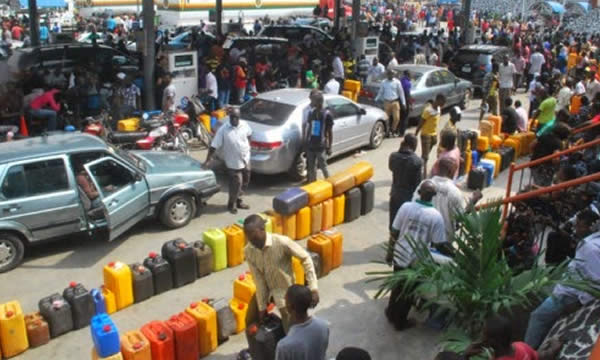
When oil prices surge internationally transport fares rise at home. The cost of moving food across the country climbs. Inflation tightens its grip. Instead of celebration there is quiet anxiety at fuel stations and markets.
It is one of the great ironies of our economic life. A nation sitting on vast crude reserves still feels pain when the price of oil rises.
The reason lies in a long standing contradiction. Nigeria exports crude but depends heavily on imported refined fuel. That gap between crude wealth and refining capacity has haunted the economy for decades. So when global prices jump the country absorbs the shock like everyone else.
Sometimes even more sharply.
This paradox should be a constant reminder that natural resources alone do not guarantee economic strength. What matters is the structure around them. Refineries, policy discipline, infrastructure and long term planning matter just as much as the crude beneath the soil.
Meanwhile the world continues to hold its breath whenever tension rises in the Gulf.
It is remarkable how much power geography still holds over modern civilization. The global economy runs on satellites, algorithms and financial networks moving money across continents in milliseconds. Yet the price of energy can still be shaken by events unfolding in a narrow waterway thousands of miles away.
That should humble anyone who believes globalization has conquered vulnerability.
Oil remains the bloodstream of the industrial world. When it trembles the entire body feels it. Markets shiver, governments worry and ordinary families brace for higher living costs.
So the recent surge in oil prices is not just about a regional confrontation involving Iran. It is about something deeper. It reveals how tightly the world economy is tied to fragile political fault lines.
A rumor in the Gulf can raise transport fares in Lagos. A military maneuver near Hormuz can make food more expensive in Abuja.
That is the strange mathematics of oil.
Until the world finds a way to loosen this dependency, every flare of tension in the Middle East will continue to ripple across the planet with astonishing speed. Traders will watch the region nervously. Governments will issue cautious statements. Markets will swing between relief and panic.
And somewhere in the background the price of crude will quietly keep track of the world’s anxiety.
Not the price of oil alone.
The markets will keep watching the Gulf. Governments will keep issuing cautious statements. Traders will keep betting on what tomorrow might bring.
And the price of oil will continue to rise and fall with every rumor and every threat.
Because in the modern energy market, we are not only paying for crude.
We are paying for fear.
Stephanie Shaakaa
08034861434


