

Three weeks ago, as Israeli jets roared through Iranian airspace and American intelligence officers packed themselves into situation rooms across Washington, the mood in Tel Aviv and the White House was almost euphoric. This, they believed, was not going to be another slow-burning Middle East war, a bloody, endless slog with no clear winner. No, this time was supposed to be different. This time, they thought they had found the shortcut.
David Barnea, the head of Mossad, had entered Prime Minister Benjamin Netanyahu’s office with a plan so seductive it must have sounded like strategic perfection. Within days of the first missiles landing, he promised, Iran would begin to crack from within. His network of spies and covert assets inside the country would trigger what the mullahs could not contain: a popular uprising. Tehran would erupt. Ethnic militias would surge across the borders. A government already weakened by sanctions, economic strain, and years of internal pressure would buckle beneath the fury of its own citizens.
Barnea did not keep the fantasy in Tel Aviv. He took it to Washington in mid-January and sold the same dream to senior officials in the Trump administration. President Donald Trump, always drawn to bold, dramatic solutions to impossible problems, embraced it. Here, at last, was the perfect script: not Iraq, not Afghanistan, not another endless American entanglement, but a swift, surgical regime change carried out by Iranians themselves. The war, they believed, would be finished before the American people even had time to grow weary of it.
Three weeks later, the silence from Iran’s streets is deafening.
The Uprising That Never Came
Let us say it plainly, because it deserves to be said without euphemism: the uprising never came. Not even remotely. The Iranian state, though battered, remains firmly in command. Tehran is not in flames. The streets are not overflowing with rebellion. The feared Revolutionary Guard still patrols with confidence. And most crushing of all for the men who built this war on fantasy, the very people who were supposed to rise up and welcome their so-called liberation are staying home, not because they are inspired, but because they are afraid.
This is not conjecture. It is not enemy propaganda. It is not the invention of critics. These are conclusions emerging from the same intelligence circles that Barnea and Trump leaned on when this conflict was set in motion. And the verdict is brutal: fear of Iran’s military and police machinery has suffocated any serious appetite for rebellion. The Iranian public, far from treating Israeli and American intervention as a doorway to freedom, appears to be doing the opposite, keeping its head down and waiting for the storm to pass.
The ethnic militias that Mossad reportedly expected to open second and third fronts have not moved. They are not flooding across the borders. Whether they do not trust Israeli promises, fear Iranian retaliation more than they desire Israeli backing, or simply understood the reality better than the planners in Tel Aviv, the outcome is the same: no multi-front insurgency, no diversion of Iranian military capacity, and no collapsing regime.
The Delusion of Easy Regime Change
What we are watching is not merely an intelligence failure. It is a collapse of strategic imagination. And it is dangerous. Barnea’s plan rested on a childish misunderstanding of how revolutions happen, and, more importantly, how they do not. You do not manufacture a popular uprising from the outside, especially not while bombing the very society whose people you expect to rise.
History is full of the wreckage of this same delusion. In 2003, American planners convinced themselves that Iraqis would welcome coalition troops with flowers and sweets. What followed was an insurgency that scarred a generation. In Libya, Western governments persuaded themselves that removing Muammar Gaddafi would automatically unleash democracy. What followed was civil war, slave markets, and state collapse. The pattern is painfully familiar: outside powers see a regime they despise, project their own hopes onto a deeply complicated internal landscape, and then stare in disbelief when reality refuses to obey.
But this case may be even worse, because the fantasy was so compressed, so wildly optimistic, so detached from political reality. “Within days,” Barnea promised. Not months. Not after years of building underground networks. Not after carefully cultivating trust with alienated communities. Days. That is not strategy. That is delusion dressed up as intelligence. It suggests a service so captivated by its own legend, so intoxicated by past exploits like the theft of Iran’s nuclear archive, that it began mistaking cinematic fantasy for geopolitical truth.
The Political Bill Is Coming Due
Now, three weeks in, the war is already refusing to follow the script either government sold to itself. That is not a minor setback. It is the beginning of a strategic reckoning, and the political consequences are likely to strike both Washington and Tel Aviv with force.
For Netanyahu, the numbers are turning ugly. He launched this war with enormous ambitions: to destroy Iran’s nuclear program, cripple its regional proxies, and finally eliminate the existential threat that has shaped his political life for years. But wars do not always reward the men who start them. Sometimes they devour them. Israeli society is tough, but toughness is not infinite. Every day that passes without the promised collapse of the Iranian regime is another day of mounting casualties, continued rocket threats over the home front, and an economy bleeding billions.
Netanyahu built his image on one central claim: that he alone was strong enough to keep Israel safe. But what happens when that claim begins to look hollow? What happens when the promise of a swift end mutates into a long, grinding conflict with no visible exit? Israelis can endure pain when they believe victory is achievable. Their patience shrinks rapidly when war begins to resemble a trap. And if both political and military opposition inside Israel begin to sense weakness, Netanyahu’s coalition, already held together with little more than political duct tape, could begin to tear apart.
Then there is the regional fallout. The Abraham Accords, once presented as the diplomatic architecture of a new Middle East, are beginning to look far less sturdy. Arab governments signed onto those arrangements for trade, strategic alignment, and shared concern about Iranian influence. They did not sign on to become passengers in a regional war built on inflated intelligence promises. If this conflict drags on, expect Gulf monarchies to rediscover the language of neutrality with astonishing speed.
Trump’s War, Trump’s Risk
But if the pressure is intense in Tel Aviv, the political danger in Washington may be even greater. Donald Trump has attached himself to this war with his usual all-or-nothing instinct. This was supposed to be the foreign policy masterpiece that silenced his critics, the proof that his disruptive style, his willingness to smash conventional diplomacy, could achieve what the so-called experts and the deep state never could.
Instead, he now risks owning a disaster stitched together from the worst failures of previous presidents. Like George W. Bush, he has embraced a war grounded in intelligence assumptions that are turning out to be catastrophically wrong. Like Barack Obama in Libya, he has stepped into military intervention without a credible plan for the day after. But unlike both, he sold it with the promise of immediate, almost magical success. That promise is now collapsing in public view.
The American people have no reservoir of patience left for Middle East wars. None. The coalition that returned Trump to power includes millions who explicitly rejected the Republican establishment’s interventionist instincts. They voted for America First. They voted against endless wars. They voted for domestic priorities, for the southern border, for economic grievances at home, not for another open-ended confrontation over Iran’s nuclear infrastructure. The longer this war drags on without producing the promised breakthrough, the louder that contradiction will become.
And the Democrats, fragmented and directionless as they may appear, have just been handed a weapon. Every day this conflict continues without Iranian collapse gives them fresh ground to accuse the administration of recklessness, gullibility, and recycling the same regime-change fantasies Trump once mocked. The 2026 midterms are drawing closer. A war that looks manageable in September can become political dead weight by November. This one already looks heavy, and it is only March.
A Deeper Failure of Credibility
Yet the damage goes beyond electoral risk. Something deeper is now being exposed: a crisis of credibility that may outlast this war itself.
Governments and intelligence services survive on trust. When Mossad makes a dramatic promise and delivers nothing, credibility cracks. When the White House wagers its reputation on a scenario that evaporates almost immediately, confidence erodes. The next time Israeli intelligence claims to possess game-changing insight into Iran’s capabilities, who will take it at face value? The next time Washington urges its allies to rally behind military action justified by “special intelligence,” who will follow without hesitation?
Worse still, this episode reveals something profoundly unsettling about how both governments reached this point. The Barnea plan was not merely optimistic. It was convenient. It offered war without consequences, regime change without occupation, victory without prolonged cost. The speed with which it appears to have been embraced suggests a decision-making culture more interested in validating desired outcomes than in stress-testing dangerous assumptions.
What Comes After the Fantasy Fails?
So, where does this leave both governments? In a trap of their own making. They committed to war on the basis of fantasy, and now reality is refusing to cooperate. None of the options ahead is attractive.
They can escalate—intensify the bombing, widen the target list, and attempt to break Iranian resolve through brute force. But that risks welding the Iranian public to a regime it may fear without necessarily loving, while also increasing the chances of drawing other regional actors into the fire.
They can turn to diplomacy, but they would do so from weakness, not strength, having already exposed the failure of their strategy and the collapse of the intelligence premise behind it.
Or they can keep stumbling forward, hoping that something changes on the ground, that some unexpected development delivers what Barnea’s planning could not. That is probably the most likely course. It is also the most dangerous, because it turns a war launched on false assumptions into a war sustained by sunk costs, wounded pride, and political stubbornness.
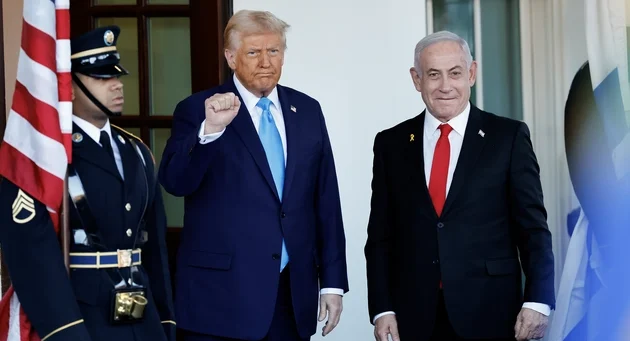
Three weeks ago, Donald Trump and Benjamin Netanyahu seemed to believe they had found the cheat code to Middle Eastern conflict: add popular uprising, stir, and wait for regime collapse. What they are discovering now is what history has taught countless leaders before them: the Iranian people are not actors in someone else’s script, revolutions cannot be scheduled like dentist appointments, and wars, once unleashed, do not obey the timetable of the men who start them.
The repercussions are no longer hypothetical. For civilians trapped in the crossfire, they are already a lived reality. For the politicians who set this in motion, they are racing closer by the day. And for everyone else watching from a distance, this moment offers a brutal reminder: in geopolitics, as in life, the costliest disasters are often born from the lies leaders tell themselves when a fantasy becomes too convenient to resist.


