

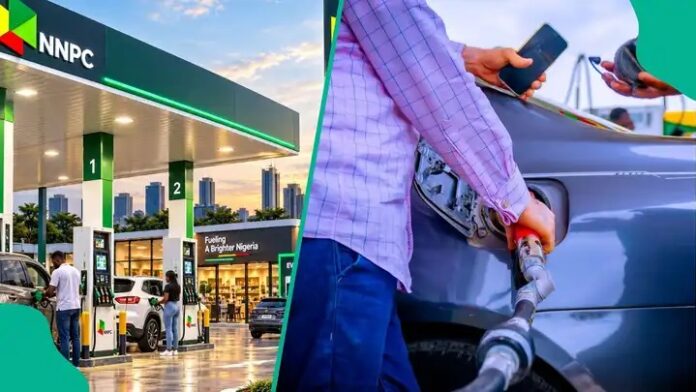
Stakeholders have expressed concerns that the growing adoption of self-service fuel dispensing stations in Nigeria could lead to job losses among petrol attendants.
The concerns followed the deployment of self-service fuel dispensing systems by Sunbed Energy in Lagos and the Federal Capital Territory.
Speaking with the News Agency of Nigeria in Abuja on Monday, a public affairs analyst, Jide Ojo, said the system could help address complaints by motorists over receiving less fuel than they paid for.
He, however, warned that its widespread adoption could have implications for employment.
Ojo noted that some large filling stations employ as many as 30 fuel attendants, adding that many of their duties could become unnecessary if motorists begin dispensing fuel themselves.
“It is a good development because nobody is cheating you of the true value of the fuel that is dispensed in your vehicle, but it will create unemployment in the country,” he said.

An economist, Dr Aliyu Ilias, said self-service fuel dispensing had been in use in Europe and other parts of the world for decades.
He said Nigeria’s increasing adoption of electronic payments could facilitate the introduction of the system but questioned whether the country was psychologically and institutionally prepared for the transition.
“Self-service is good if there is adequate system technology, especially from the CBN,” Ilias said.
He noted that employment remained a major concern as automation continued to expand across various sectors.
According to him, while self-service dispensing could reduce operating costs for fuel companies, it would also likely reduce the number of workers required at filling stations.
Similarly, a labour leader and former Secretary-General of the Organisation of African Trade Union Unity, Owei Lakemfa, said Nigeria’s relatively recent adoption of self-service fuel dispensing highlighted the slow pace at which some technologies had been introduced in the country.
Lakemfa said self-service fuel stations had existed in other countries for decades and could offer benefits such as shorter waiting times and reduced opportunities for manipulation of fuel pumps.
READ ALSO: Bashir Ahmed Celebrates as Kano Ranks First in 2026 NECO Examinations for Second Consecutive Year
He, however, warned that widespread adoption could reduce the demand for petrol attendants and worsen unemployment.
The labour leader said Nigeria needed to prepare for the social consequences of technological change by developing measures to support workers displaced by automation.
“This goes beyond whether motorists should dispense their own fuel. It raises a broader question about how Nigeria can adopt technologies.
“It is also about how Nigeria can improve efficiency and reduce opportunities for malpractice while ensuring that workers affected by automation are not left without alternatives,” he said.
Lakemfa added that the long-term impact of self-service fuel dispensing would depend not only on the technology but also on how businesses, regulators and policymakers managed the transition for workers and consumers.


