

“Education is the most powerful weapon which you can use to change the world.” — Nelson Mandela.
Nigeria’s education system stands today at a troubling crossroads. Once seen as a pathway to social mobility and national development, the sector now struggles with structural weaknesses that threaten its future. From indigenous learning systems to the modern university structure, Nigeria’s educational journey reflects both promise and neglect. To understand the urgency of reform, it is necessary to reflect on what education in Nigeria was, what it has become, and what it ought to be.
Before colonial rule, education in Nigerian societies was deeply rooted in community life. It was informal yet purposeful, designed to prepare individuals for productive participation in society. Knowledge was transmitted through oral traditions, apprenticeship, storytelling, and communal activities. Young people learned practical skills such as farming, fishing, weaving, and blacksmithing, alongside moral values like respect, discipline, and communal responsibility. Education was not confined to classrooms; it was embedded in daily life.
In northern Nigeria, Islamic education flourished through Qur’anic schools and centres of scholarship that produced generations of scholars versed in Arabic, theology, law, and philosophy. These intellectual traditions long predated Western schooling and played an important role in shaping governance and social organisation.
The arrival of colonial rule in the nineteenth century reshaped Nigeria’s educational landscape. Missionary schools introduced Western-style education centred on literacy, arithmetic, and Christian doctrine. While these institutions opened new opportunities, they were largely designed to serve colonial administrative needs. The system produced clerks, interpreters, and junior administrators rather than scientists, engineers, or innovators. Many of the structural patterns established during the colonial period continue to influence Nigeria’s education system today.
After independence in 1960, Nigeria attempted to reposition education as a tool for national development. Universities expanded, polytechnics and colleges of education were established, and successive governments introduced policies aimed at widening access. The vision was clear: a well-educated population capable of driving economic growth and social progress.
However, the reality of Nigeria’s education sector today tells a more sobering story.
Nigeria currently has one of the highest numbers of out-of-school children in the world. UNICEF recently revealed that the number of out-of-school children in Nigeria has soared to 18.95 million. This statistic alone should alarm policymakers. Education is supposed to be the foundation of national development, yet millions of Nigerian children are growing up without access to basic schooling.
The contrast becomes even more striking when compared with countries like the United Kingdom. In the UK, education is compulsory for all children. Every child must receive full-time education from the age of five to sixteen. State schools are free, and in many cases the standards of these publicly funded schools are far better than what many Nigerians describe as “international schools”.
If the same country that colonised Nigeria decades ago can guarantee free, quality, compulsory education for its children, a legitimate question arises: why can’t Nigeria do the same? Can’t we also make education compulsory for children in Nigeria? As long as the children of Nigeria’s ruling elites are schooling abroad, they care less about the children of the masses who gave them the votes and power to hold public offices.
This reality also explains why many Nigerian parents feel compelled to relocate abroad in search of better opportunities for their children. Yet the same political class that presides over the decline of the education sector often criticises young Nigerians for wanting to “japa”. How can anyone blame parents for seeking quality education for their children when the system at home continues to deteriorate?
Underfunding remains one of the most persistent challenges. In the 2025 budget, President Bola Tinubu’s administration allocated ₦3.52 trillion to education, representing roughly 6.1 to 7.5 percent of total government expenditure. While this marked a nominal increase from the ₦1.54 trillion allocated in 2023, it still falls far below the 15 to 20 percent benchmark recommended by UNESCO for developing countries.
The consequences of chronic underinvestment are visible everywhere — overcrowded classrooms, dilapidated infrastructure, poorly equipped laboratories, and overstretched teachers.
Perhaps the most troubling symbol of this crisis is the situation within Nigeria’s universities. Last week, Timothy Nubi, professor of estate management and sustainable housing advocate, disclosed that about 40 percent of Nigerian university lecturers now sleep in their offices because of the country’s worsening housing crisis. When the individuals responsible for producing the nation’s intellectual capital cannot afford decent accommodation, how will they be in the best state of mind to deliver at optimal capacity? This is troubling and raises fundamental questions about national priorities.
Leadership within the sector has also failed to inspire sufficient confidence. Some ministerial positions — particularly those tied directly to national development, such as the education ministry and power sector — require the expertise of technocrats and seasoned professionals. They should not be treated as political rewards distributed on the basis of party loyalty or patronage. Education policy requires deep institutional knowledge, long-term planning, and evidence-based reform. Without these, policies risk becoming cosmetic while the structural challenges remain unresolved. To be precise, I’m not impressed with the performance of Nigeria’s current Minister of Education, Tunji Alausa and his counterpart in the Power sector, Adebayo Adelabu who appears clueless and has practically abandoned his duty in pursuance of a governorship ambition in Oyo state.
The crisis is not limited to the federal level. Across the country, political decisions sometimes appear disconnected from the urgent needs of the education sector. Last week, there was a report that Plateau State governor Caleb Mutfwang presented brand new Exceed VX sport-utility vehicles to first-class traditional rulers to mark his 61st birthday. The gesture came amid calls from some communities urging the government to prioritise basic social infrastructure such as school buildings, with reports that pupils in some areas still learn in mud classrooms without chairs or tables. In a state where many public schools lack adequate classrooms and learning facilities, such optics inevitably raise questions about governance priorities.
Funding for basic education also reveals deeper systemic problems. The Universal Basic Education Commission (UBEC), which coordinates Nigeria’s basic education programme, is funded through two percent of the Consolidated Revenue Fund.
Yet a substantial portion of these funds remains unutilised because several states fail to provide the required counterpart funding needed to access the grants. As a result, billions of naira meant for improving public schools remain idle while classrooms deteriorate.
In 2026 alone, UBEC reportedly received an allocation of about ₦441.9 billion, yet a large portion of that amount was earmarked for salaries, leaving limited resources for capital projects and infrastructure.
This raises another critical question: who effectively monitors how education funds are utilised? While UBEC works with State Universal Basic Education Boards and internal oversight structures, accountability mechanisms often appear weak, allowing inefficiencies and delays to persist.
What, then, ought education in Nigeria to be?
Education in Nigeria must be treated as a genuine national priority rather than a recurring budgetary afterthought. Meeting — or at least moving closer to — the UNESCO funding benchmark would demonstrate serious commitment to human capital development. The sector requires leadership grounded in expertise rather than political convenience. Competent professionals with deep understanding of education systems should drive policy reform.
Also, transparency and accountability must become central to education governance. Agencies responsible for managing education funds must operate with greater openness, while state governments must demonstrate the political will to access and utilise available resources effectively.
Lastly, the welfare of teachers and lecturers must be addressed urgently. No country can build a strong education system while neglecting the very people responsible for delivering knowledge.
Nigeria has the talent, the population, and the intellectual capacity to build a dynamic education system. What it lacks is not potential, but consistent political will. If Nigeria fails to prioritise education today, the consequences will extend far beyond classrooms and campuses. They will shape the country’s economic future, social stability, and global relevance for decades to come.
A nation that neglects education ultimately mortgages its future. The future of Nigeria will ultimately depend on the quality of education it provides today; without decisive reforms, the country risks undermining the potential of an entire generation.
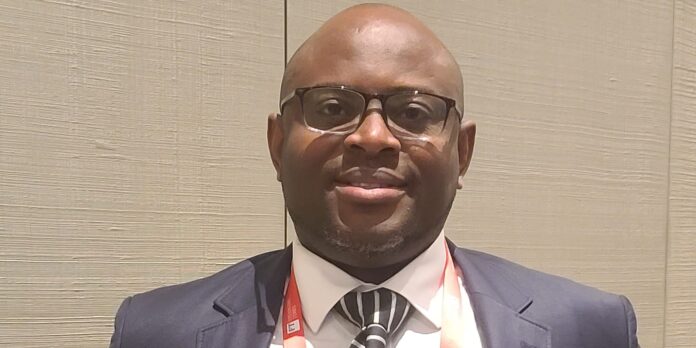
Akinsuyi, former group politics editor of the Daily Independent, writes from the United Kingdom. He can be reached at shabydayo@gmail.com


