

Initially, there was no intention to do a second part of this article whose first part appeared last week, July 3, 2026. However, some new developments require the continuation of the discussion in part two. It would be recalled that in our previous article published here on May 22, 2026, we argued that one of the key features of a new governance template we were proposing is a ’budgetary system that produces results through effective implementation of appropriated projects.’ We also argued that ‘over-blotted funds and misuse of such funds, characterize the current budgetary practice.’ But we never knew that a budget allocation can be made to a ‘non-existent’ and officially called ‘fictitious’ agency, as we knew only of the existence of fictitious or ghost workers who are yet to be discovered.
In today’s article, we would argue that Nigeria’s budgetary system is one of the hubs of corruption in our governance system, and ipso facto, constitutes a huge area of public service disservice that serves private or partisan interests. And by extension, our current budgetary system together with the entire procurement eco-system across Ministries, Departments and Agencies (MDAs), constitute one big area that perpetuates Nigeria’s underdevelopment. For example, take the issue of the controversial presidential agency called Presidential Foreign Intervention Promotion Council (PFIPC), which in official quarters is a ‘fictitious’ agency. And yet, this agency exhibited all the qualities of a genuine government establishment including having an office at the Federal Secretariat and also having its name included in Nigeria’s federal budget (with an allocation). And yet again, the budgetary estimates of MDAs go through different stages before culminating at the National Assembly (NASS) and after which, presidential assent. How believably fictitious is this agency?
If it is true that the PFIPC, which operated openly, is fictitious, then there is ample evidence that the integrity of our budgetary process is called into serious question. But more importantly, it confirms a long-held hypothesis by critics that the federal budget system is one of the twin hubs of systemic and institutionalized corruption. The other twin hub is the procurement system, where in some cases the officials who award the contract are involved in all manner of circumvention of the Procurement Act. In some cases for instance, they are part of the beneficiaries of the awarded contract(s). This is no longer the case of the proverbial and long-known 10% kickback, as it has gone far beyond it, with contract(s) now easily going to cronies or proxies.
Another area of public service disservice that currently came to limelight is the alleged extra-budgetary (off-budget) spending estimated at N8.83 trillion. The allegation emanated from the observations made by the International Monetary Fund (IMF). And according to the IMF, this amount is said to be equivalent to about 2% of Nigeria’s Gross Domestic Product (GDP). The IMF noted that this amount was not reflected in Nigeria’s fiscal accounts, thereby making the deficit appear smaller than the actual amount it should have been. Although, the government denied this allegation, it has however not explained why many MDAs are starved of funds while there is surplus money being spent on political campaign-related activities by cronies of the ruling party. For example, some organizations supporting the ruling party are spending massively on campaign activities including holding events at the Transcorp Hilton, Abuja.
The major question goes back to how the budgeted funds are spent, and not on the inadequacy of generated revenue by the government. There is gross under-allocation of funds to MDAs, thereby causing gross underperformance of the budget in the last three years. So where did all the money go given the increased Federation Account Allocation Committee (FAAC) distribution to the three tiers of government? FAAC allocation actually increased by more than 100%. For example, in October 2023, FAAC disbursed N906,955 billion, and in June 2026, it disbursed N2.300 trillion showing an increase of more than 100%. Given the twin problems of poor budgetary allocation and budgetary under-performance, Nigeria is experiencing what one Programme of the African Independent Television (AIT) called ‘triple budget dilemma ‘. There is budget implementation overlaps causing under-performance of the budgets. This accounted for one of the reasons why there was an uproar in the House of Representatives on July 8, 2026. It is clear to any critical mind to suspect that some parts of the increased allocation to the federal government by FAAC is being spent elsewhere on what the public does not know because of lack of transparency. Consequently, the suspected extra-budgetary spending is a great disservice to our country because it signals a lack of transparency and accountability, which are key attributes of good governance.
If we go into history (and leave the two cited current happenings above), we will get angry the more. In its December 7, 2025 news report, the Sahara Reporters carried an explosive headline titled: Audit Exposes massive Collapse in Nigeria’s Public Service, 30 MDAs tagged structurally failing. The report centres on the disregard for Business Facilitation Act (BFA) 2022. The results of the BFA Compliance Ranking carried out by the Presidential Enabling Business Environment Council (PEBEC) revealed that more than half of the MDAs that were assessed failed to meet the minimum 50% benchmark, with 30 of them classified as ‘structurally non-compliant and operationally failing.’ This confirms that regulatory compliance failures is one of the major parts of public service disservice in Nigeria.
A more disturbing area of disservice also has to do with the results of the Ethics and Integrity Compliance Scorecard (EICS) ranking carried out by the Independent Corrupt Practices and Other Related Offences Commission (ICPC). In its 2025 exercise, the report revealed that out of the 357 MDAs that were assessed, not one achieved full compliance with the required ethical and integrity standards. If one probes deeper, one will also discover that at the centre of this is the non-compliance with budgetary and procurement laws of the country. The required standards are thrown overboard as if there are no restraining laws.
A deeper look into history will reveal more disturbing and embarrassing cases of public service disservice. For example, Nigerians will recall the revelation of the controversial missing (unremitted by the NNPC) $20 Billion Oil scandal in 2014, which the former Governor of the Central Bank of Nigeria (CBN), Lamido Sanusi, blew open. There were however different versions of the actual amount of money not remitted by the Nigerian National Petroleum Corporation (NNPC) then to the Federation Account in that year. For example, (a) the Nigeria Extractive Industries Transparency Initiative (NEITI) reported N1.804 trillion which included $1.42 billion from unremitted Nigeria Liquefied Natural Gas (NLNG) dividends for 2014; (b) the Revenue Mobilization, Allocation and Fiscal Commission (RMAFC) reported that NNPC’s unremitted liability from domestic crude oil sales was N1.99 trillion in 2014; and (c) the Auditor-General of the Federation puts it figure at N3.2 trillion which the NNPC failed to remit. Whatever the figure was, it reveals a staggering amount that Nigerians were denied benefit of, with respect to (for example) critical infrastructural services. All these reported missing or unremitted figures were and are, in the public domain.
It is no rocket science for any concerned citizen to know why Nigeria is not developing with all her available resources. Some unscrupulous public officials who are expected to give us services are rather giving us disservice, and deceptively turn round to complain that there is lack of funds. Furthermore, they tell us to be patient and make sacrifices and then deceptively again, promise us that things will get better. When countless number of assurances fail, they resort to telling us to be patient. And when they think that people are getting impatient, they tell us to go and establish a micro-scale business for survival instead of waiting for the government. We have been hearing these moral preachments over and over again by officials of successive governments, and we are getting tired of hearing them now.
But Nigeria cannot develop and make progress along this trajectory of high level of public service disservice that appears endless. Something must be done by the present government if it is to be trusted going forward, or by the Nigerian citizens themselves, or by another political party with new governance thinking. Whichever way, something has to be done, as we cannot proceed this way, or else our children and grandchildren would be enslaved by poverty in the midst of abundant resources enjoyed only by the privileged few who have corrupted the values/morals of our social existence.
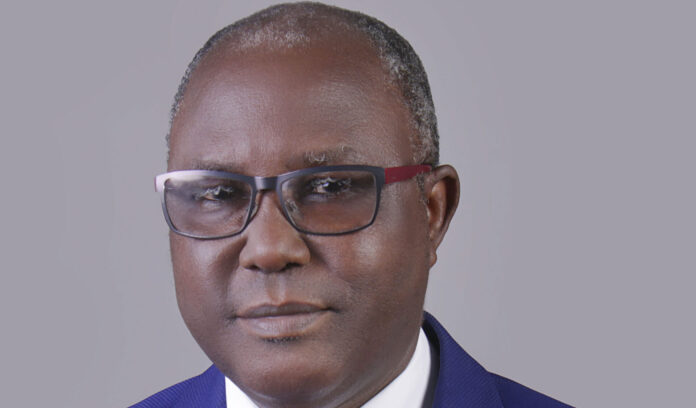
Prof. Obasi, a public policy expert, is of the Department of Public Administration at the Yakubu Gowon University, Abuja (formerly University of Abuja).


