spot_img
spot_imgspot_img
October 7, 2026 - 8:00 PM

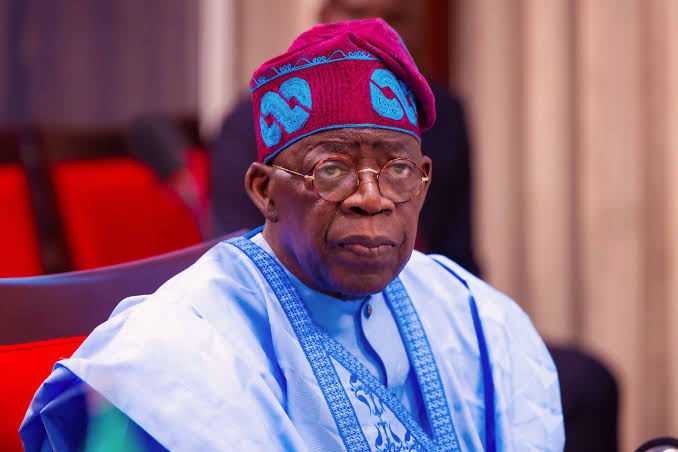
President Tinubu: Building Nigeria brick by brick

—

In governance, opportunity cost is more complex as an empirical construct. Foregone alternatives may not necessarily be foregone. In certain cases, there may be very little wiggle room for such niceties. Allocating resources to critical sectors without neglecting other sectors for the holistic and organic development of the country becomes the potent ideal, verging on emergency.
The proclivity for an integral fettling of Nigeria’s gaping concerns is patent in the ideation and iteration of the Tinubu administration’s priority areas of reforming the economy to deliver sustained inclusive growth; strengthening national security for peace and prosperity; boosting agriculture to achieve food security; unlocking energy and natural resources for sustainable development; enhancing infrastructure and transportation as enablers of growth; focusing on education, health, and social investment as essential pillars of development; accelerating diversification through industrialisation, digitisation, creative arts, manufacturing & innovation, and improving governance for effective service delivery.
It is one reticular hoop. One niche subsisting on the other; one outcome depending on the other and vice versa, and one thread cascading down on the others. A breathing filament runs through the nexus of security, agriculture, education, infrastructure, job creation, and other sectoral motifs. They are one important whole.
Effective security will naturally enhance food production as citizens can go to farm; open arteries of investments, and effectuate the deepening of investments in other sectors, as well as impact the overall well-being of society. Improved agriculture will, in turn, ensure food security, price stability, and hunger mitigation. Infrastructure provision will stimulate investments and create opportunities along multiple channels of growth. And so will investments in education, healthcare, and other sectors all converge to secure Nigeria’s future.
It takes a dexterous laying of bricks to build an edifice. The administration takes a cultivated and diligent brick-by-brick approach to governance; to building that nation we all deserve. It is a steady, well-thought-out, and carefully executed step-by-step fashion as against the harum-sacrum option.
In March, President Bola Tinubu approved the establishment of the Renewed Hope Infrastructure Development Fund (RHIDF) to facilitate effective infrastructure development across the pivotal areas of agriculture, transportation, ports, aviation, energy, healthcare, and education in Nigeria.
The Fund will, among other things, invest in critical national projects that will promote growth; enhance local value-addition, create employment opportunities, and stimulate technological innovation and exports.
It will cover agricultural infrastructure and food security with emphasis on the development of robust agricultural infrastructure networks; ports revitalisation, with premium on the rejuvenation of port facilities and associated infrastructure to streamline operations and enhance the ease of doing business; aviation enhancement, with focus on the revitalisation and modernisation of major airports nationwide; road infrastructure, with some strategic projects like the Lagos-Calabar Coastal Road, the Sokoto-Badagry Road, among other key road projects across the nation, to receive attention, and rail infrastructure, with Lagos-Kano and Eastern rail lines as some of the projects to be prioritised.
In healthcare, President Tinubu is sparing no effort as investments are being funnelled into the sector. Recently, he directed the immediate upgrade of key health infrastructure and equipment across the six geo-political zones. Ten hospitals bestrewing the six geopolitical zones will be revamped to provide exigent and top-tier healthcare services in the lines of radiology, clinical pathology, medical and radiation oncology, and cardiac catheterisation.
On April 3, the President signed into law the Student Loan (Access to Higher Education) (Repeal and Re-enactment) Bill, 2024. And in furtherance of his resolve to secure Nigeria’s socio-economic future by ensuring sustainable higher education and critical skill development for all Nigerian students and the youth, he expeditiously and carefully appointed a management team. This is so that the necessary instruments are put in place for the effective take-off of this all-important Fund.
There is also the plan for school-feeding and other education-specific initiatives to overhaul the entire pedagogy train.
The President has also approved the establishment of the Nigerian Consumer Credit Corporation (CREDICORP) and appointed a chief executive to efficaciously manage the corporation and ensure the expansion of access to credit to all classes of Nigerian citizens, while promoting financial inclusion, and enhancing the quality of life of the Nigerian people as they access the tangibles of prosperity.
The Tinubu administration is executing a full-system upgrade, even with specific attention to some sectors, understanding that Nigerians deserve a full complement of good governance and socio-economic security.
Fredrick Nwabufo is Senior Special Assistant to the President on Public Engagement.
0 0 votes
Article Rating
Subscribe
Notify of
0 Comments
Oldest
Newest Most Voted

Share post:

Subscribe

Latest News

More like this
Related

Improve welfare of Nigerian Teachers 

I was and I am a teacher. I was a Parents Teachers Association hired teacher at Oba Akinbiyi High School (II), Mokola, Ibadan in 1997. Apart from that stint, I also taught briefly at a private secondary school during my National Youth Service at Asaba, Delta State as well as at another private secondary school at Akowonjo area of Lagos state around 2001 / 2002. My late father, Deacon Isaac Oyeniyi Ojo taught for about 40 years across several primary schools in Oyo and Osun sates and retired as a headmaster in 1995. At present, I don’t just teach but train people across various democratic institutions namely election management bodies (INEC and SIECs), political parties, media, national and state legislative assemblies, police, and civil society organisations. Information gleaned from the website of UNESCO says “World Teachers’ Day is held annually on 5 October to celebrate all teachers around the globe. It commemorates the anniversary of the adoption of the 1966 ILO/UNESCO Recommendation concerning the Status of Teachers, which sets benchmarks regarding the rights and responsibilities of teachers, and standards for their initial preparation and further education, recruitment, employment, and teaching and learning conditions. In 2026, the Day marks the 60th anniversary of the Recommendation concerning the Status of Teachers.” In Nigeria, this year's celebration focused on five interconnected pillars: innovation, mobility, Artificial Intelligence, inclusion, and professional excellence. The Minister of State for Education, Prof. Suwaiba Ahmad, announced that the selection process for the 2026 World Teachers' Day awards was digitised to promote transparency, accountability, and efficiency. The celebration includes a symposium, a march-past featuring state flags and cultural attire, and the recognition of 14 awardees, including the first, second, and third best teachers receiving prestigious car gifts, while the best Federal Unity College received a bus. Other prizes include laptops. In commemoration of the World Teachers Day, Dr. Akin Ayeni and I were guests on a breakfast programme on Ekiti 91.5 FM, Ado Ekiti last Monday where we dissected the plights of Nigerian teachers and proffered solutions to them. The host was Ademola Adeleke. I enumerated some of the plights of Nigerian teachers to include: Low wages, insecurity, quackery, inadequate classrooms, lecture theatres, libraries and laboratories, high turnover of staff especially in private schools, high workloads, disrespects from parents, students and even government. I made a proverb on the programme. Elo ni teacher ngba, ti o ntuto s’owo ka’wo osu (meaning, how much does a teacher earn that he or she needs to use saliva to count salary). This was a random joke even among teachers when they used to collect their salary in cash. This day, they receive their wages via online money transfer. The proverb however is meant to drive home the paltry nature of the salaries and wages of teachers cum lecturers. I recall the sticker produced by Academic Staff Union of Universities many years ago which has the inscription “My take home pay cannot take me home”. That’s very instructive. On issue of insecurity, according to Daily Trust of October 1, 2022, “The registrar of the Teachers Registration Council of Nigeria, Professor Josiah Ajiboye, said attacks on schools by insurgents have claimed the lives of more than 2,295 teachers in the North East between 2009 and 2022.” The PUNCH in its June 5, 2026 online edition reported that “An estimated 603 students and teachers have been kidnapped in seven mass abductions across schools in Nigeria between March 2024 and May 2026 under President Bola Tinubu, despite the N145bn Safe Schools Initiative.” Recall that on May 15, 2026, a total of 46 persons – seven teachers and 39 students – were abducted from Community High School Ahoro-Esinele and Yawota Baptist Nursery and Primary School in Oriire Local Government Area of Oyo State. Thankfully, most of them were rescued though two teachers were murdered by the bandits.  Michael Oyedokun, was reportedly beheaded, while John Olaleye, was shot dead during the attack. It is noteworthy that some university lecturers have also been abducted in the past. The heavy workloads and low wages have resulted into brain drain and high turnover of teaching staff across our academic institutions. Many education graduates don’t want to teach. The lecturers in tertiary institutions are leaving in droves for greener pasters abroad. Many teachers today take the job as a last resort when better options are not available. Many of the private schools recruit untrained teachers. They side step the federal government policy of having every teacher certified by Teachers Registration Council of Nigeria. Recall that the TRCN regulates the teaching profession in Nigeria by setting standards, accrediting teacher education programmes, registering qualified teachers, and enforcing professional ethics.  It establishes national minimum standards for teacher education and monitors teacher training institutions, including Colleges of Education, university faculties, polytechnic schools of education, and the National Teachers Institute. Unlike in the 20th century when teachers in Nigeria were widely respected and seen as mini-God, in contemporary times, there have been situation where pupils and students openly abuse teachers, bully them and even beat them up. Some irresponsible parents have even gone to school to harass and molest teachers for caning or meting out corporal punishments to their wards and children. Thus, many teachers now work in an atmosphere of fear. Mrs. Comfort Fasunwon is a multiple award-winning teacher in Ondo State, here is an excerpt from what she wrote on her Facebook wall in commemoration of the 2026 World Teachers Day “To my fellow teachers, today.  Teaching is not always easy. There are days when the workload is heavy, resources may be limited, and the results of our efforts may not be immediately visible. Yet we continue to show up, teach, encourage, correct, inspire and believe in our students. Sometimes, the greatest reward of a teacher is not a certificate or trophy. It is seeing a child who once struggled begin to understand. It is watching a student grow in confidence. It is meeting a former student years later and hearing the words, “Ma or sir, you made a difference in my life.” My plead to government at all level as well as private schools’ owners is to ensure that their schools are well resourced and staff welfare is made paramount. Professionalism should be their watchwords. Teachers’ rewards shouldn’t be in heaven; a foretaste of that should be here on earth. Best wishes to fellow teachers and nation builders. Remember the popular song that says “Anyone who hates teachers will homeschool his or her  child” I.G: @jideojong  

Over 22,000 Arms Recovered Across Nigeria in 10 Years – NCCSALW

The National Centre for the Control of Small Arms...

NBA Calls for End to Torture, Deaths in Nigeria’s Detention Centres

The Nigerian Bar Association (NBA) has called for tougher...

Kari, Tinubu – APC and Nigeria’s Years of Devaluation

Whenever I think about 2015, I remember two births....
Join us on
For more updates, columns, opinions, etc.
WhatsApp
0
Would love your thoughts, please comment.x
()
x