

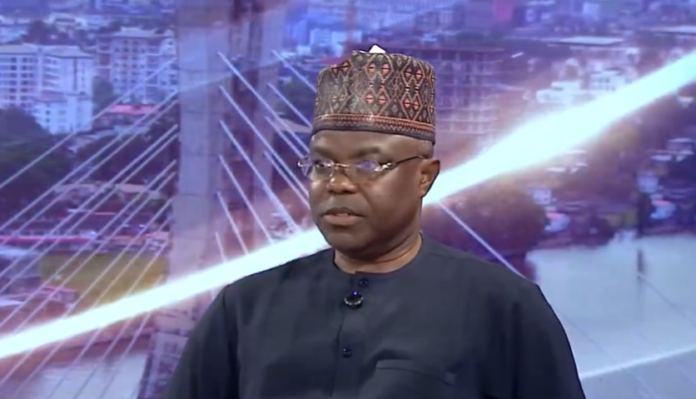
Senior Advocate of Nigeria, Adeyinka Olumide-Fusika, has alleged that politicians in Nigeria divert public funds to finance election campaigns, making it difficult for opposition parties and candidates outside government to compete on a level playing field.
Olumide-Fusika made the assertion during an interview on ARISE NEWS monitored by The News Chronicle, where he spoke on the financing of political campaigns and the controversy surrounding the freezing of government accounts during election periods.
According to the senior lawyer, although it may be difficult to trace every transaction, the widespread use of public funds for political campaigns has become an open secret.
“It is undeniable, unless we are deceiving ourselves, that most of these politicians fund their campaigns, especially those who spend heavily despite legal restrictions, with government money,” he said.
He argued that politicians who are not in government are often unable to match the financial strength of incumbents because they lack access to state resources.
“So when people talk about political structure, they are talking about people who have access to free government funds—money that ought to be used for education, healthcare and other public services but is instead diverted into election campaigns,” he added.
Olumide-Fusika further claimed that there have been instances where government funds were allegedly used to finance election petitions, including the payment of legal fees and other political expenses.
Speaking on the role of the Economic and Financial Crimes Commission, he expressed reservations about the anti-graft agency’s authority to freeze state government accounts.
“I don’t personally believe that the EFCC is a super state that has the right to freeze state government accounts. I don’t subscribe to that,” he said.
The senior advocate argued that even if there were legal provisions empowering the commission to take such action, he would still not support the freezing of government accounts, insisting that state accounts should not be treated in the same manner as private accounts linked to corruption investigations.


