

You cannot inspect the wreckage of 2020 closely without seeing the rubble of spectacularly failed forecasts by reputable seers.
I’ve seen, in many forums, fans of renowned predictors trying very hard to defend the reputation of a number of these seers against the onslaught of mocking videos showing just how wide off the mark were their predictions for last year.
There’s no need to fuss. And I’m pleased that not one of the high-profile seers involved has, so far, tried to make any excuses or to defend themselves. There’s nothing to defend, really, other than to swallow the humble pie, flush it down with a warm glass of lemonade and move on.
If 2020 was not the end of the world – my goodness it almost looked like it was! – then we can look back with some humility and gratitude and admit that every business, including the business of futurology, has its hazards. I also goofed “bigly”, to borrow that Trumpian phrase, not in the flippant Trumpian way, but in all its solemnity.
This time, last year, I said that Comrade Adams Oshiomhole (do you still remember him?) would survive the nasty war with his protege, Godwin Obaseki, because the forces behind both parties, especially the former, would do everything to prevent a mutually assured destruction.
I predicted that Oshiomhole would be kept as Chairman of the All Progressives Congress (APC), not for his strength or any intrinsic value, but for his strategic weakness in the rat race for 2023. That forecast failed and it is a matter of camaraderie regret that Oshiomhole’s ambition, if not his continued political relevance, has been buried in an unmarked grave.
I also predicted that President Donald Trump would be re-elected on account of the relatively strong performance of the US economy at the time. It was a forecast made with a heavy heart; yet, if COVID-19 did any good thing at all last year, it was not only its monumental capacity to upturn cocksure predictions of a Trump re-election, but also the epiphany of saving the US and the world from a potentially apocalyptic Trump second term.
Of course, Trump still has a different calendar and a different set of election results, which he would be free to use in Trumpistan, from January 20, after he would have been escorted from the White House. But the rest of the world is relieved to move on, hoping that the US knows that it won’t be taken seriously again until and unless Trump faces a trial.
OK, the Summer Olympic Games were postponed and along with them our misery of a medal-less outing. But there’s still something that turned out right: parts of Nigeria’s land borders were re-opened, just as I had predicted.
Also, the rate of inflation was as significantly high as predicted and with the combined effects of COVID-19 and falling oil prices leaving government in dire financial straits by the end of the year, the government, as foretold, savagely raided corporate and individual pockets, leaving millions poorer and desperate.
Like a number of my chastened compatriots, I have a weakened appetite to forecast. But isn’t it said that we master the danger we overcome? And why fear to walk where angels fear to tread when angels, unlike mortals, lack the gift of hindsight?
2021 will be under the shadow of 2020 well beyond the second quarter. COVID-19, that wrecking ball which evaded the world’s telescope last year, will continue to dominate the headlines.
Developed countries will struggle with the second wave of the pandemic compounded by winter.Increased production and rollout of the vaccine will, however, cut the rates of infection, reduce fatalities among vulnerable populations and give some countries a chance to restart their economies. Concerns will remain about the possibilities of mutations, the prospects of a third wave and the safety and viability of the new vaccines.
The history of pandemics suggests that they don’t die easily. The interconnectedness of the modern world, especially with cheaper transport and faster connections, also means that viruses travel faster and spread quicker.
COVID-19 is not good news for Nigeria not just for the toll it has already taken on lives and the economy, but also because the country itself has a cocktail of underlying illnesses that will make the virus fester this year.
Although official statistics claim that 1,324 have died of COVID-19 as of today, the number is much higher and the rate of infection far worse. With health facilities in the epicentres stretched to their limit and governments at both the federal and state levels unwilling or unable to take tougher measures because of a combination of poor data and potential political backlash, there will be more unreported or under-reported fatalities.
Yet, it will be increasingly difficult to conceal the cause of death, where they are COVID-19 related. As we grope for a solution, the government will, at some point, be forced to discuss with either China, India or the Soviet Union for small quantities of discounted vaccines for the larger population, while the rich will obtain the more reputable brands through the backdoor.
If you wish, you may believe Lai Mohammed that the economy will recover soon, but do yourself the favour of asking, how? The 2021 budget is benchmarked at $40bpd, which is fair since the most optimistic forecasts peg prices at $46. The problem, however, is that the budget of N13.8trillion carries over one-third deficit on top of mounting liabilities already threatening to drown the government.
It’s improbable that government oil revenue will improve sufficiently and the impact of COVID-19 on all but the ICT sector will further dampen the prospects of any significant revenues from taxes to cushion the shortfall or much change left to defend the naira. Not with sterned-faced IMF and World Bank officials currently lining the corridors of the Central Bank of Nigeria.
Also, food prices will remain high, largely as a result of insurgency in many parts of the North East and general insecurity in the farm belt. As a result, inflation will remain a big headache and savings, either as deposits or pension funds, will be significantly eroded. There’ll be no safety in government bonds or treasury bills either.
As the government enters its lame-duck phase, the rich few desperate to protect their funds will increasingly prioritise special foreign-currency-denominated portfolios created by a number of elite banks or look for safer havens outside these shores.
The African Continental Free Trade Area (AfCFTA) will play big this year. Although implementation is only in its infancy, the agreement will eliminate 90 percent of tariffs on goods, increase the continent’s income by about $450billion in the next 15 years, and lift an estimated 30million Africans out of poverty.
The prospects of bigger intra-African trade should be good news for Nigeria, one of the continent’s powerhouses. But that’s hardly the case. The country famous for consuming what it does not produce. On top of that, it is cursed with an elite that has the most pristine of exotic appetites. Over one year of border closure has not changed much. And now the borders must, willy-nilly, be reopened.
When AfCFTA moves to a higher gear this year, there will be relief in the Southern part of the country where a greater volume of cross-border trade takes place, and angst in some quarters that the open sesame brought on by AfCFTA and the reopening of the borders could roll back gains from reduced food imports.
The government will of course respond either by its silence or with its typical half-hearted measures that will dissatisfy both parties but leave the black market better off.
Even though President Muhammadu Buhari has promised that this is the year when he would focus on completing a number of his legacy projects, preparations for 2023 will almost certainly fast-track the government’s lame-duck mode. He will change a few cabinet members reluctantly, while a significant number will keep one foot in government and the other out.
Slowly, but steadily, Nigerians are beginning to look beyond the Buhari years; to live as if he wasn’t there. But this is the year when Buhari’s road to a lonely retirement will also start in earnest. It will be signposted by a last, maddening rush to curry his favour, and then, it’s all past tense.
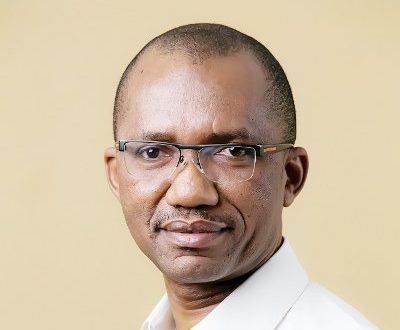
Ishiekwene is the MD/Editor-In-Chief of The Interview


