

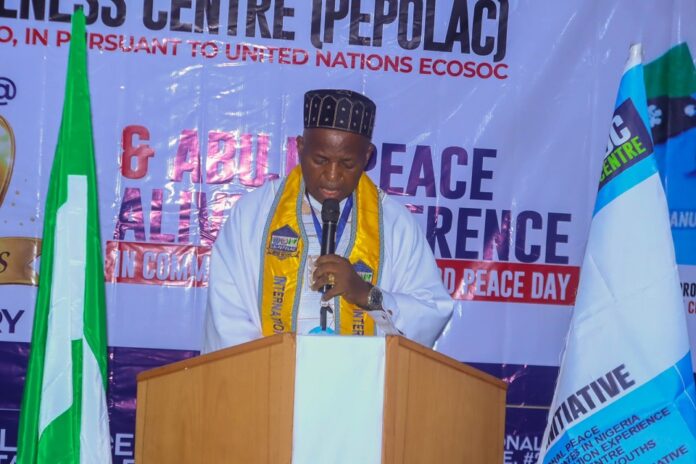
The Peace and Positive Living Awareness Centre (PEPOLAC) has identified rising unemployment, poverty, illiteracy and social exclusion, particularly among young people, as key factors contributing to the worsening insecurity in Nigeria.
The group also decried the erosion of moral values, the weakening of family institutions and the declining culture of patriotism, saying these have negatively affected societal harmony.
In a communiqué issued by the Peace Diplomat and International President of PEPOLAC, Bishop Dr Festus Ozoemena, the group blamed the lack of national unity and peaceful coexistence on ethnic, religious and political divisions.
According to the communiqué, the proliferation of illicit arms and light weapons has fuelled violence in several communities across the country.
The group further lamented that women, children, widows, persons living with disabilities and other vulnerable groups continue to bear a disproportionate burden of insecurity.
“The spread of misinformation, disinformation and hate speech through digital and social media platforms has become a major driver of tension and social unrest.
“Traditional rulers, faith-based organisations and community leaders remain critical stakeholders in grassroots peacebuilding efforts.
“There is an urgent need to institutionalise peace education and conflict prevention mechanisms at all levels of society.
“Sustainable peace cannot be achieved without justice, equity, good governance, accountability and the inclusive participation of all citizens.
“Community ownership of peace initiatives remains essential to addressing localised security challenges.
“Climate change, environmental degradation and competition over natural resources are emerging contributors to communal conflicts.
“Strong partnerships among government, civil society, international organisations and the private sector are indispensable for effective peacebuilding.”
The group also expressed concern over the persistent loss of innocent lives, the destruction of property, the growing displacement of people and the worsening humanitarian crisis affecting many communities.
It identified additional concerns, including the declining public trust in institutions responsible for maintaining law and order, the increasing commercialisation and politicisation of security matters, and inadequate investment in preventive peacebuilding and early warning systems.
Other issues highlighted include widening socio-economic inequalities that fuel grievances and social tensions, poor implementation of existing peacebuilding and conflict management policies, and the threat insecurity poses to Nigeria’s economic growth, foreign investment and international reputation.
The communiqué called on the federal, state and local governments to prioritise preventive peacebuilding by institutionalising community-based conflict prevention mechanisms. It also urged governments to strengthen intelligence gathering, early warning and rapid response systems nationwide.
The group further called on government to invest heavily in youth empowerment, vocational training, entrepreneurship and job creation initiatives, implement policies that promote equitable development and reduce poverty, and strengthen collaboration among security agencies to improve operational efficiency.
PEPOLAC also urged traditional and religious leaders to intensify interfaith and intercultural dialogue to promote tolerance and peaceful coexistence. It encouraged them to use their platforms to discourage hate speech, violence and divisive rhetoric, serve as impartial mediators in resolving communal disputes, and reinforce moral values and ethical leadership within their communities.
The group called on educational institutions to integrate peace education, civic responsibility and conflict resolution into school curricula, promote the values of tolerance, empathy, patriotism and responsible citizenship, and encourage research and innovation in peacebuilding and conflict management.
It also urged young people and women to participate actively in peacebuilding initiatives at the community, national and international levels, reject violent extremism, criminality and other social vices, embrace dialogue, entrepreneurship and productive engagement, and use digital platforms responsibly by avoiding the spread of misinformation.
While calling on civil society organisations and development partners to strengthen grassroots peace initiatives and community resilience programmes, expand advocacy campaigns promoting social cohesion and national unity, support capacity-building efforts for local peace actors, and provide technical and financial assistance for sustainable peace programmes, the group reaffirmed its commitment to promoting peace in Nigeria, across Africa and globally.
PEPOLAC pledged to strengthen partnerships for sustainable peace and development, promote dialogue, mediation and peaceful coexistence, empower communities through peace education and advocacy, foster a culture of tolerance, justice and mutual respect, support vulnerable populations affected by conflict, and advance the Sustainable Development Goals, particularly those relating to peace, justice and strong institutions.
“As we commemorate the 2026 World Peace Day event, we urge all stakeholders to renew their commitment to building communities where peace is not merely an aspiration but a lived reality for all.
“Together, we can transform insecurity into stability, division into unity and fear into hope. If we keep peace alive in our communities, we shall secure peace for our nation and contribute meaningfully to global peace.”


