

There are moments in the history of every profession when the actions of one individual compel the entire fraternity to pause, reflect, and confront uncomfortable truths. Nigerian journalism recently found itself in one such moment.
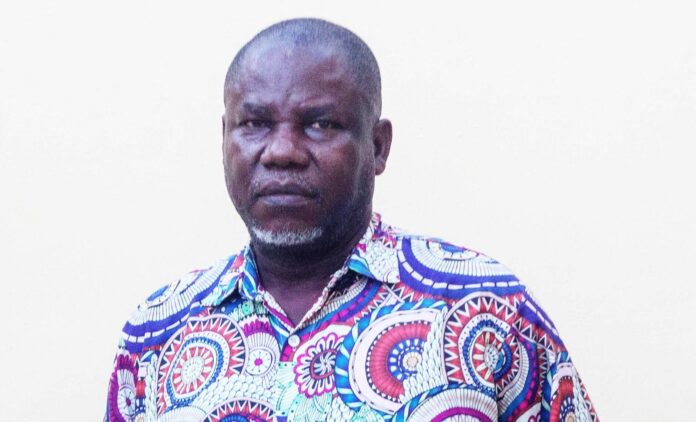
The widely reported confession by journalist and publisher Ejike Ofoegbu that he fabricated stories concerning Anambra State Governor Chukwuma Soludo and his son, Ozonna, before later retracting them and tendering a public apology should not be viewed merely as another fleeting media controversy. Rather, it should serve as a wake-up call to everyone who proudly bears the title of journalist.
The episode is a painful reminder that while journalism often comes under attack from politicians, governments, pressure groups and powerful interests seeking to suppress the truth, one of the gravest injuries the profession can suffer is that inflicted from within. Indeed, one injury done to journalism by one journalist is an injury to all journalists. The foregoing view may sound like an exaggeration, but it is not.
Unlike many other professions, journalism survives almost entirely on one priceless asset: credibility. Newspapers do not sell merely because they are printed on paper. Television stations are not watched simply because they possess cameras. Digital news platforms are not visited merely because they have attractive websites. They command audiences because people believe that what they publish has been painstakingly verified. The day that confidence disappears, journalism begins to lose its soul.
According to reports, Ofoegbu admitted that the stories he published were false and apologized for circulating them. Whether the motivation was the pursuit of online traffic, financial benefit or poor professional judgment is ultimately secondary to the larger issue. What matters is that stories reportedly presented as factual were later acknowledged to be fabricated.
That should alarm every conscientious journalist. Journalism has room for mistakes, but it has absolutely no room for fabrication. The distinction is important.
Mistakes happen despite honest efforts to verify facts. Fabrication happens despite knowing the truth or despite failing to make any genuine effort to establish it. One deserves correction. The other demands accountability.
In fact, the consequences of fabricated journalism extend far beyond those directly affected by false reports. Certainly, individuals whose names are dragged through the mud suffer enormous reputational damage. Their families endure emotional distress. Businesses may lose customers. Political careers may be threatened. Yet perhaps the greatest casualty is journalism itself.
Every fabricated story becomes fresh ammunition for those who already distrust the media. Every false exclusive strengthens those who dismiss legitimate investigations as fake news. Every unethical publication weakens public confidence in ethical journalism. This is why one journalist’s misconduct becomes every journalist’s burden.
Across Nigeria are thousands of journalists who remain fiercely committed to professional ethics despite difficult working conditions. They spend days investigating stories, interviewing multiple sources, examining documents, seeking opposing views and verifying facts before going to press.
Many receive poor salaries. Some endure intimidation. Others face arrests and lawsuits simply for exposing wrongdoing. A few have even paid with their lives.
It is therefore profoundly unfair that years of sacrifice by these dedicated professionals can be overshadowed by the unethical conduct of a few individuals who abandon the principles upon which journalism stands.
One careless matchstick can reduce an entire building to ashes. Likewise, one fabricated story can ignite public distrust that takes years for the profession to extinguish. The digital age has unfortunately made matters worse.
News is now measured in clicks, impressions, engagement and virality. The pressure to break exclusive stories has never been greater. Social media rewards sensational headlines more generously than measured reporting. Algorithms favour speed over caution.
Within such an environment, some journalists may begin to see verification as an inconvenience rather than a professional obligation.
Nothing could be more dangerous. The first duty of journalism is not to be first. Its first duty is to be accurate. A newspaper that reports the truth tomorrow is infinitely more valuable than one that publishes falsehood today.
Unfortunately, this timeless principle is increasingly being sacrificed on the altar of digital competition. Editors therefore have an even greater responsibility than before. Every sensational claim should trigger heightened scrutiny.
Every anonymous source should invite deeper verification. Every explosive allegation should compel editors to ask difficult questions. Can this information be independently confirmed? Have documentary records been examined? Has the other side been contacted? What evidence supports these claims? These questions are not obstacles to journalism. They define journalism.
Media proprietors also have responsibilities. They should resist the temptation to judge editorial success purely through web traffic and advertising revenue. When commercial interests become more important than editorial integrity, the newsroom slowly transforms from a public institution into a content factory. Such a transformation ultimately serves neither journalism nor society. Journalism schools likewise have important lessons to draw from this unfortunate episode.
Professional ethics should never be treated as an academic ritual taught merely to satisfy curriculum requirements. Rather, ethics must become the heartbeat of journalism education. Young reporters must understand from their very first lecture that journalism is unlike creative writing. Novelists create stories. Journalists discover them. Novelists imagine characters. Journalists verify facts. The moment those boundaries disappear, journalism loses its identity.
Professional associations within Nigeria’s media industry equally have a role to play. Ethical violations should neither be ignored nor selectively punished. Accountability strengthens journalism; it does not weaken it.
The public also deserves mention. Readers must become more discerning consumers of news. Every sensational report should provoke thoughtful questions rather than immediate sharing. Citizens should support credible media organizations that consistently demonstrate accuracy, fairness and accountability instead of rewarding sensationalism with attention.
Ultimately, journalism remains one of democracy’s strongest pillars because society entrusts journalists with extraordinary responsibility. That trust cannot coexist with deliberate falsehood.
The Ofoegbu episode should therefore become compulsory reading in every newsroom across Nigeria. Not because one individual should forever remain the subject of condemnation, but because every profession advances by honestly confronting its failures. Doctors study medical errors to improve healthcare. Engineers investigate collapsed buildings to prevent future disasters. Pilots analyze air crashes to improve aviation safety. Journalists must likewise examine ethical failures to strengthen professional standards. This is not about celebrating another person’s downfall. It is about protecting journalism itself.
The profession has produced countless courageous men and women who have exposed corruption, challenged dictatorship, defended democracy and paid dearly for pursuing the truth. Their sacrifices should never be diminished by acts that undermine the very values they stood for.
As journalists, our names may appear in different newspapers, broadcast stations and online platforms, but our collective reputation is shared. Whenever one journalist chooses fabrication over verification, the stain does not remain confined to one newsroom. It splashes across the entire profession.
That is why the recent episode should not be dismissed as someone else’s embarrassment. It is a cautionary tale for every reporter, editor, publisher and media owner. This is as journalism has only one enduring currency, and that currency is credibility. Once credibility is compromised, every journalist becomes poorer.
Indeed, one injury done to journalism by one journalist is truly an injury to all journalists.


