spot_img
spot_imgspot_img
October 7, 2026 - 7:14 PM

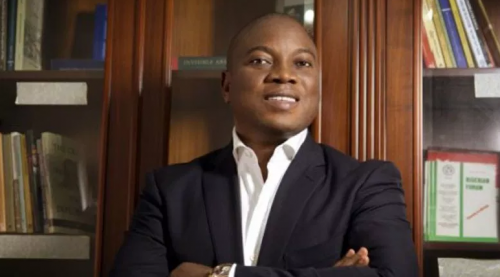
Ondo Governorship Poll: Kingsley Kuku Sets Eyes on PDP Ticket

—

The Ondo State Governorship election will be due in about a year’s time. But, the ground work in some of the interested political parties is gradually gaining momentum.

Though Governor Rotimi Akeredolu, a Senior Advocate of Nigeria (SAN), is interested in retaining his position on the platform of his party, the All Progressives Congress (APC), there are other emerging aspirants with the party who are at the moment, engaging key stakeholders in serious consultations.

Like in the APC, the battle for the governorship ticket does not promise to be easy either in the opposition Peoples Democratic Party (PDP). The party’s candidate in the 2016 poll, Eyitayo Jegede (SAN) is busy reactivating his political machinery. This time, he will find in Kingsley Kuku, an Ijaw, a major obstacle to getting the PDP ticket again.

Apart from Kuku, the PDP National Vice Chairman, South-West, Dr Eddy Olafeso is eyeing the ticket. Names like Prince John Ola Mafo, Hon. Banji Okunomo, Barr. Sola Ebiseni, Otunba Bamidele Akingboye, Hon. Adefemiwa Tope, Hon.Erewa Goddy, Sen. Boluwaji Kunlere, Comr. Dayo Fadahunsi, Chief Rotimi Ibidapo, Engr. Ogunwa Oboli, Hon. Saka Lawal, Hon. Kolade Akinjo, Hon. Femi Adekanbi, Mr.Oshin Damilola, Oniya Ajibola, Engr Olanrewaju Oje and Barr. Adebimpe Olatemiju are also said to be interested in governing Ondo.

Of all of them, Kuku appears to be the only aspirant with a revolutionary credential. Based on his political antecedents, this Ijaw activist is seeking the governorship of Ondo as an instrument to revolutionise the affairs of the state for the highest good of the peoples of the state. Immanuel Kant, the 18th-century German philosopher, believed in revolution as a force for the advancement of humankind. Kant believed that revolution was a ‘’natural’’ step in the realisation of a higher ethical foundation for society. Just as this idea helped in serving as a basis for the American and French revolutions, that is obviously what Kuku is seeking in Ondo.

Within the context of the Kuku politics, a revolutionary is a change agent. S/he causes a complete or dramatic change. Kuku was born in Arogbo, the traditional headquarters of the Ijaw ethnic nationality in Ondo, the base of Egbesu as far as the Ijaw spirituality is concerned. He had his early education in Arogbo before moving out of the community to further his study.
Kuku attended Patrick Catholic Primary School, Arogbo (1977–1983). He had his secondary education at Ijaw National High School, Arogbo (1983–1988). He later proceeded for his higher education and obtained a Bachelor of Education degree in English Language at the Ondo State University, Ado Ekiti, now Ekiti State University in 1995; and M.Sc. in International Relations and Strategic Studies at Igbinedion University, Okada, Edo State (2011–2012). He also had a stint at University of Cambridge where he got a certificate in Dispute Resolution in 2008. In recognition of his role in the advancement of Nigeria’s fledgling democracy, Kuku was conferred with an Honorary Doctorate in Political Science – Phd (Honoris Causa) in November 2013 by the Igbinedion University.
The ebullient governorship aspirant  embraced activism early in his university days as one of the socio-politically conscious young Nigerian students who were agitated about the then military rule and dictatorship in the country. He was a student leader and one time National Mobilisation Officer of the National Association of Nigerian Students (NANS) who was active in the campaign and struggle for the demilitarisation of the Nigerian society and absolute return of democratic governance.

His experience in the leadership of the apex students’ body set a platform for him to be at the vanguard of many organisations that were set out to tackle injustice and maladministration within the socio-political structure the country that is today wobbling again. He was a pioneer member and part of the collegiate leadership of the radical Ijaw Youth Council (IYC), and was actually the second spokesman of the group. He was signatory to the Kaiama Declaration, a document that was like a political bible in the struggle of the Ijaw people for justice in the Niger Delta.

While Kuku still has remains a vocal voice and an active stakeholder for the development and restoration of enduring peace in the oil-polluted Niger Delta, after his involvement in the IYC, he  contested and won as a member of the Ondo State House of Assembly and became Chairman of the House Committee on Information for four years. After, he was at various times Special Assistant and Head of the Conflict Management Unit at the Niger Delta Development Commission (NDDC); a member of the Presidential Committee on Amnesty; and Secretary of the Presidential Committee on Peace and Conflict Resolution in the Niger Delta.

In January 2011, he was appointed Special Adviser to former President Goodluck Jonathan, on the Niger Delta and Chairman Niger Delta Presidential Amnesty Programme. Jonathan reappointed him into the same position in July 2011 after the general elections in 2011. As the Chairman of the Presidential Amnesty Programme for ex-agitators in the oil-bearing communities, Kuku oversaw the disarmament and demobilisation of 30,000 ex-agitators and he is superintending the skilling and reintegration of these youths into civil society. The ongoing reintegration component of the Amnesty Programme, which is geared towards building capacity in the deprived Niger Delta youths that are enrolled in the Presidential Amnesty Programme, has so far attained considerable measure of its set objectives.

On the third anniversary of the amnesty programme in 2012, Kuku confirmed at a press briefing that the peace being restored to the oil and gas region, through the coordination of the Programme, has significantly increased the production capacity of oil operators in the environmentally despoiled region and saved Nigeria amount running in billions of dollars in oil revenue within just three years.

The ethnic composition of this 43-year-old state that was created on February 3, 1976, is largely from the Yoruba subgroups of the Akoko, Akure, Okitipupa, Irele, Ilaje, Ondo, and Owo peoples. Ijaw such as Apoi and Arogbo populations inhabit the coastal areas, and a sizable number of the people who speak a variant of the Yoruba language similar to Ife dialect reside in Oke-Igbo.

Ondo needs a potential liberator like Kuku to give her economy a shot in the elbow. At the moment, agriculture is the mainstay of the economy, with the chief products being cotton and tobacco from the north, cacao from the central part, and rubber and timber (teak and hardwoods) from the south and east; palm oil and kernels are cultivated for export throughout the state.

Without the doubt, Ondo is Nigeria’s chief cocoa-producing state. Other crops include rice, yams, corn (maize), coffee, taro, cassava (manioc), vegetables, and fruits. Traditional industries include pottery making, cloth weaving, tailoring, carpentry, and blacksmithing. Mineral deposits include kaolin, pyrites, iron ore, petroleum, and coal. There is a textile mill located at Ado-Ekiti and a palm-oil processing plant at Okitipupa.

For now, will the PDP give Kuku its gubernatorial ticket to fight for the liberation of Ondo? That will certainly depend on what the party players will make out of their congress for the recruitment of their standard bearer. Till then, Kingsley Kuku, an Ijaw of Ondo has his eyes on the governorship of the sun shine state.

0 0 votes
Article Rating
Subscribe
Notify of
0 Comments
Oldest
Newest Most Voted

Share post:

Subscribe

Latest News

More like this
Related

Improve welfare of Nigerian Teachers 

I was and I am a teacher. I was a Parents Teachers Association hired teacher at Oba Akinbiyi High School (II), Mokola, Ibadan in 1997. Apart from that stint, I also taught briefly at a private secondary school during my National Youth Service at Asaba, Delta State as well as at another private secondary school at Akowonjo area of Lagos state around 2001 / 2002. My late father, Deacon Isaac Oyeniyi Ojo taught for about 40 years across several primary schools in Oyo and Osun sates and retired as a headmaster in 1995. At present, I don’t just teach but train people across various democratic institutions namely election management bodies (INEC and SIECs), political parties, media, national and state legislative assemblies, police, and civil society organisations. Information gleaned from the website of UNESCO says “World Teachers’ Day is held annually on 5 October to celebrate all teachers around the globe. It commemorates the anniversary of the adoption of the 1966 ILO/UNESCO Recommendation concerning the Status of Teachers, which sets benchmarks regarding the rights and responsibilities of teachers, and standards for their initial preparation and further education, recruitment, employment, and teaching and learning conditions. In 2026, the Day marks the 60th anniversary of the Recommendation concerning the Status of Teachers.” In Nigeria, this year's celebration focused on five interconnected pillars: innovation, mobility, Artificial Intelligence, inclusion, and professional excellence. The Minister of State for Education, Prof. Suwaiba Ahmad, announced that the selection process for the 2026 World Teachers' Day awards was digitised to promote transparency, accountability, and efficiency. The celebration includes a symposium, a march-past featuring state flags and cultural attire, and the recognition of 14 awardees, including the first, second, and third best teachers receiving prestigious car gifts, while the best Federal Unity College received a bus. Other prizes include laptops. In commemoration of the World Teachers Day, Dr. Akin Ayeni and I were guests on a breakfast programme on Ekiti 91.5 FM, Ado Ekiti last Monday where we dissected the plights of Nigerian teachers and proffered solutions to them. The host was Ademola Adeleke. I enumerated some of the plights of Nigerian teachers to include: Low wages, insecurity, quackery, inadequate classrooms, lecture theatres, libraries and laboratories, high turnover of staff especially in private schools, high workloads, disrespects from parents, students and even government. I made a proverb on the programme. Elo ni teacher ngba, ti o ntuto s’owo ka’wo osu (meaning, how much does a teacher earn that he or she needs to use saliva to count salary). This was a random joke even among teachers when they used to collect their salary in cash. This day, they receive their wages via online money transfer. The proverb however is meant to drive home the paltry nature of the salaries and wages of teachers cum lecturers. I recall the sticker produced by Academic Staff Union of Universities many years ago which has the inscription “My take home pay cannot take me home”. That’s very instructive. On issue of insecurity, according to Daily Trust of October 1, 2022, “The registrar of the Teachers Registration Council of Nigeria, Professor Josiah Ajiboye, said attacks on schools by insurgents have claimed the lives of more than 2,295 teachers in the North East between 2009 and 2022.” The PUNCH in its June 5, 2026 online edition reported that “An estimated 603 students and teachers have been kidnapped in seven mass abductions across schools in Nigeria between March 2024 and May 2026 under President Bola Tinubu, despite the N145bn Safe Schools Initiative.” Recall that on May 15, 2026, a total of 46 persons – seven teachers and 39 students – were abducted from Community High School Ahoro-Esinele and Yawota Baptist Nursery and Primary School in Oriire Local Government Area of Oyo State. Thankfully, most of them were rescued though two teachers were murdered by the bandits.  Michael Oyedokun, was reportedly beheaded, while John Olaleye, was shot dead during the attack. It is noteworthy that some university lecturers have also been abducted in the past. The heavy workloads and low wages have resulted into brain drain and high turnover of teaching staff across our academic institutions. Many education graduates don’t want to teach. The lecturers in tertiary institutions are leaving in droves for greener pasters abroad. Many teachers today take the job as a last resort when better options are not available. Many of the private schools recruit untrained teachers. They side step the federal government policy of having every teacher certified by Teachers Registration Council of Nigeria. Recall that the TRCN regulates the teaching profession in Nigeria by setting standards, accrediting teacher education programmes, registering qualified teachers, and enforcing professional ethics.  It establishes national minimum standards for teacher education and monitors teacher training institutions, including Colleges of Education, university faculties, polytechnic schools of education, and the National Teachers Institute. Unlike in the 20th century when teachers in Nigeria were widely respected and seen as mini-God, in contemporary times, there have been situation where pupils and students openly abuse teachers, bully them and even beat them up. Some irresponsible parents have even gone to school to harass and molest teachers for caning or meting out corporal punishments to their wards and children. Thus, many teachers now work in an atmosphere of fear. Mrs. Comfort Fasunwon is a multiple award-winning teacher in Ondo State, here is an excerpt from what she wrote on her Facebook wall in commemoration of the 2026 World Teachers Day “To my fellow teachers, today.  Teaching is not always easy. There are days when the workload is heavy, resources may be limited, and the results of our efforts may not be immediately visible. Yet we continue to show up, teach, encourage, correct, inspire and believe in our students. Sometimes, the greatest reward of a teacher is not a certificate or trophy. It is seeing a child who once struggled begin to understand. It is watching a student grow in confidence. It is meeting a former student years later and hearing the words, “Ma or sir, you made a difference in my life.” My plead to government at all level as well as private schools’ owners is to ensure that their schools are well resourced and staff welfare is made paramount. Professionalism should be their watchwords. Teachers’ rewards shouldn’t be in heaven; a foretaste of that should be here on earth. Best wishes to fellow teachers and nation builders. Remember the popular song that says “Anyone who hates teachers will homeschool his or her  child” I.G: @jideojong  

Over 22,000 Arms Recovered Across Nigeria in 10 Years – NCCSALW

The National Centre for the Control of Small Arms...

NBA Calls for End to Torture, Deaths in Nigeria’s Detention Centres

The Nigerian Bar Association (NBA) has called for tougher...

Kari, Tinubu – APC and Nigeria’s Years of Devaluation

Whenever I think about 2015, I remember two births....
Join us on
For more updates, columns, opinions, etc.
WhatsApp
0
Would love your thoughts, please comment.x
()
x