

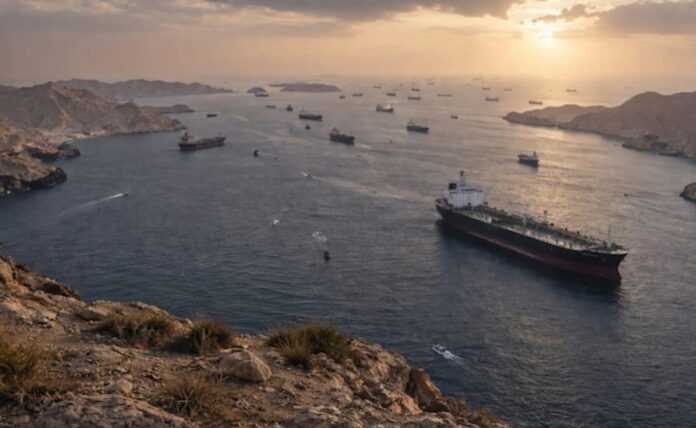
Oman has dismissed speculation about the possible imposition of transit fees on vessels passing through the Strait of Hormuz, reaffirming its commitment to maintaining free and secure navigation through the strategic waterway.
Oman’s Foreign Minister, Sayyid Badr bin Hamood Albusaidi, stated this on Thursday during a joint ministerial meeting between the Gulf Cooperation Council (GCC) member states and the United States in Bahrain.
Albusaidi said any future arrangements concerning the Strait of Hormuz would not include transit charges, stressing that Oman remained committed to upholding international maritime obligations.
He noted that the country’s position was consistent with international law and the provisions of the United Nations Convention on the Law of the Sea (UNCLOS).
According to him, Oman, as one of the littoral states bordering the Strait of Hormuz, has a special responsibility to support international efforts aimed at safeguarding maritime navigation and regional stability.
The minister also expressed support for the memorandum of understanding signed between the United States and Iran, describing it as an important step toward achieving lasting peace and stability in the region.
He underscored the need to restore and preserve freedom of navigation through the Strait of Hormuz and ensure the uninterrupted flow of maritime traffic.
Meanwhile, Iranian Foreign Minister Seyed Abbas Araghchi and Albusaidi on Thursday emphasised the importance of continued coordination and cooperation in managing the strategic waterway.
The Strait of Hormuz remains one of the world’s most important maritime routes, serving as a key passage for global energy supplies and international trade.


