

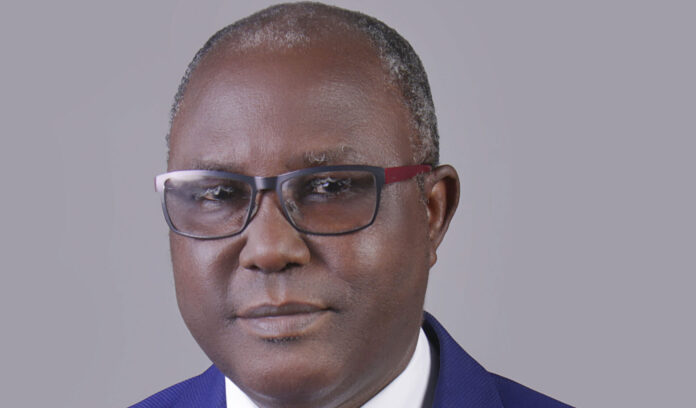
One area the minister is looking at that strikes the right cord is his plans to re-assess the usefulness Nigerian Bulk Electricity Trading Plc (NBET) in the entire electricity value chain. He was reported to have said that he plans to move away from this NBET model adding that this agency ought to have been sunset about five years ago.
One noticeable tragedy across our Ministries, Departments and Agencies (MDAs) is that an agency created as an ad hoc body to take care of one particular problem and after which it ceases to exist, ends up institutionalizing itself and become a permanent one. This is not peculiar to NBET. All sunset agencies should go because some of them end up becoming immersed in corruption. The minister should find out how a sunset agency by law has become a permanent body. For instance, is its permanency backed by an amended law?
Unfortunately, the NBET has been reported to be one of those agencies where corruption is deep-rooted. This singular factor has created the appetite for hiking electricity tariffs over the years thereby adding to Nigerians’ paying more for non-existing electricity, which is sheer exploitation.
A look at the Box below tells the story vividly:
An AI Overview summary of list of major fraudulent activities, procurement breaches, and financial infractions alleged at the NBET is presented in the Box below:
| ü Payments for Unexecuted Contracts: The OAuGF uncovered ₦100 billion in irregular payments for jobs or contracts that were either partially executed or not executed at all. This directly violated federal financial regulations prohibiting advance payment for undelivered services. ü Failure to Recover Government Revenues: Audit reports flagged systemic failures in revenue management, noting that NBET failed to collect or recover trillions of naira in unremitted government revenue. ü Overpayment and Invoice Inflation to GenCos: Former leadership was indicted for allegedly overpaying certain Power Generating Companies (GenCos)—such as the Omotosho and Olorunsogo power plants—by at least ₦2 billion, violating the boundaries of active Power Purchase Agreements (PPAs). ü Fraudulent Registration of a Parallel Shadow Entity: In 2026, the House of Representatives Committee on Finance flagged a major irregularity where a private entity named “NBET Finance Company” was secretly incorporated through the Corporate Affairs Commission (CAC). The company was registered in the name of an individual private subscriber unaffiliated with the government, drawing warnings of structural fraud and an order for immediate deregistration. ü Procurement Law Violations: Investigations by the ICPC and the National Assembly cited multiple procurement breaches under previous administrations, including bypassing due process to purchase official luxury vehicles, funding illegal foreign trips for lawmakers, and paying for six years of office furniture for a four-year tenure. ü Operating Without Audited Accounts: For consecutive years (notably 2017 to 2019), NBET operated completely outside federal accountability frameworks by failing to submit statutory audited financial statements, making it impossible for oversight bodies to track cash flows. ü Unremitted Investment Interests: The Senate Public Accounts Committee launched a probe into the alleged failure of NBET to remit over ₦1.5 billion in accrued interests generated from the agency’s investments in Federal Treasury Bills. ü Suppression and Retaliation Against Whistleblowers: Internal audits and investigations revealed that executive management actively weaponized agency power against internal auditors and whistleblowers who attempted to report these financial infractions to anti-graft agencies. Staff members faced arbitrary redeployment, unlawful termination, and withholding of salaries. |
Note: This AI Overview summary was actually based on reports by various media houses such as The Guardian, The Cable, TVC News, Daily Trust, The Eagle Online and Secretreporter.com The Overview attributed these sources in its summary.
The public is also aware that the Socio-Economic Rights and Accountability Project (SERAP) not too long ago took the former minister Adebayo Adelabu and NBET to court over the missing N128b power sector funds. Their inability to account for the funds which was exposed by the Auditor-General of the Federation’s report published in September 2025, is a serious indictment on those involved. If the deep-rooted corruption is removed from the electricity value chain by the present minister (a job well cut out for him), then his hope of providing affordable electricity would become a reality.
One way to do this is to invoke the NBET sunset law and make this agency to wind up.
It is important to note that the
NBET was intentionally created as a temporary entity in 2010 to act as a credit-worthy intermediary (a single buyer) between power generation companies (GenCos) and distribution companies (DisCos) while the market matured. The sunset provision dictates that NBET must cease to exist as the exclusive bulk trader once the Nigerian Electricity Supply Industry (NESI) transitions into a competitive, medium-term market stage.
It is my humble opinion that the power sector has ‘matured’ enough to invoke this sunset law otherwise it will never be allowed to ‘mature.’ In fact, its maturity will continue to be interpreted in a dynamic way with changing operationalization of what maturity means. More importantly, the envisaged market maturity will never be allowed to materialize in the way it was planned because of deep-rooted corruption. This means that this is the time to say ENOUGH IS ENOUGH WITH THE UNCHECKED CORRUPTION IN THE POWER SECTOR VALUE CHAIN.
However, in winding up as recommended here, the deployment of technically competent and non-corrupt staff to where they are needed in the rest MDAs should be seriously considered so that innocent staff do not suffer for nothing.
Finally, if the minister is able and courageous enough to dispense with the NBET model thereby reducing drastically the deep-rooted and seated corruption in the power sector, then, history would be kind to him as he would have written his name in gold.
Prof. Obasi, a public policy expert and analyst is formerly of the Department of Public Administration, University of Abuja. Email: nnamdizik@gmail.com; Cell: 07065692668


 is that an agency created as an.....)