

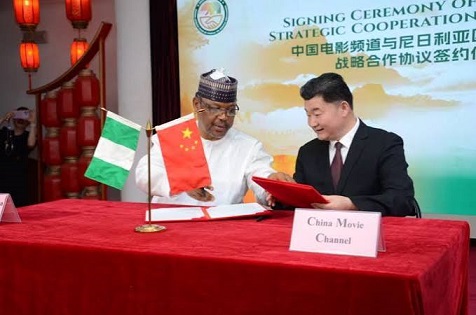
Nigerian and Chinese writers have expressed readiness to collaborate on literary projects, saying stronger exchanges in literature and culture will deepen understanding and strengthen ties between both countries.
The writers made the call at the August edition of the Reading and Writers Dialogue organized by the Abuja chapter of the Association of Nigerian Authors (ANA) on Sunday.
The event, held at the Mamman Vatsa Writers Village, featured renowned Chinese novelist and poet, Zhu Shanpo, as the guest writer.
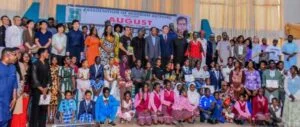
With the theme, “The Influence of Literature on Human Progress in China and Nigeria,” the dialogue brought together authors, students and literary enthusiasts from Nigeria and China.
The participants said both countries had rich literary and cultural traditions, with writers whose works have gained international recognition.
They noted that partnerships involving literary exchanges, translation and joint storytelling projects could promote cultural understanding and strengthen people-to-people relations between Nigeria and China.
READ ALSO: Kano Palace Rejects Carry-Over Claim, Says Sanusi’s First-Class Goal Intact
Chairman of ANA Abuja, Chukwudi Eze, described the dialogue as a meeting of two great civilizations whose histories had been shaped by storytelling, scholarship and culture.
Eze said the theme went beyond celebrating books and writers, stressing that literature had the power to shape societies, bridge cultural divides and inspire generations.
“Literature has always been humanity’s greatest archive. It preserves memory, questions injustice, celebrates diversity, nurtures imagination, and inspires innovation.
“Long before diplomacy found expression in treaties, literature was already fostering understanding between peoples. It reminds us that while languages may differ, our hopes, struggles, dreams, and aspirations remain remarkably alike.
“Today, ANA Abuja is proud to stand at the forefront of that noble tradition by creating a platform where Chinese and Nigerian literary voices can engage in meaningful dialogue, exchange ideas, and build lasting friendships,” he said.
Eze described the forum as a reflection of the growing relationship between ANA Abuja and the Embassy of the People’s Republic of China.
He said the dialogue provided an opportunity for participants to learn from one another, celebrate their shared humanity and deepen friendship between the two countries.
He expressed hope that the discussions would lead to new research, literary collaborations, translation projects and exchanges that would benefit writers and readers in both countries.
In his presentation, Shanpo highlighted the rich literary and cultural heritage of Nigeria and China, urging contemporary writers from both countries to collaborate and exchange ideas.
The Chinese writer said he had long looked forward to visiting Africa, particularly Nigeria, describing his participation in the event as a memorable experience.
“Since my early days, I anticipated and longed for my visit to Africa, especially to Nigeria, such a beautiful and great nation.
“Today, it gives me great pleasure and delight to participate in such a symposium together with my counterparts and authors in Nigeria,” he said.
Shanpo praised Nigerian literary giants, including Wole Soyinka and Chinua Achebe, for their global influence.
He said Nigerian literature had a strong presence in the Western world and had also attracted considerable interest among Chinese readers and writers.
“In 1986, the most famous author, Wole Soyinka, won the Nobel Literature Prize, which has a very great impact in China.
“Another great writer is Chinua Achebe, with his most famous work, Things Fall Apart, which has become most popular with writers and authors in China,” he said.
The dialogue also featured a panel discussion moderated by writer and Professor of Communication and Cultural Studies, Udenta O. Udenta.
Panelists included author and human rights activist, Sen. Shehu Sani; Prof. Razinat Mohammed; and Director of the China Cultural Center in Nigeria, Mr Yuan Jianxing.
Jianxing said literature remained an effective tool for bridging cultural differences through the exchange of historical narratives and experiences.
He called for greater collaboration between Nigerian and Chinese writers through cultural and academic exchanges, as well as capacity-building programs.
The event also featured the presentation of awards to outstanding student writers and poets.
SOURCE: NAN


