

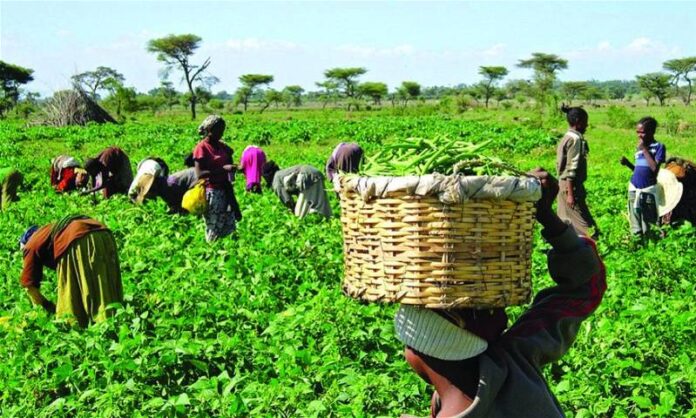
Nigeria’s food security forecast for 2026 is becoming increasingly doubtful as farmers throughout the North-Central and Northwest areas warn that growing production costs, insecurity, and increasing post-harvest losses may cause them to leave agriculture.
Findings revealed that many farmers in Niger, Nasarawa, Kogi, and Kaduna are fighting to stay in business in spite of government policies meant to steady food costs.
Citing the rise in costs of fertilizer, fuel, agrochemicals, and labor, The News Chronicle gathered that some farmers have already reduced cultivation this year. Many of them claim that without direct government assistance lowering their operating costs, the industry is unsustainable.
Ibrahim Abdullahi, a rice farmer from Niger State, said the price of inputs has tripled in two years; hence, many farmers have fallen into debt.
Should producers keep exiting the field, he warned that the country may next year have a more severe food shortage. Expressing disappointment that farming has turned into an unprofitable business, particularly for young people who now prefer to abandon rural areas altogether, maize farmer Patience Ayuba said in Nasarawa State.
Farmers claim the administration is negligent, saying that President Bola Tinubu’s instruction for producers to lower food prices cannot be followed without subsidized inputs and better rural infrastructure. Some farmers also related the continuous drop in production to the fall of earlier support projects like the Anchor Borrowers Initiative, which many claimed motivated them to grow their activities before the project started to wind down.
Still among the most important barriers is insecurity. Producers in some northern states claimed they were still losing farms to banditry, abduction, and herder fights. Many people employ private security nowadays, hence increasing their operating expenses even more.
The warning from farmers matches an earlier alert by the Food and Agriculture Organization, which predicted that up to 34.7 million Nigerians could face severe food shortages between June and August 2026 if significant measures are not taken. According to the FAO study, significant threats to food output included economic shocks, organized crime, and continuing wars.
According to agricultural experts, the indications are already apparent. Noting that cultivation levels have dropped significantly, University of Abuja’s Dr. Grace Alonge said the government should give subsidies, credit access, and enhanced security in farming areas top priority. Another analyst, Ben Okukpe of Nasarawa State University, Keffi, thinks that efforts to reduce food costs should be accompanied by robust support systems that shield farmers from losses.
Without immediate action, stakeholders predict that Nigeria would experience one of its worst food shortages in decades, with poverty and inflation projected to grow.


