

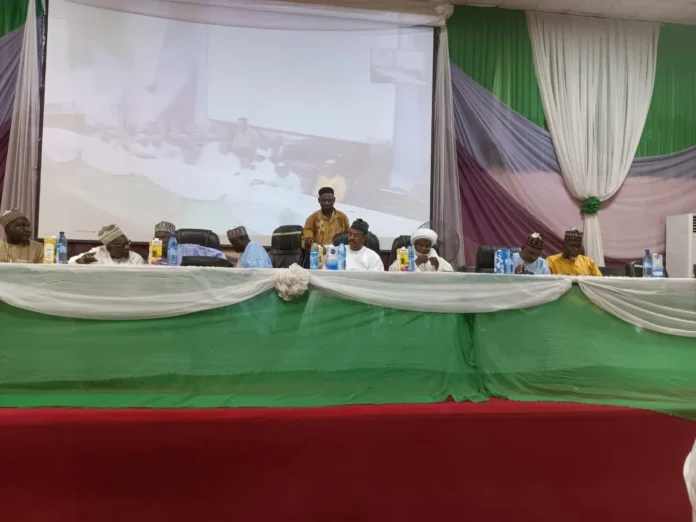
The Executive Secretary of the National Board for Technical Education (NBTE), Prof. Idris Bugaje, has blamed inadequate practical training, weak mentorship and chronic power shortages for Nigeria’s slow industrialization and underdevelopment of its engineering sector.
Speaking on Wednesday at the maiden International Conference of the Faculty of Engineering and Environmental Studies of Usman Danfodio University, Sokoto (UDUS), Bugaje said the country’s inability to build local engineering capacity has forced it to depend on foreign expertise for major infrastructure projects.
He cited the Dangote Refinery in Lagos, which he said was designed by Indian engineers; the Kaduna Refinery, by a Japanese firm; and the two Port Harcourt refineries, by Shell. He added that the Lagos-Calabar Coastal Highway and the proposed Sokoto-Badagry Super Highway were also designed offshore.
According to him, the shortage of hands-on experience and proper mentorship has continued to weaken Nigeria’s engineering profession and limit indigenous participation in critical national projects.
Bugaje also identified poor electricity supply as a major obstacle to industrial growth, revealing that Nigeria currently generates only about 22 watts of electricity per capita.
“Twenty years ago, South Africa had 270 watts per capita, Egypt had 400 watts per capita, Europe had 1,000 watts per capita, while Nigeria in 2026 is still at about 22 watts per capita,” he said.
He stressed that meaningful industrialization would remain unattainable without a significant improvement in power generation.
The NBTE boss urged policymakers, particularly state governors, to take advantage of constitutional reforms that now place electricity on the concurrent legislative list by investing in decentralized renewable energy projects.
“We need to embrace decentralized solar-based power plants for our states. Fortunately, power is now on the concurrent list, giving both the Federal and State Governments equal opportunity to invest in the sector,” he said.
Earlier, the Vice-Chancellor of Usman Danfodio University, Sokoto, Prof. Bashir Garba, described the conference as timely and significant, noting that the world is grappling with climate change, environmental degradation, rapid urbanization and the depletion of natural resources.
He said the gathering provides a platform for scholars, researchers, industry experts and policymakers to exchange ideas, present research findings and develop practical engineering solutions that will advance environmental sustainability.


