

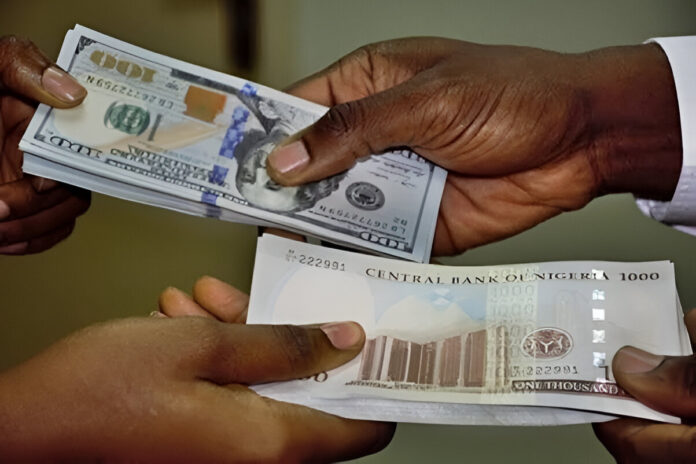
The naira opened the week on a weaker note, sliding to N1,376 against the United States dollar at the official market as renewed tensions in the Middle East boosted demand for the greenback.
Figures published by the Central Bank of Nigeria show the local currency declined from N1,368.5 recorded at the close of trading on Friday. The movement followed a sharp rally in the dollar after fresh United States strikes on Iran unsettled global markets and triggered a flight to safety.
Rising almost one per cent, the dollar index showed its best daily performance in seven months and supported the conventional safe haven attraction of the currency. As investors moved their portfolios toward dollar assets, emerging market currencies—including the naira—came under stress.
The News Chronicle gathered that Monday’s decline reflects near-term global volatility rather than a fundamental flaw in Nigeria’s foreign-currency system. With a straightforward average rate of N1,378.48, the naira fluctuated between N1,397 and N1,368.5 during the session.
External buffers have got better even if there was recently a drop. While gross reserves have been moving up early in 2026, the apex bank recently revealed that net foreign exchange reserves grew from 23.11 billion dollars at the end of 2024 to 34.80 billion dollars by the close of 2025.
Analysts argue that constant reserve growth would leave room for intervention should global pressures persist.


