

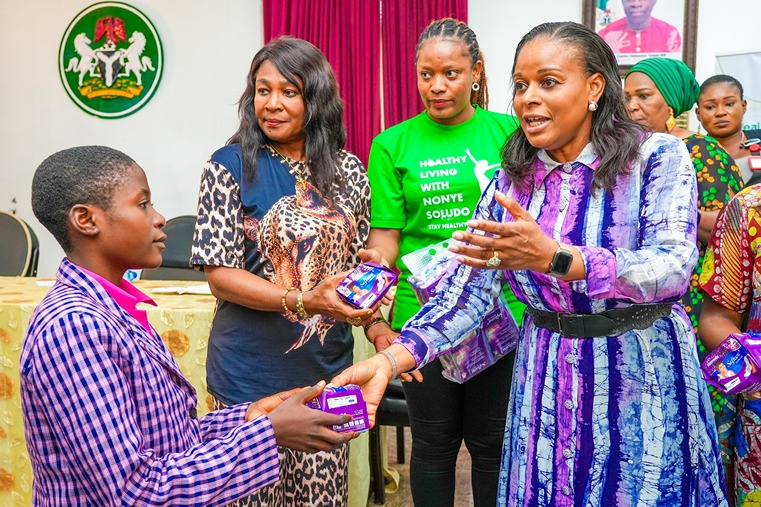
As part of efforts aimed at promoting safe personal hygiene among school girls in Anambra State, the wife of the Governor, Mrs Nonye Soludo on Wednesday, launched the Healthy Living Sanitary Pad Banks in over 400 secondary schools in the state.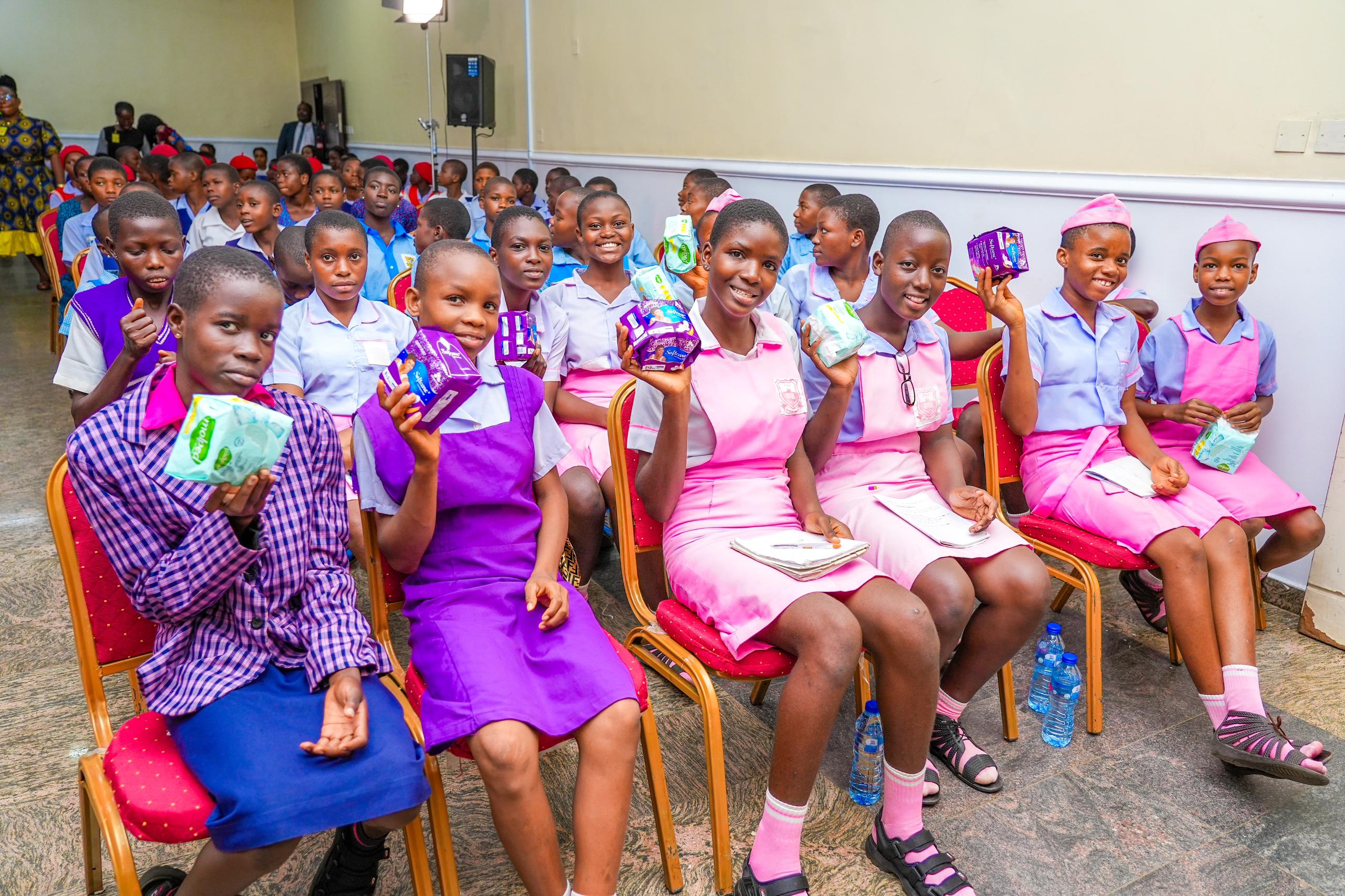
The four hundred secondary schools where the initiative was launched, are those currently operating the Healthy Living School Clubs, which the Anambra First Lady is the founder.
The governor’s wife announced the launch of the initiative with the distribution of over one thousand sanitary pads to school girls ata training workshop held at the governor’s lodge Amawbia, to mark the 2023 International Day of the Girl Child.
The workshop attracted school girls from 15 secondary schools selected from Awka North and Awka South Council Areas of the state.
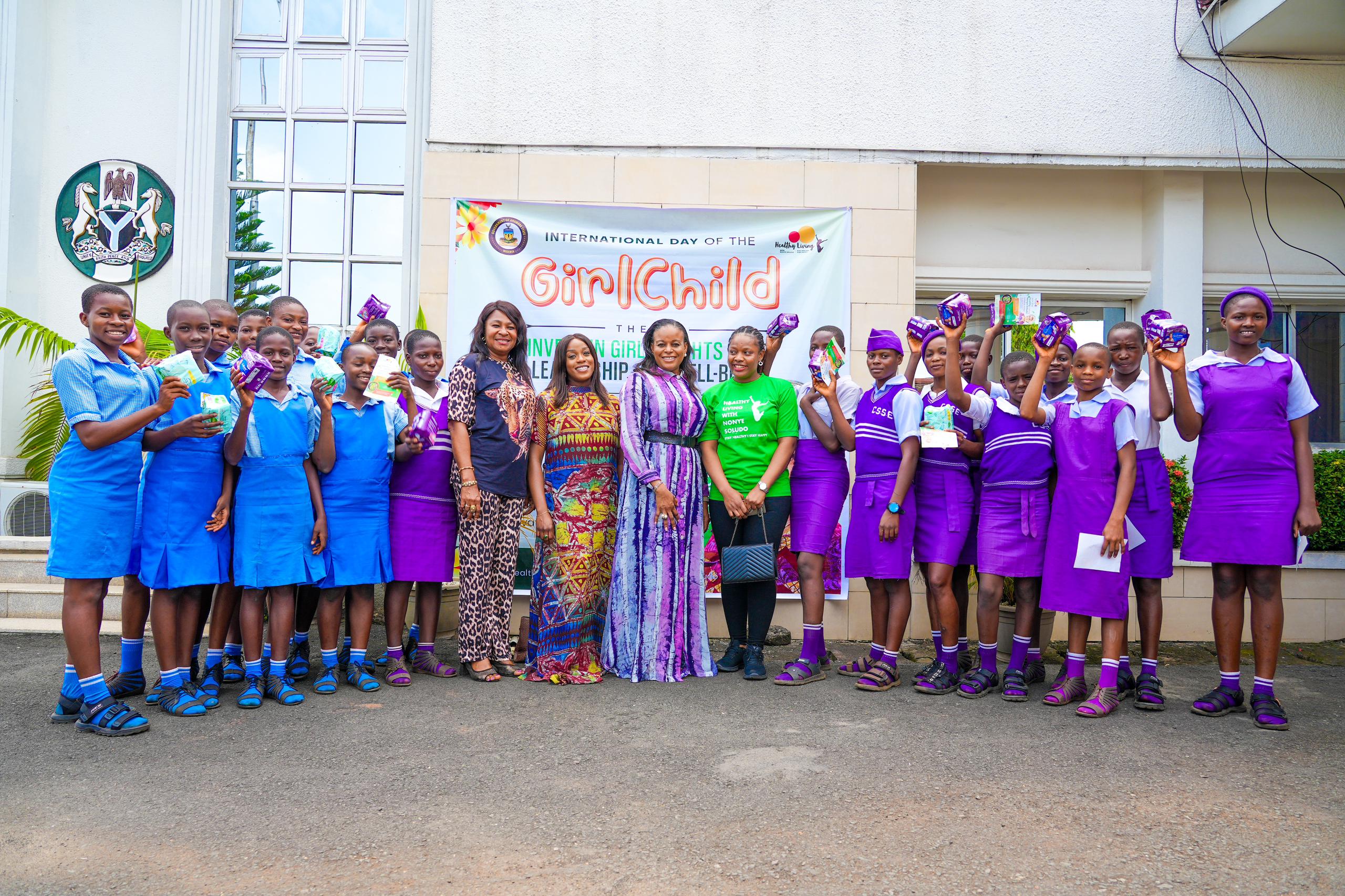
Anchored on the theme of this year’s International Day for the Girl Child, “Invest in Girls Rights, Our Leadership, Our Well-being”, the workshop featured talks on the Girl Child Rights and Sexuality, Girl Child life skills training, as well as Innovative Career and Digital Skills, all aimed at equipping the girls with the right knowledge towards self-actualization and independence.
Launching the Pad Banks initiative, Mrs Soludo said one of the significant goals of her Healthy Living Crusade, is to explore smart avenues and rekindle the consciousness of self-belief and knowledge of individual potentials of the girls.
He said the crusade also targets to empower the girls with the rules of hygiene, nutrition and self development, hence the adoption of nutrition and personal hygiene as two of the five pillars of the Crusade.
“We see nutrition and hygiene as an important process for child development.

“In the area of hygiene, we are also looking at menstrual hygiene and the overall health education of women and girls, especially those in the low income class.
“Recognizing these fundamental facts, I’m glad to announce today that Healthy Living with Nonye Soludo has taken a step further to promote menstrual hygiene in secondary schools where Healthy Living Clubs are domiciled.
“We have concluded arrangements to provide Sanitary Pad Banks (Pad Banks) in over four hundred secondary schools across Anambra State where our clubs are currently operating.
“Accessibility to primary hygiene needs like sanitary pads remains a major concern in rural homes. It gets even worse when menstrual emergencies break out in schools. Therefore, we want to intervene where it matters the most.
“Today, we will be distributing over one thousand sanitary pads to our schools to kick off the campaign. Subsequent distributions will be done at the beginning of each academic term, with enough supplies to last throughout a particular academic calendar,” she said.
The Anambra First lady noted that by opening the shelves and lockers where these sanitary pads would be kept, the government hopes to restore girl child confidence and beat down stigmas arising from menstrual emergencies.
She said; “We also want to create a perfect environment for every girl child to grow happily in without having to be scared of what will happen next.
“Our Pad Banks will give equal opportunities to girls from every social class, and build a hygiene bond that will last beyond the school walls. It is, however, worthy to note that every girl child – in her menstrual age – attending a school where these Pad Banks are accessible, can equally access them. Our commitment is universal, and we want to keep it so.
“The statistics of girls and women in their reproductive age brackets with access to basic menstrual requirements are begging for better attention. This is our own way of paying attention.
“We want to ensure that every school girl can reach her dreams without being afraid of her environment and the people who make it unhealthy to grow in.
“Healthy Living with Nonye Soludo is committed to promoting and protecting the fundamental objectives of right health. I prefer to say that “Health is the Greatest Wealth” to give a clearer illustration of what a system that lacks good health looks like.
“We are about goals, results and compassion. At the end of the day, we want to achieve a society that opens up a platform of equal aspirations for every gender.”
Earlier in her presentation, Dr Tonia Mbagwu of the State Ministry of Health, who spoke on girl child rights and sexuality, explained that sexuality is basically about a child’s identity and the way the child feels about their developing body.
She stated that it is important for the society to change its patriarchal stance that disposes negatively towards women, and strive more towards giving the girl child equal rights with their male counterparts across social, cultural and economic opportunities.
Another resource person, Miss Adaora Soludo said the day is all about recognizing the incredible talents of girls, encouraging them to reach the stars and face their dreams., adding that the positive attributes of problem solving, boldness in speaking up, critical thinking, self-confidence and creativity are required for today’s girl child to break even.
“Girls must invest in self-belief, make smarter choices and use the power of their brain more.
“By giving the girls life-skill training and the opportunity to pick up hobbies early in life, they can become empowered to face the future. These are the keys to not only surviving but also thriving,” she posited.
Another speaker, the Special Adviser to the Governor on Innovation and Business Incubation, Ms Chinwe Okoli, hammered on the need for the girls to acquire digital skills, innovative careers and take advantage of the numerous digital opportunities available to to actualize their life ambitions.
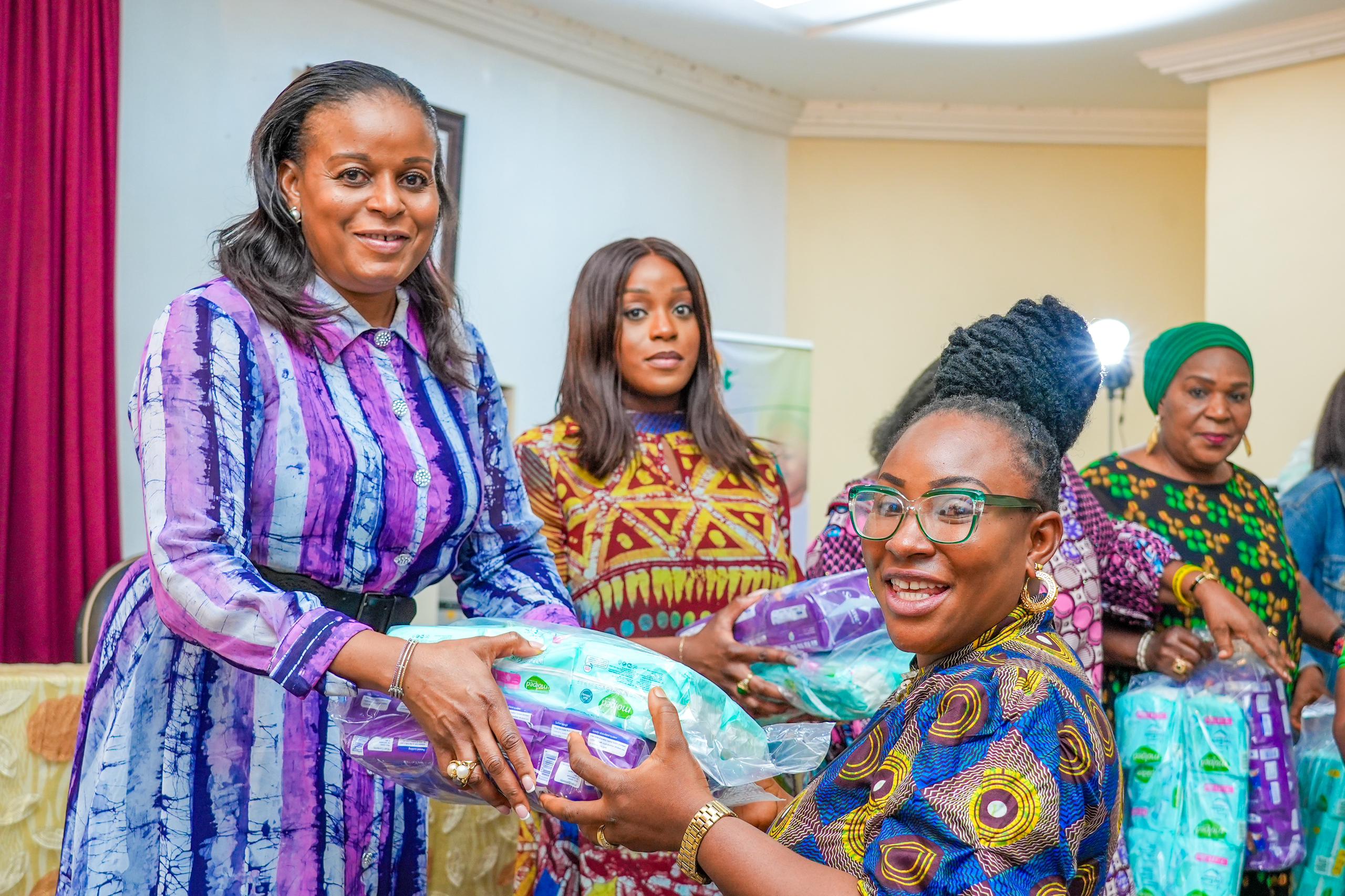
The event climaxed with the presentation of sanitary pads to over 200 female students and teachers who attended the event, while representatives of each school also got packs of the product to start off their pad banks.
Among other dignitaries who attended the event were the Chairman, Anambra State Universal Basic Education Board (ASUBEB), Dr Vera Nwadinobi and her Post Primary Schools Service Commission (PPSSC) counterpart, Professor Nkechi Ikediugwu.


