

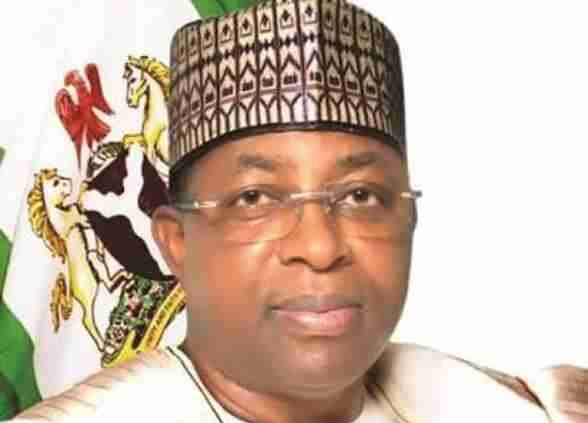
Across the world, the story of leadership is rarely written in moments of panic or desperation. History shows us that enduring leaders emerge not because a vacuum forced them forward, but because patience, resilience, and hard work ripened them for the responsibility. From Nelson Mandela, who spent 27 years in prison before leading a reconciled South Africa, to Lee Kuan Yew, who spent decades building institutions before transforming Singapore, the pattern is consistent: leadership is earned in quiet seasons before it is worn in public. It is forged in criticism, tested by rejection, and validated by time. These are not overnight phenomena. They are the product of character that outlives political weather.
In Nigeria’s political terrain, and particularly in Bauchi State, this same principle has played out with striking clarity in the person of M. A. Abubakar, SAN. His administration before the 2019 elections was perhaps one of the most criticized in recent Bauchi history. The airwaves, the street corners, and even within party circles were filled with narratives designed to overshadow his efforts. Yet, amid the noise, what stood out was not retaliation, but restraint. Not desperation, but discipline. While others chased patronage and short-term applause, he stayed committed to process, to governance, and to a long view of service. That posture dismissed by many at the time as weakness is today being reread as strength.
I recall personal conversations during that period with individuals who then enjoyed relative political patronage. I tried to share a perspective that many were not ready to hear: that M. A. Abubakar, SAN possessed the temperament, legal grounding, and administrative patience required to reposition Bauchi for sustainable development. The doors were closed. The ears were tuned to immediate benefits, not to vision. But this is not fiction. It is documented in our rich political archives in Bauchi in meeting notes, in media clips, in the testimonies of civil servants and community leaders who watched how he governed under pressure without abandoning principle. True leadership often looks unpopular in the moment it is being lived.
What followed after 2019 further proves the point. Immediately he left office, the conversation shifted. The same deeds that were criticized began to dominate public discourse. Projects, policies, and decisions once drowned out by politics started to “take to the airwaves” on their own merit. People began to say it openly: “let us wait for his return in 2027.” That is the hallmark of leadership that does not beg for relevance. It waits, it works, and when the time is right, the people remember. It affirms the belief that nothing ordained by Almighty Allah can be stopped by man’s timelines or propaganda.
This trajectory mirrors global leaders who shared his vision and characteristics. Like Abraham Lincoln, who lost elections repeatedly but was eventually called upon because the nation needed steadiness, not noise. Like Olusegun Obasanjo, who left office, was vilified, and later returned to national relevance because his capacity outlasted the criticism. Like Muhammadu Buhari, who contested multiple times before the country turned to him in a season that matched his discipline. In each case, patience was not inactivity. It was preparation. Resilience was not stubbornness. It was consistency. Hard work was not for show. It was for legacy.
Therefore, to speak of M. A. Abubakar, SAN in 2027 is to speak of leadership that ripened with patience. It is to speak of a man whose administration was stress-tested in public, whose character was questioned but not broken, and whose service record is now speaking louder than the criticisms that once overshadowed it. Bauchi’s political history will record that his emergence was not born of desperation, but of endurance. And in a democracy where memory is short but consequences are long, that kind of leadership is exactly what states waiting for transformation need.
Bauchi State has long stood as one of the most peaceful hubs in Northern Nigeria. Bordering seven states and hosting diverse ethnic and religious communities, Bauchi has historically served as a meeting point for trade, culture, and coexistence. Yet peace does not mean the absence of challenges. Like many states in the region, Bauchi has had to contend with insecurity spillovers, farmer-herder tensions, youth unemployment, decaying public infrastructure, and the strain of providing services to a growing population. In such a context, leadership cannot be about grandstanding. It must be about steady hands and the ability to hold the center together when pressure mounts from every side. This is the exact terrain where character, not charisma, determines outcomes.
This is precisely where M. A. Abubakar, SAN fits in. His record shows a leader who never compromised security for personal ambition or political expediency. At a time when many states were flirting with crisis, Bauchi under his watch maintained relative stability. He understood that no investment in roads, schools, or hospitals can survive in an atmosphere of fear. So he prioritized coordination with security agencies, community engagement, and intelligence-driven governance.
He resisted the temptation to politicize safety. Instead, he treated it as the foundation upon which every other development agenda must rest. That decision earned him quiet respect, even from critics who disagreed with him on everything else. In Bauchi’s political memory, that period is remembered as a time when the state did not burn, and that itself was an achievement.
Beyond security, his administration recorded significant and measurable boosts in the three sectors that directly touch the lives of ordinary citizens: education, healthcare, and agriculture. In education, there was renewed attention to teacher welfare, school rehabilitation, and access drives aimed at reducing out-of-school numbers. In healthcare, primary health centers received upgrades and attention, with a focus on maternal and child health the barometer of any serious government.
In agriculture, Bauchi’s identity as a farming state was reinforced through support programs, inputs distribution, and efforts to link farmers to markets, recognizing that food security is also peace security. These were not loud, headline projects. They were patient, deliberate investments. And it is why, immediately after he left office, public conversation began to shift. People started to connect the dots and say: the work was there. Which is why many today are saying, “wait for his return in 2027.” Because Bauchi does not need desperation. It needs the kind of leadership that was tested, refined, and proven by time.
Beyond law books and policy files, what sets M. A. Abubakar, SAN apart are the emotional qualities that leadership in Bauchi demands: patience under fire, humility in power, and empathy for the ordinary. He governed without malice. Even when provoked by harsh criticism and personal attacks before 2019, he chose restraint over reaction. That is not weakness. That is emotional intelligence. It is the discipline to know that a leader’s job is not to win arguments on the radio, but to win trust in the home. Bauchians saw a man who listened more than he spoke, who bore insults without nursing grudges, and who kept serving communities that sometimes did not clap for him. In politics where tempers flare and egos rule, that calmness became his signature. It is why many now say, “he is the kind of man we need again.”
His election in 2027 will not be a regular political cycle. It will be a precedent. For the first time in our recent political archives, Bauchians will have the chance to consciously choose their best — not by noise, not by money, but by memory and merit. They will be voting to correct a narrative, to reward endurance, and to say that criticism without evidence does not erase service. This is history in the making: a people looking back, weighing what was said against what was done, and deciding that character matters more than campaigns. If it happens, Bauchi will teach the rest of the North a lesson that democracy matures when citizens ignore distractions and honor consistency. That is the kind of political rewriting that outlives one administration.
While this is happening, fake narratives have continued to dominate the opposition’s campaign playbook. Name-calling, old clips taken out of context, and stories with no footnotes have become their daily tools. Meanwhile, M. A. Abubakar, SAN has stayed on a different lane: results. He is not in the business of trading insults. He is in the business of reminding people what was built, what was protected, and what can be finished. In the absence of truth, perception becomes reality and for a while, that worked for his critics. But perception cannot survive a second look. When people sat down after 2019 and compared the noise to the records in health, education, agriculture, and security, the attacks lost oxygen. You cannot ridicule a track record that communities are still benefiting from. Truth, though delayed, is stubborn.
Today, that is why he stands tall as the frontline candidate for 2027. Not because he shouted the loudest, but because he endured the longest. Not because he promised the most, but because he delivered when no one was watching. Bauchi needs a governor who will not be distracted by propaganda, who will not compromise security for ambition, and who will treat governance as a duty, not a show. M. A. Abubakar SAN embodies that. His story is proof that patience is not waiting for nothing it is preparing for something. And now, that something is here. The people are watching, the archives are open, and history is waiting to be written by Bauchians who choose substance over slogans.
They threw everything at him. Lies were printed, whispers were paid for, and whole machineries were deployed just to dim the name M. A. Abubakar SAN. Propaganda machines ran day and night, sponsored attacks tried to rewrite his record, and staged dramas paraded fake voices to drown out the truth. They banked on noise to break him.
But he is still standing. Not because of billboards or hired crowds, but because the people remember. The farmers, the teachers, the market women, the real voters of Bauchi have watched, waited, and kept their own records. No scripted actor can vote for them. Come that day, it will be their hands, their ballots, their choice that decides his fate.
Danaudi Writes From Bauchi Via danaudicomrade@gmail.com


