

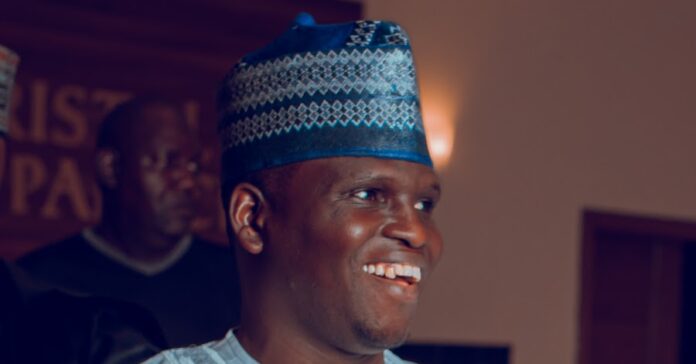
Dauda Adamu Kahutu, popularly known as “Rarara”, one of northern Nigeria’s most influential political praise singers, has suddenly found himself bleeding in the court of public opinion. His unsolicited, uncharitable intervention on national issues landed at a moment when emotions run feverish, anti-government sentiment rules the air, and there is a desperate attempt to crown one narrative as absolute truth that is sacred, untouchable, beyond debate.
Yet life keeps teaching us that truth rarely wears a clean jersey marked “good” or “evil”. Framing theory reminds us that audiences don’t just consume facts; they consume the frames through which facts are packaged, and those frames decide heroes and villains before judgment begins. Everything with advantage also carries shadows that appeal more to another man’s sensibilities. That is why our conversations in the marketplace of ideas demand nuance, not knives, as competing voices seek validation, conviction, and public verdict through independent judgment.
I first became aware of the “villain” Rarara had become when I overheard women in a public place dissecting the subject. “You know that Davido performed at FIFA World Cup 2026, that ‘Bring Them Home’ song?” one said. “Rarara called it ‘barbaric’, saying Davido wanted to damage Nigeria’s image and politicize insecurity. He accused Davido of partisanship because of his uncle in Accord Party.” By the time I opened social media, the platforms were flooded with articles, commentaries, and outrage, mostly under emotional headlines branding Rarara a “beggar.” The label matched the storm. Moral panic, as Stanley Cohen theorized, needs a folk devil, and Rarara fit the suit the public had already tailored. Yet despite the attempt to force one verdict, despite calling him names that now resonate because insults have been legitimized, the contradictions and double standards of these new moralists cannot be ignored. We are watching selective outrage sharpen its blade, deploying emotion to make one judgment stick while hiding the wilderness of our own hypocrisy.
Let’s begin with a question that cuts deeper than the insults: is the public just realizing that Rarara is a “beggar” or illiterate after years of commanding high influence and acceptance? Rarara has been a political praise singer with a style he never disguised, and that style enjoyed high public approval exactly because his music was celebrated. Born on September 13, 1986 in Kahutu Village, Danja LGA, Katsina State, raised in a Hausa-Fulani Muslim home with Qur’anic education and basic secular schooling, he moved to Kano originally to become an Arabic teacher. His first hit came in 2007 with “Ruwa Baba” for then Kano deputy governor Abdullahi T. Gwarzo. “Kainuwa” for Gov. Ibrahim Shekarau followed. Both became political street anthems. National fame exploded in 2015 when he became the unofficial voice of APC and Muhammadu Buhari, with “Masu Gudu Su Gudu”, “Buhari is Back”, and “Father Buhari the Monster” dominating rallies. He was appointed National Director of Music for Buhari’s 2019 Presidential Support Committee.
In the Tinubu era he composed “Jagaba Shine Gaba” and “Omo Ologo”, the latter fusing Hausa-Yoruba and now regarded as an APC anthem. This was when APC was the new bride. He is a household name in northern politics, pivotal in Buhari’s 2015/2019 and Tinubu’s 2023 wins, performing at state functions, maintaining close ties with Seyi Tinubu. Recognition followed: West Africa Representative, Association for Educational Assessment in Africa. FUDMA held a 2025 international conference on his cultural and political influence. Political communication scholars like Murray Edelman would call this the “political spectacle”, the deliberate merging of performance and power, where songs are not entertainment but instruments of mobilization.
Rarara’s career is built on switching patrons: Gwarzo to Shekarau to Kwankwaso to Ganduje to Sharada. Critics call him unprincipled: “Show him the money, and he will praise his closest friend and abuse the friend’s enemy.” He’s hurled colorist and body-shaming insults at former masters. In 2020 he asked Buhari’s supporters for ₦1,000 each to fund a praise video, raised ₦57 million in 48 hours, then faced allegations of misusing funds. This happened when “world’s poverty capital” became the hallmark of Buhari’s government and “Buharia” became slang for austerity. Hunger spread. Banditry entered our vocabulary after we had only just learned what Boko Haram meant. Through it all, Rarara’s praise singing persisted, and his fortunes helped make or break governments in Kano by mobilizing emotions, rhetoric, slogans, and popularity. The people who tapped into those emotions became his backbone. He is said to own multimedia studios in Kano, with a net worth estimated between 50 billion and 200 billion naira, known for luxury cars, designer clothes, and jewelry. The masses who amplified him are the same ones now holding the knife.
What is clear is that Rarara’s recent intervention does not look like betrayal or a change of style. It is still the same voice you once enjoyed, the music you shared when it appealed to your emotions, even when the nation never escaped deep crises. What changed is not Rarara but the people who find the same style entertaining at one time and offensive at another. Agenda-setting theory tells us the media, and now social media, don’t tell us what to think, but what to think about. Rarara’s primary constituency therefore becomes the first suspect of reinvention and double standards, prioritizing different values when interests shift, making him a victim of the same tides that once lifted him.
Coming to Rarara’s feud with Davido that now exposes him to public backlash: yes, his outright dismissal of Davido’s musical intervention at the 2026 FIFA World Cup as “misplaced” could read as lacking empathy or emotional maturity. But both men cannot escape the charge of prioritizing symbolism over substance. Those attacking Rarara argue that Davido exposed no secret, that CNN and BBC often break our local news before we do. Yet that begs the question, if the world already knows, what is the need to perform it on a global stage? The problem is the convention. We have made symbolism and public showmanship the currency of genuineness, so that political correctness and rhetoric matter more than meaningful contribution.
The uncomfortable question: while #BringBackOurGirls made some advocates role models and launched them to stardom, and while that pressure contributed to Jonathan’s fall, if it were a cure and not just treatment of symptoms we would not expect a repeat under Buhari, and all the girls should have been released as Buhari pledged. Yet several other abductions after Chibok were overlooked differently by the same celebrities, masses, and human rights activists. Research by Nnamdi Obasi at International Crisis Group shows that performative advocacy without sustained policy follow-through often leaves security vacuums intact.
Yes, major school abductions happened under Buhari after Chibok: Dapchi Schoolgirls, February 19, 2018, where Boko Haram abducted 110 girls. Government announced the return of 106 children on March 21, 2018. Five girls died the day they were kidnapped. Leah Sharibu was not released and remains held as of 2026, with her parents saying Boko Haram would only free her if she converted to Islam. Government said the release was “unconditional” and “no ransoms were paid”, but a UN report later stated government paid “a huge ransom”. Buhari’s response was faster than Jonathan’s on Chibok. He said “I acted fast” and ordered security briefings every 24 hours. Kankara Schoolboys, December 11, 2020, saw 344 boys kidnapped while Buhari was visiting Katsina. All were released after six days following negotiations. Groups called it a “sad reminder of Dapchi, Chibok episodes”. Nigeria saw a wave of mass kidnappings especially 2020-2021: Kagara, 27 students; Jangebe, 279 schoolgirls; Afaka, 39 students; Greenfield University, 20 students, 5 killed; Tegina, 136 pupils. As Vanguard noted, “Since Islamist militants kidnapped nearly 300 schoolgirls from Chibok.
Nigeria has struggled with a series of mass kidnappings, mostly carried out by criminal gangs looking for ransom”. Buhari recovered more Chibok girls than any government, 21 in October 2016 and 82 in May 2017. But abductions continued. By 2023, “600+ pupils kidnapped despite N145bn Safe Schools Initiative”. As of 2026, abductions still happen: May 2026, 39 students and 7 teachers in Oyo; April 2026, 23 pupils from an Islamic school in Kogi. Dapchi and Kankara are the most high-profile post-Chibok abductions under Buhari. His government was faster, recovered 106 Dapchi girls in one month, but Leah Sharibu and about 90 Chibok girls were still missing when he left office May 2023.
While solidarity with victims of abduction is humane, we must acknowledge that over-pressurized symbolism carries disservice. Social contagion theory and studies on crisis communication, like those by Timothy Coombs, warn that heightened emotions and tension make both government and citizens vulnerable at a time when emotional strength, strategy, and rationality should be prioritized. Terrorists and bandits feed on chaos and unchecked emotion. Pressure that instigates chaos may not secure rescue. Yet there is an obvious charge of inconsistency when celebrities treat one abduction as normal and another as requiring international attention. If emotional songs, outrage, and symbolism were all needed for rescue and prevention, it is difficult to understand why the Oyo school abductees are still in captivity even after Davido’s FIFA 2026 performance, and why new abductions still count.
We must not lose our heads even with deep anger, disappointment, and frustration, because we need clear heads more than rhetoric that legitimizes outrage without delivering solutions. Emotions led to Jonathan’s fall, only for many to later say they wanted him back, realizing that many lapses in government are not necessarily deliberate or conspiratorial. If he was the problem, we expect all the problems should have ended with Buhari, or even Tinubu. But they didn’t. And that is the thrilling, fascinating, and uncomfortable truth Rarara’s ordeal forces us to confront: the knives are not really about him. They are about us, and the mirrors we refuse to look into.
Bagudu can be reached via bagudumohammed15197@gmail.com or 07034943575.


