

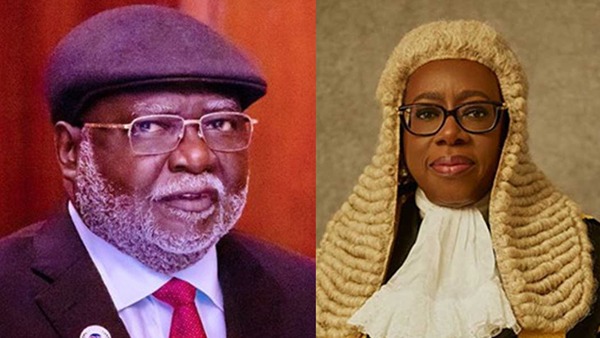
Justice Ariwoola’s retirement marks the end of his tenure, which had been marked by his calls for significant reforms within the judiciary. In a valedictory session held in his honor at the Supreme Court in Abuja, Ariwoola emphasized the critical need for changes, particularly in reducing the caseload of the Supreme Court. He stated, “There are too many cases before the apex court which ought to have terminated at the appellate court.” His remarks underscored the delays and inefficiencies that have plagued Nigeria’s judicial system.
Justice Kekere-Ekun, now the second female CJN after Justice Mariam Aloma Mukhtar, steps into this role at a crucial time for the Nigerian judiciary. Her appointment was recommended by the National Judicial Council (NJC) and is pending confirmation by the Nigerian Senate. At 66 years old, she is expected to serve as CJN for the next four years, bringing with her a wealth of experience from her career in both the private and public sectors.
During the event, Vice President Kashim Shettima, along with other dignitaries, including the Minister of the Federal Capital Territory (FCT), Nyesom Wike, attended a book presentation in Ariwoola’s honor titled “Judging With Justice” at the International Conference Centre in Abuja. The gathering highlighted the challenges ahead for the new CJN, particularly in restoring the integrity and credibility of the judiciary.
The judiciary in Nigeria has recently faced significant criticism, with allegations of nepotism, judicial misconduct, and a lack of transparency in judicial appointments. The situation was described as dire by Mr. Ebun Sofunde (SAN) last year when he stated, “The reputation of the judiciary is at an all-time low, to a point where it may no longer be redeemable.”
Justice Kekere-Ekun is now expected to take decisive action to address these issues. Rights activist Aisha Yesufu, citing a report by the United Nations Office on Drugs and Crime (UNODC) and the National Bureau of Statistics (NBS), stated that “the judiciary is the highest receiver of bribes, ahead of the police and customs.”
As she takes on the new position, all eyes will be on Justice Kekere-Ekun to see whether she reforms the judiciary, including stricter enforcement of judicial codes of conduct and the introduction of transparent processes for judicial appointments.


