

My senior associate, Engineer Suleman Ndaman of SON, fondly called Yan Sule reached out to ask if I would be in Bida last weekend for the one-million-man march organized in solidarity with Governor Umar Bago of Niger State, a public spectacle meant to signal both loyalty and belief in leadership. I told him I would try to be there for him. We had agreed to meet by 5 p.m. on Sunday, but he arrived a little after 6, apologizing with the familiar urgency of a father’s duty,, he had just taken his daughter back to FGGC Bida for resumption.
It was a simple explanation, almost routine, yet it stirred a deeper curiosity in me, one that lingered quietly until the noise of the gathering faded and conversation became more intimate, I asked him a question he clearly did not expect: are these premier public schools, I mean these old symbols of excellence, still in good shape? He paused, searching for balance between honesty and conviction, before replying that as far as he knew, many who attended such schools were still doing well academically.
Before his words could settle, my good friend, Al-Habib Alhaji Usman, Chairman of the Writers’ Association in Bida, interjected with calm assurance that even his own daughters in such schools were doing well. It was a reassuring chorus, but one that seemed to echo more from faith and memory than from measurable certainty. And therein lies the tension between what we remember and what we can prove.
Historically, these so-called premier or unity schools such as, the Federal Government Colleges, Federal Government Girls’ Colleges, and the science schools, technical colleges have not merely been institutions; they have been factories of national consciousness, crucibles where Nigeria’s intellectual and professional elite were forged. From medicine to engineering, from law to public administration, generations of high-impact professionals trace their roots to these public citadels. In the language of human capital theory, as advanced by scholars like Gary Becker, these schools functioned as strategic investments in the productive capacity of a nation, yielding dividends in the form of skilled manpower that sustained development.
Yet, as modernization theorists would argue, institutions are not immune to the pressures of change. The rising wave of private secondary schools armed with sleek branding, modern facilities, and the seductive promise of excellence has steadily redefined public perception. What we are witnessing is not merely a shift in preference, but a quiet ideological battle between tradition and adaptation. Pierre Bourdieu’s concept of cultural capital becomes relevant here: parents who once drew pride from shared experiences in public schools now find themselves negotiating new symbols of status, where high fees are often mistaken for high standards, and exclusivity becomes a proxy for quality.
In many conversations, including a telling remark from a relative whose children attend El-Amin International School in Minna, there is a subtle but powerful bias, schools are casually categorized by their fees, with lower-cost institutions dismissed almost instinctively. It is a psychological shortcut, one that behavioral economists might describe as heuristic thinking, where price becomes a stand-in for value. But the critical question remains: does cost truly reflect quality of output, or merely the aesthetics of provision?
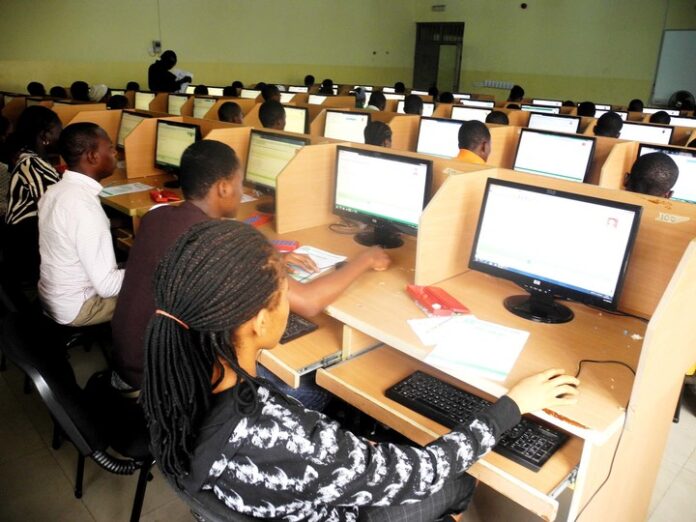
This is where the silence of data becomes deafening.The debate over whether private schools outperform public ones is often driven by perception, anecdote, and emotional allegiance rather than empirical evidence. And this is precisely the gap that the Joint Admissions and Matriculation Board (JAMB) is uniquely positioned to fill. In an era defined by data-driven decision-making, the absence of structured, accessible, and comparative data on secondary school performance is not just a missed opportunity, it is a systemic blind spot.
JAMB has already demonstrated remarkable progress in enhancing transparency and credibility in its examination processes. The introduction of national ranking based on UTME scores provides an objective lens through which student performance can be viewed.
However, this lens remains narrowly focused. What if the data could speak more deeply? What if it could reveal not just how a student performed nationally, but how they ranked within their state, their chosen course, or even among peers from similar educational backgrounds or schools?
Such multidimensional data would transform understanding. It would illuminate the relative nature of university admissions, where success is not solely about crossing a national cutoff mark but helping to identify which secondary schools consistently produce high-performing candidates, not by reputation, but by measurable outcomes. More importantly, it would challenge assumptions. It might reveal, perhaps surprisingly, that some of the revered unity schools are coasting on historical prestige rather than present performance.
Conversely, it might expose that certain elite private schools, despite their impressive infrastructure and high fees, do not necessarily translate advantage into superior academic outcomes. Or, even more intriguingly, it could validate a growing suspicion that many students from public schools, shaped by scarcity and adversity, develop a form of internal resilience that propels them beyond expectations.
This aligns with self-determination theory in psychology, as articulated by Edward Deci and Richard Ryan, which emphasizes the power of intrinsic motivation over external rewards. Students in under-resourced environments often cultivate independence, discipline, and self-driven learning as coping mechanisms. Deprived of constant academic support, they are compelled to think, to struggle, and ultimately to internalize knowledge more deeply. In contrast, those surrounded by abundant external support may sometimes lack the urgency to develop these internal drivers.
Empirical hints of this dynamic already exist. Informal polls among first-class graduates in Niger State suggest that a significant proportion attended public secondary schools, including those not considered elite by conventional standards. These findings, though not yet rigorously systematized, point to a paradox worth exploring that disadvantage, under certain conditions, can become a catalyst for excellence.
Of course, this is not to romanticize the challenges within public schools. Issues such as underfunding, overcrowding, bureaucratic inefficiencies, and frequent industrial actions undeniably disrupt learning and weaken institutional capacity. The recent strikes affecting schools in the FCT, even as WASSCE examinations commence, underscore the fragility of the system. Yet, within this fragility lies a complex interplay of constraint and adaptation, where some students rise precisely because the system fails them.
All of this brings us back to the central argument: without credible, granular, and accessible data, the discourse on school quality will remain trapped in speculation. JAMB, with its nationwide reach, technological infrastructure, and growing public trust, is in a powerful position to change this narrative. By expanding its data capture and analysis to include secondary school performance: school by school, state by state, course by course, year by year, it can provide a more complete picture of educational outcomes in Nigeria.
Such an intervention would not merely settle debates; it would reshape them. It would empower parents to make informed choices, enable policymakers to identify gaps and allocate resources more effectively, and push schools, both public and private toward greater accountability.In essence, it would move the conversation from sentiment to substance, from memory to measurement.
Until then, we remain in a peculiar state of knowing and not knowing, where confidence is high, but clarity is low; where stories abound, but evidence is scarce. And so, as I reflect on that evening in Bida, on a simple question that unsettled a seasoned engineer, I am reminded that sometimes the most important truths are not hidden, they are simply unmeasured.
Bagudu can be reached via bagudumohammed15197@gmail.com or 07034943575.


