

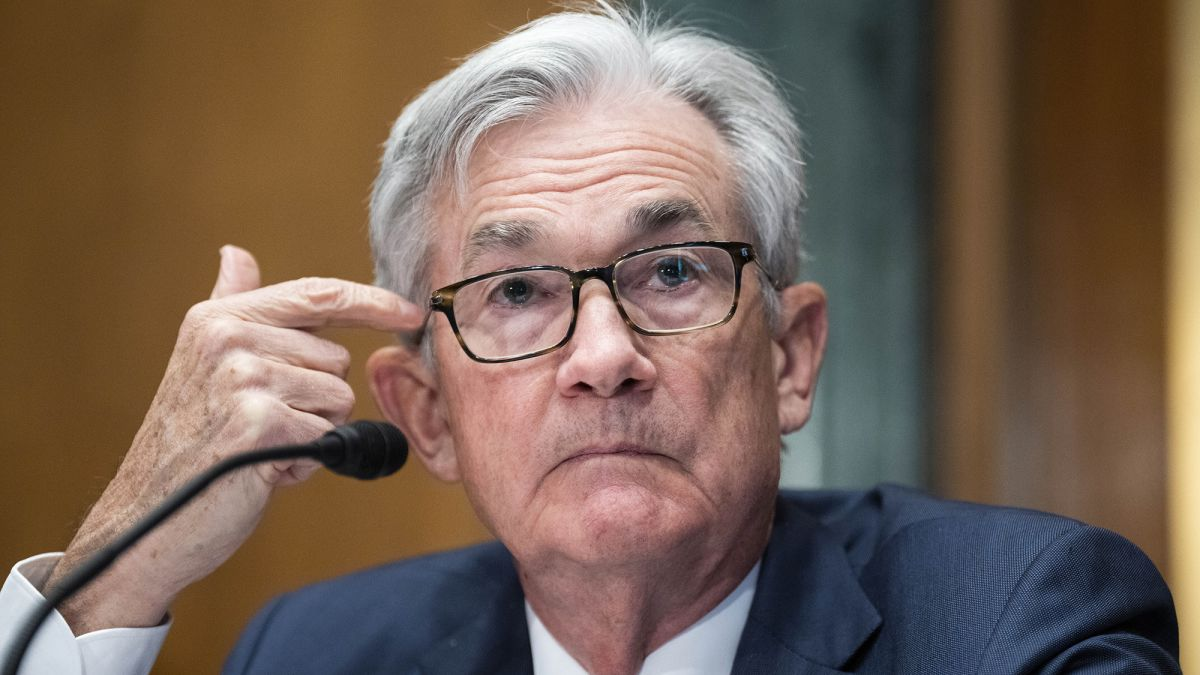
Market participants have expressed disappointment with the Monetary Policy Committee’s (MPC) recent decision to hike the interest rate to 13%, claiming that it will have a negative impact on the stock market.
The operators stated that the interest rate hike would dampen investors’ desire for shares in the near future, undermining the market’s positive outlook.
They claimed that in the fight to get out of the recession, unsuccessful monetary policy had accidentally boosted the money supply, while structural obstacles to production and trade, along with excess liquidity, exacerbated inflation.
The operators claimed that the interest rate and the stock market have an adverse relationship in portfolio management.
They claim that when interest rates are low, speculators move their money from money market instruments to the stock market for a better yield, just as they do when interest rates are high and they migrate from stocks to other asset classes, particularly fixed income assets.
As a result, they recommended that the government take steps to boost the economy’s supply side in order to boost output.
The CBN, according to Tajudeen Olayinka, Managing Director of Valmon Securities Limited, has not showed sufficient capacity to control excess liquidity in the system.
He noted that an increase in interest rates will naturally draw investors’ attention to fixed income instruments until the market becomes saturated with surplus liquidity, driving yields to fall.
“If you’ve been paying attention to the two markets, you’ll see that share prices fell after the announcement of the 13% MPR on Tuesday, before recovering yesterday.” Because of the liquidity overhang, the recovery was quite quick.
“Interest rates and stocks and bond prices have an inverse relationship, so as interest rates rise, bond and equity prices fall,” he explained.
As money flows in, he says, rising returns entice additional investors to the fixed income market and the overall economy. Due to the economy’s low absorptive capacity and a bad handshake between monetary and fiscal policy, he noted, this development brings back a new wave of liquidity surplus, driving rates on fixed-income assets to fall.
The scenario, according to Olayinka, is not always the case in more developed markets, which are constantly ready to deploy all weapons of liquidity management to their economies’ benefit.
“In summary, we anticipate an immediate repricing of equities securities in line with the new base rate, followed by a short-term price rebound while fixed income and stock markets rebalance,” he said.
David Adonri, Vice President of Highcap Securities Limited, also stated that the increase could hurt shares demand.
“As interest rates rise, more financial assets will shift to debt,” he warned. Given the US rate hike, it is anticipated to boost Nigeria’s competitiveness by increasing foreign investor demand for Nigerian debt.
“As a result, the increase may have a negative impact on equity demand.” It is also intended to lessen the naira’s volatility and suppress demand for hard currency. When interest rates rise, fixed income investments gain favor and assets flee equity.”


 recent decision to hike the interest rate to 13%, claiming that it will have a negative impact on the stock market.)