

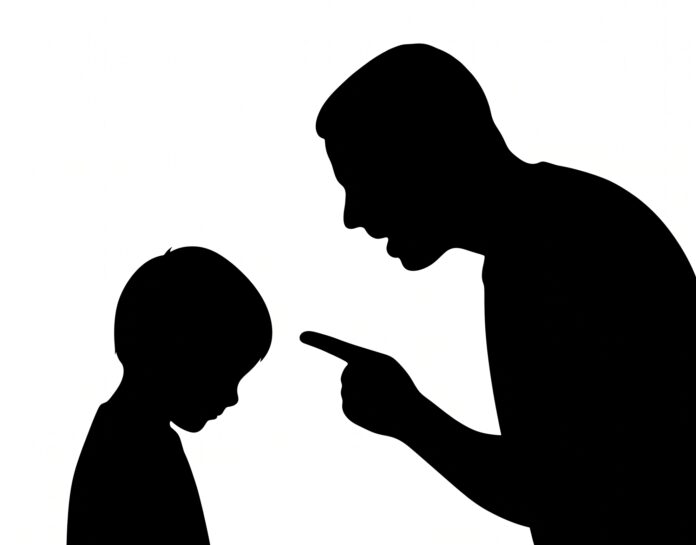
There is a reason a Man is traditionally regarded as the head of the family. It is not simply about being male, having a deeper voice, or being the person everyone fears.
At its best, it is about authority, leadership, responsibility, protection, discipline, and the understanding that a father’s presence can shape the direction of a child’s life.
I came across this funny clip on X (Twitter), shared by @AgbaExtro, showing a familiar scene in many households: Mum tells the kid to do something, stop or behave, but they don’t listen, but the moment the Dad speaks, everyone suddenly obeys.
https://x.com/AgbaExtro/
The video is amusing, especially for anyone who grew up in a home where the sound of their father’s voice is enough to make everyone sit up and comport themselves. But beyond the amusement, it raises a serious question worth reflecting on: why does a father’s authority matter so much in a child’s upbringing, and why should that authority be built on respect rather than fear?
Away from the video, In many homes, mothers tell the children to do something or stop doing something, and they carry on doing that, not out of disrespect, but because of a mothers’ touch. But once Dad speaks, they obey, listen, and do just that. Different homes, same experience.
So, again, why does the fathers’ authority matter so much in a child’s upbringing?
Of course, children need affection, but they also need direction and discipline. They need someone who will comfort them when they cry, but also someone who will correct them when they are wrong.
They need to learn that not every desire must be satisfied, not every rule is negotiable, and not every action is without consequences. A good father helps teach these lessons, not through fear or violence, but through firm, consistent, loving authority.
I remember when we were kids, six of us growing up together. With Mum around, everyone would be running around, doing what they liked. Mum would be shouting, and we would ignore her. But once we heard the sound of Dad’s car or bike coming in, everyone would comport themselves and do the right thing. This was not simply because we feared him, but because we understood that it was largely his responsibility to put us in check.
Psychology and child-development research support the importance of this. A review of 24 longitudinal studies found that active father involvement helps with better social, behavioural, psychological, and cognitive outcomes for children. Even a major review in the Annual Review of Sociology also links father absence with poorer outcomes in areas such as educational attainment, emotional adjustment, and adult mental health.
A father is not just another person paying the bills. His influence comes from being present, setting expectations, enforcing boundaries, and showing his children how to face the world.
When a father keeps his word, his children learn accountability. When he remains calm under pressure, they see self-control. When he corrects them fairly, they learn that being loved does not mean being allowed to do anything they want. And when he treats their mother with respect, he gives them a living example of how people should treat one another.
READ ALSO: Atiku Raises Alarm Over Abducted Kaduna Family, Demands Urgent Rescue
This is why fatherly authority matters. A child should not obey Dad merely because Dad is louder; the child should gradually learn to respect his word because Dad has shown that his authority can be trusted. The goal is not to raise children who tremble whenever their father enters a room, but children who understand boundaries even when he is not there.
Across many cultures and religious traditions, fathers are entrusted with serious family responsibilities. Ephesians 6:4 instructs fathers to raise their children with discipline and guidance without provoking them to anger. This is not an argument for men to have unlimited power over their households; it is a reminder that the responsibility of guiding a family must be taken seriously.
We must not fail to give mothers their flowers. A mother’s love, care, tenderness, and daily sacrifices are invaluable. Many mothers provide both nurture and discipline, and many raise wonderful children without a father’s support. But recognising the greatness of motherhood should never require us to minimise fatherhood.
A mother’s contribution does not make a father unnecessary, just as a father’s contribution does not make a mother less important. They can bring different strengths, perspectives, and experiences into a child’s life, and children benefit when both parents are loving, involved, and united in their guidance.
The problem is that some men want the title of “head of the family” without accepting the responsibility that comes with it. They want obedience without earning trust, respect without showing respect, and authority without being present.
You simply cannot lead children you never make time for or teach discipline when your own actions contradict your words. You also cannot demand that your children see you as a role model when they rarely experience you as a father.
A responsible father understands that his authority is a duty, not a trophy. He does not use it to silence every disagreement or make his family feel small. He uses it to establish order, protect his children, correct their mistakes, and prepare them for life beyond his home. He knows when to say no, when to explain why, when to listen, and when to admit that he was wrong.
And to children growing (or that grew) up without a present father due to death, separation, abandonment, or circumstances beyond their control, this is not a judgement on you or your family. Your future is not ruined, and your worth is not reduced. Loving mothers, grandparents, uncles, aunts, and other trusted adults can provide guidance and stability. But where a father can safely and lovingly be present, his place in his children’s lives should never be dismissed as optional or unimportant.
One day, a child may forget the toys Dad bought or the money he spent. But that child may remember the father who showed up, kept his promises, corrected him when necessary, defended him when he was vulnerable, and taught him to stand on his own feet.
That is the deeper meaning of fatherly authority: not simply controlling a child’s behaviour today, but helping shape the character that child carries into tomorrow.
The world does not just need more men who want to be called the head of the family. It needs more fathers who understand what being the head demands. A father’s greatest achievement is not raising children who obey him only when he is present. It is raising children who carry his lessons, values, and good example with them long after they have left home.
God bless fathers.
Chukwukamso A Okoye


