

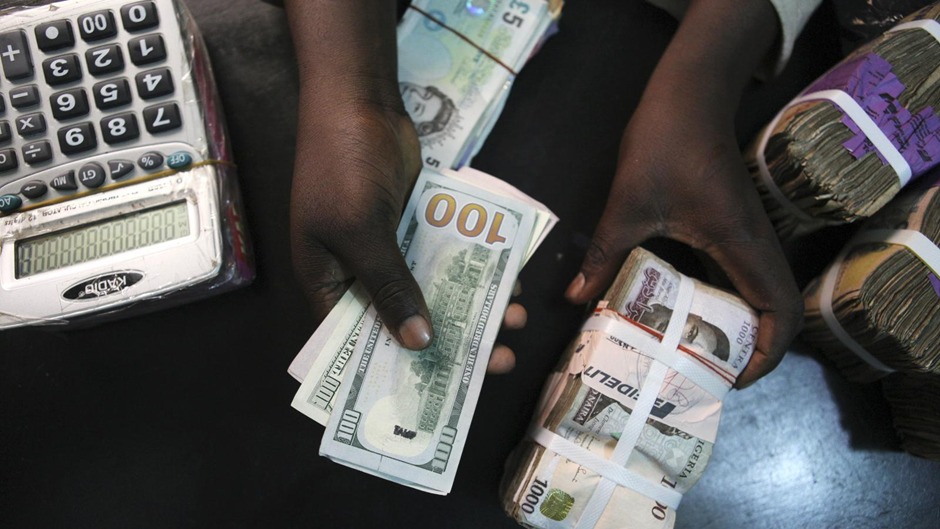
The ongoing forex crisis is having a serious impact on data centre operators in Nigeria, posing a threat to millions of dollars in investments already made in the construction of these facilities.
Concerns over operators’ increasing difficulty in obtaining new capital have been voiced by industry stakeholders as they struggle to earn a profit in the face of escalating exchange rate volatility.
According to them, the negative attitude of Nigerian banks towards funding this kind of venture makes matters worse and forces the operators to keep looking for outside investors.
It is understood that Nigerian banks lack the patience needed for the kind of long-term investment necessary for a data centre.
Currency Volatility Is The Most Significant Issue
The operators claimed that the volatility of the Nigerian Naira has emerged as the main issue, despite several other difficulties like power and other facilities needed to support a data center’s efficient operation.
About 90% of the capital needed to construct a new data centre is in foreign currency, according to Engineer Ikechukwu Nnamani, CEO of Digital Reality Nigeria, one of the top data centre firms in Nigeria. This is because the majority of the equipment required is not readily available in Nigeria.
Nnamani examined how the foreign exchange crisis is deterring international investments in the data centre industry.
He said, “If you come to Nigeria and you use an exchange rate of N1500/$1, for instance, to benchmark what you want to charge, and that amounts to $500 but you are charging in Naira for the use of your service, then by next year, Naira depreciates to N2000. If you convert back what you charge in Naira back to USD, you suddenly find out that you no longer sell your service at $500 but at $300 equivalent.”
“So, your total business case, the basis of which you got investment, gets thrown out of the window, not because the customers are not there; not because the metrics under which you went into the business were wrong, but 100% based on the valuation of the naira, which unfortunately, you have zero control over because as a data center provider, you don’t have any influence on what happens to the exchange rate.”
Nnamani stated that data centre operators who establish their businesses with local investment are now very concerned, in addition to the danger associated with foreign investment.
“I think some of the data center players are going to run into big problems if they are not already in trouble,” he explained.
The Equinix data center business in Nigeria, MDXi, also bemoaned the volatility of the Naira, pointing out that due to the difficulties, everything has become more expensive, including diesel, installation and maintenance, and replacement parts for the mechanical and electrical equipment needed to run the data center, which includes air conditioning, generators, UPSs, air conditioning, fire protection, security surveillance, and other systems.
The MDXi parent company, MainOne, has stated that the Naira fluctuation has resulted in greater operational expenses because of the higher cost of service contracts with OEMs and third-party vendors. This has eventually affected the operational bottom line of the data center. This is according to the Managing Director of MainOne.
Foreign Funding Remains The Sole Option
Although Nnamani pointed out that the only way for data center operators in Nigeria to survive is to base their rates on the Naira fluctuation, he added that international investment is still the only viable option for the company because Nigerian banks demand rapid returns.
“The only kind of funds that can sustain this are long-term funding. People who can give you five to 10 years before they start looking at how to claw back their investment; that is the only players and sorts of funds that will be able to sustain this market.
“People that are not like the Nigerian banks, who want to put in money and get it back in two years time, that is not going to work because it’s just not sustainable,” he added.
Data Center Disparity
In meanwhile, even though Nigeria has seen recent growth in the number of data centers, there is still a significant capacity gap that would require more investments to close given the size of the population and the volume of data being generated in the nation.
Nigeria now trails significantly behind South Africa’s 408 MW in total data center capacity, ranking second in Africa at 145 MW with 21 percent of the market fully fitted up, according to DC Byte.
This Reveals The Present Gap In The Country’s Digital Infrastructure
Nonetheless, a few new data initiatives have been announced in the nation; if they succeed, they could increase its capability.
Dr. Ayotunde Coker, the CEO of Open Access Data Centre (OADC), recently informed Nairametrics that the organization is constructing an extra 24 megawatts in two phases of 12 megawatts each, divided into two buildings of 12 megawatts each.
Additionally, Digital Realty recently declared its intention to build a 10-megawatt facility, and Airtel broke construction on its 34-megawatt Nxtra data center in Lagos in March of this year.
MTN Nigeria also declared in June that it was expanding Nigeria’s digital infrastructure by constructing a 1,500-rack Tier 4 data center.
The nation’s data center capacity might be increased by all of these projects, but their completion is still threatened by the present volatility in the foreign exchange market.
Why It’s Important
Nigeria is aiming for a fully digital economy by 2030 under the National Digital Economy Policy and Strategy (NDEPS 2020–2030).
By then, it is anticipated that all government services will be available online, eliminating the need for residents to visit any government office in person to get services. Standard data centers with enormous capacity are needed to support this.
Apart from the push to move all government services online, almost every business today needs a server to hold data. These servers also need to be available around the clock, which is something that can only be done by hosting with a tier 3 data center.
A thriving data centre is necessary for the ecosystem of startups and fintechs to continue to grow. Up until now, a lot of these initiatives have hosted their data outside of the nation since companies are forced to seek abroad due to concerns about scalability and reliability.


