

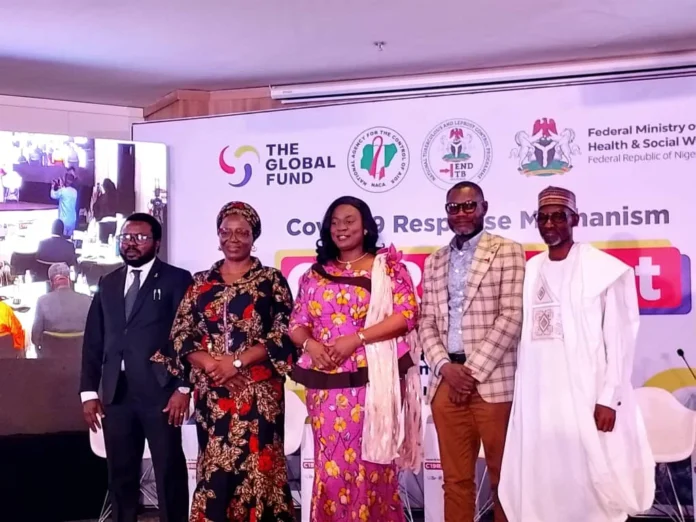
The Federal Government has announced a strategic shift from emergency response to the long-term sustainability of critical health systems strengthened under the COVID-19 Response Mechanism (C19RM) Grant as the program formally comes to an end.
The Coordinating Minister of Health and Social Welfare, Prof. Muhammad Pate, disclosed this on Thursday at the C19RM Grant Closeout Meeting in Abuja, describing the intervention as a transformative investment that significantly strengthened Nigeria’s health sector beyond the COVID-19 pandemic.
Represented by the Director of Hospital Services, Dr. Vivian Okafor, Pate said the pandemic underscored the critical link between health security, national security, economic resilience, and sustainable development.
“The COVID-19 pandemic challenged health systems across the world and reminded us that health security is not separate from national security, economic resilience, or sustainable development,” he said.
According to the minister, the grant evolved from an emergency response initiative into a strategic health systems strengthening program, boosting disease surveillance, laboratory networks, oxygen infrastructure, infection prevention and control systems, supply chains, logistics platforms, and community-based health structures across the country.
He noted that the investments enhanced Nigeria’s ability to detect and respond to health threats, protect frontline healthcare workers, and maintain essential services during public health emergencies.
“The most important lesson from C19RM is clear: emergency investments must leave behind sustainable systems,” Pate said.
He added that the program’s enduring legacy includes stronger institutions, improved governance structures, enhanced workforce capacity, better preparedness mechanisms, and stronger partnerships across the health sector.
According to him, improved accountability, data management systems, coordination frameworks, and program implementation structures also emerged as key outcomes of the intervention.
Pate said the government was now prioritizing sustainability through domestic health financing reforms, including the Basic Health Care Provision Fund and initiatives under the National Health Sector Renewal Investment Initiative.
“As we close this chapter, our focus must now shift decisively from implementation to sustainability,” he stated.
“The closeout marks a transition from emergency response to preparedness, project implementation to institutional ownership, and short-term interventions to long-term resilience.”
In her remarks, the Director-General of the National Agency for the Control of AIDS (NACA), Dr. Temitope Ilori, described the grant as a critical investment that strengthened Nigeria’s capacity to respond to COVID-19 and other public health emergencies.
She said the program improved surveillance systems, laboratory capacity, oxygen infrastructure, infection prevention and control measures, supply chain management, community engagement, and emergency preparedness.
Ilori identified collaboration among government institutions, development partners, implementing agencies, healthcare workers, and communities as one of the program’s most significant achievements.
Also speaking, the National Coordinator of the National HIV, Viral Hepatitis and STIs Control Program (NASCP), Dr. Adebobola Bashorun, said the investments had left visible and lasting footprints across Nigeria’s healthcare landscape.
He cited improvements in oxygen systems, genomic laboratories, and pharmaceutical warehouses as evidence of the program’s impact.
“Nigeria was wise. NACA and the health system leadership chose to invest in the right direction—investing in something that leaves a footprint,” he said.
“Global Fund will not be here forever. We must sustain the progress we have made and ensure we are prepared for future outbreaks.”
The Executive Secretary of the Country Coordinating Mechanism (CCM), Mr. Ibrahim Tajudeen, commended implementing agencies and partners for the successful delivery of the program.
He said deliberate investments in oxygen therapy, public health laboratories, and pharmaceutical-grade warehouses had significantly strengthened Nigeria’s health system and urged stakeholders to take ownership of the assets and systems created under the grant.
The Global Fund’s Country Portfolio Manager for Nigeria, Dr. Jean-Thomas Nouboussi, described the C19RM as an unprecedented mobilization of resources that supported critical investments in laboratories, surveillance systems, oxygen infrastructure, and supply chain management.
“We are very proud of what has been done, but also eager to hear what worked and what must be sustained and scaled,” she said.
According to her, lessons learned from the program would inform future investments in pandemic preparedness and resilient health systems in Nigeria.
Representing Jhpiego, Dr. Yemisi Ogundare said the organization was pleased to support the documentation of achievements and lessons learned under the grant.
She urged stakeholders to leverage the systems and structures established through the program in responding to future disease outbreaks and public health emergencies.
“The ball is now in each and every one of our courts to take these lessons and take this investment forward,” she said.
Also speaking, the Managing Director of Nigeria Health Watch, Mrs. Vivianne Ihekweazu, stressed the importance of preserving the gains achieved under the program.
She warned against allowing the infrastructure, systems, and capacities built through the intervention to deteriorate after the grant’s closure.
Presentations at the meeting revealed that approximately $345 million was invested under the grant, achieving a 97 percent fund utilization rate across implementing agencies.
The program facilitated the installation of 73 oxygen plants and 12 cryogenic oxygen tanks, extended oxygen piping systems to 44 tertiary hospitals, and supported the training of more than 600 biomedical engineers nationwide.
It also strengthened disease surveillance through the training of over 40,000 surveillance officers, upgraded six zonal reference laboratories, and supported the establishment of a national genomic sequencing laboratory.
The C19RM Grant, established by the Global Fund as an emergency funding mechanism, was designed to help countries respond to COVID-19 while safeguarding essential HIV, tuberculosis, and malaria services.
In Nigeria, the initiative evolved into a broader health systems strengthening and pandemic preparedness program implemented through government institutions and development partners, leaving behind critical infrastructure and systems expected to support healthcare delivery for years to come.
SOURCE: NAN


