

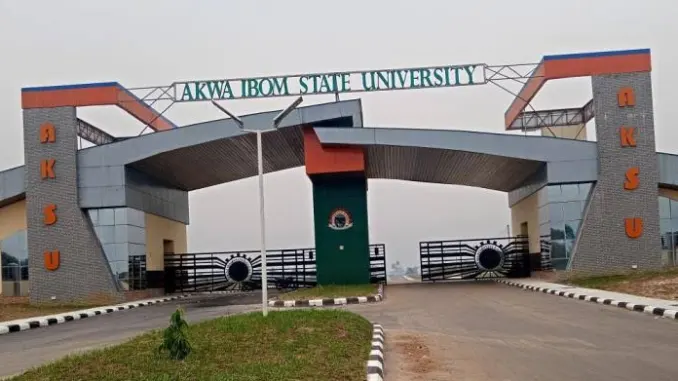
The Federal Government and Family Homes Funds Limited (FHFL) are set to commission a 1,600-bed student hostel at Akwa Ibom State University, Ikot Akpaden.
The facility is the first university-level project to be completed under the National Student Housing Program (NASHP).
Abdul-Mutallab Mukhtar, Managing Director and Chief Executive Officer of FHFL, disclosed this in a statement made available to the News Agency of Nigeria (NAN) on Thursday in Abuja.

Mukhtar said the hostel would be inaugurated by Gov. Umo Eno of Akwa Ibom, alongside the Ministers of Finance, Taiwo Oyedele, and Education, Tunji Alausa.
He said NASHP was being implemented through a Public-Private Partnership involving FHFL, the Tertiary Education Trust Fund (TETFund) and Student Housing Company (SHC).
According to him, FHFL provides development financing and program management, while TETFund anchors the intervention within the tertiary education funding framework.
“SHC provides private capital and long-term facilities management, reducing pressure on government and institutions to finance accommodation infrastructure,” he said.
Mukhtar said the Akwa Ibom project was the second completed site under the program, following the completion of a hostel at the College of Education, Warri, Delta.
He said the national program was designed to provide 38,400 bed spaces across 24 tertiary institutions, comprising 12 universities, six polytechnics and six colleges of education.
“Each hostel comprises 1,600 bed spaces in 400 en-suite rooms, with study tables, chairs, reading rooms, common room, cafeteria and laundry facilities,” he said.
READ ALSO: Davido’s Cousins Give Him Standing Ovation After Uncle’s Osun Election Win
The FHFL boss said the program would also generate employment opportunities for local contractors, artisans and suppliers, as well as create permanent facility-management jobs across participating institutions.
FHFL is a government-promoted social housing institution that supports affordable housing development, job creation and homeownership opportunities for low- and middle-income and vulnerable Nigerians.


 are set to commission a 1,600-bed student hostel at Akwa Ibom State University, Ikot Akpaden.)