

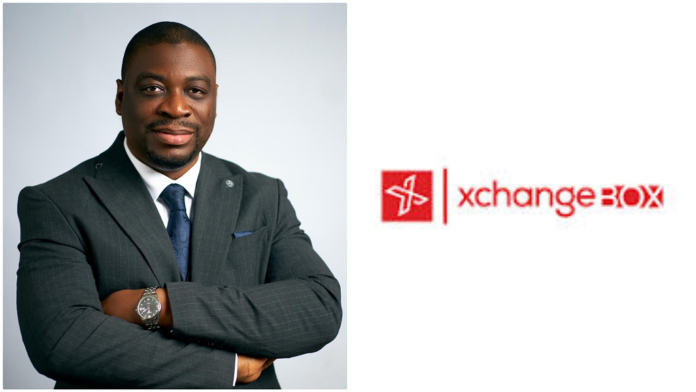
As Nigeria grapples with limited access to finance for small businesses and rising economic challenges, Cofounder and Chief Executive Officer of XChangeBOX, Abiola Jimoh, says the country’s biggest challenge is not a lack of capital but the absence of a credible bridge connecting investors with productive businesses.
In this interview with The News Chronicle, featured in the profiling of Chief Executives of established and emerging businesses across different sectors of the Nigerian economy, Jimoh speaks on XChangeBOX’s mission to transform agri-trade financing, the challenges of building a regulated fintech, entrepreneurship, and how structured financing can drive economic recovery.
TNC: Could you kindly tell us about yourself and your company? What does your business do? What inspired you to venture into this line of business? How has the journey been so far? Please also tell us about your company’s growth trajectory, including the number of staff.
Jimoh: My name is Abiola Jimoh, and I am Cofounder/CEO of XChangeBOX, a trade financing platform. My background is in corporate and commercial law, with postgraduate training in public policy, and that combination has shaped how I approach XChangeBOX.
Access to finance for SMEs and impact-driven businesses is our focus, and it is as much a regulatory problem as it is a structuring problem.
At XChangeBOX, we connect capital to the real economy. We structure financing for SMEs, renewable energy businesses, agri-traders, agritech platforms, and smallholder farmers who typically fall outside the risk appetite of conventional banks. We do so through a model that gives everyday investors a transparent, well-governed way to participate and earn returns.
What drew us into this space was simple: Nigeria has no shortage of capital, and it has no shortage of productive trading activity. The missing piece has always been a credible, well-governed bridge between the two. Too many viable agri-traders and processors have been priced out of formal finance, not because their businesses lack merit, but because the market lacked the right instruments and the right trust infrastructure. That gap is what XChangeBOX was built to close.

The journey has been demanding but deeply rewarding. We have spent considerable time building the legal, compliance, and operational backbone required to operate. That groundwork is now translating into a growing pipeline of agri-trade transactions and a small but highly capable team spanning legal, risk, operations, and technology.
TNC: What keeps you motivated and focused on your business despite the inevitable challenges that entrepreneurs face? What are the unique challenges in your industry, and what have been some of the most memorable achievements or defining moments in your business journey?
Jimoh: What keeps me going is proximity to impact. When you sit across from a smallholder farmer, an agri-trader, or an SME and see, in concrete terms, what a well-structured facility does for their business, the jobs it sustains, the produce that moves, and the households it touches, the abstraction of “financial access” becomes very real. That is a powerful motivator on the difficult days.
The unique challenges in agri-trade financing are well known but no less demanding. They include fragmented and often informal supply chains, price volatility, logistics and storage constraints, and a historical trust deficit between financiers and agri-businesses built up over years of default and poor documentation.
Layered on top of that is the complexity of operating a regulated fintech, where capital adequacy, investor protection and compliance obligations must be met without slowing the business down.
A defining moment for us was successfully building our operational documentation suite, trade financing agreements with structured disbursement mechanisms, investor risk disclosures and platform governance. It marked the point where we were no longer just an idea, but an institution capable of earning and sustaining investor and trader trust at scale.
TNC: Have you benefited from any government initiatives or incentives aimed at supporting businesses? How do you typically raise the funds needed to sustain and expand your business, particularly during economic downturns?
Jimoh: Our operating environment is shaped directly by government policy, particularly as we are seeking the SEC crowdfunding license, which itself is a form of enabling regulatory infrastructure. We intend to operate in close alignment with the broader financial inclusion agenda championed by the Central Bank of Nigeria (CBN) and the Securities and Exchange Commission (SEC).
We also engage constructively with sector-specific programmes and partnerships that support agri-financing and financial inclusion, and we hope to deepen these relationships as the business matures.
On funding, our model is intentionally designed to be resilient. We shall raise capital directly from investors through our regulated portal and channel it into structured agri-trade facilities and SME financing. This reduces dependence on a few institutional lenders and provides greater resilience during economic downturns.
That said, discipline remains critical. We structure facilities conservatively, price risk carefully and prioritise trade viability over transaction volume, especially when the macroeconomic environment is under pressure.
TNC: Please walk us through a typical day in your life as a business owner. What challenges do you commonly encounter with clients, employees or operations, and what aspects of your work bring you the greatest satisfaction?
Jimoh: My day usually starts early with a review of pending regulatory, transactional or legal matters before the rest of the team comes online, a habit I retained from my legal training.
The day itself is spent structuring transactions, reviewing agreements and disclosures, engaging with agri-trade partners and prospective investors, and working closely with our operations and risk teams on active financing facilities. My evenings are often dedicated to strategic thinking and regulatory reading because our industry evolves quickly.

The challenges are fairly consistent. We constantly balance the urgency of businesses seeking financing with the need for proper due diligence and documentation. We also manage information gaps between investors and trade partners while monitoring transactions across dispersed and sometimes informal supply chains.
The most satisfying part of my work is seeing a transaction complete its entire lifecycle—from the signing of a term sheet, to disbursement, to produce reaching the market, and finally to investors receiving their returns. That full cycle demonstrates the value of structured, transparent financing.
TNC: How would you describe your journey to success? What distinguishes you and your business from others in the industry?
Jimoh: I would describe it as a journey of deliberate institution-building rather than one defined by a single breakthrough moment. From the outset, we have prioritised governance, structure and sound risk allocation over rapid expansion.
We believe a business built on strong compliance and institutional foundations will ultimately outlast one built solely on speed.
What differentiates XChangeBOX is our combination of regulatory rigour and sector focus. We are not a general lending platform. We specialise in financing impact-driven sectors, including renewable energy, women-led SMEs and agri-trade.
TNC: Do you believe entrepreneurship is for everyone? What advice would you give to aspiring entrepreneurs who are looking to start or grow their own businesses?
Jimoh: Honestly, No. I say that not to discourage anyone, but because entrepreneurship requires an unusual tolerance for uncertainty, delayed gratification and continuous problem-solving. It is not the only path to success, and there is tremendous value in being an outstanding professional or operator within another organisation.
For those who choose entrepreneurship, my advice is simple: build your foundation before your brand. Get your governance, documentation and compliance right from the beginning because it is far more expensive to fix those issues after scaling.
Most importantly, be honest about the problem you are trying to solve. In financial services, trust is the product, and once it is lost, rebuilding it takes a very long time.
TNC: In your opinion, how can your line of business help ease Nigeria’s economic hardship, soaring inflation, rising unemployment and the increasing cost of living and support Nigeria’s economic recovery?
Jimoh: Agri-trade, SME and renewable energy financing sit at the heart of Nigeria’s economic recovery because agriculture remains one of the country’s largest employers and one of the strongest levers for reducing food inflation.
When we finance an agri-trader or processor properly, we are not simply funding one transaction. We are enabling produce to move efficiently from farms to markets, reducing post-harvest losses and improving supply, all of which contribute to food price stability.
Beyond that, our model democratises investment by allowing everyday Nigerians to earn returns from financing productive economic activities within the country instead of leaving their capital idle or moving it elsewhere.
At scale, this keeps capital circulating within the real economy, supports farmer incomes, sustains employment throughout the agricultural value chain and helps reduce the pressures of inflation and unemployment.
Ultimately, our role is to continue demonstrating, through disciplined, transparent and well-governed financing, that SMEs, renewable energy enterprises and agri-trade businesses are not only development priorities but also credible and sustainable investment opportunities.


