

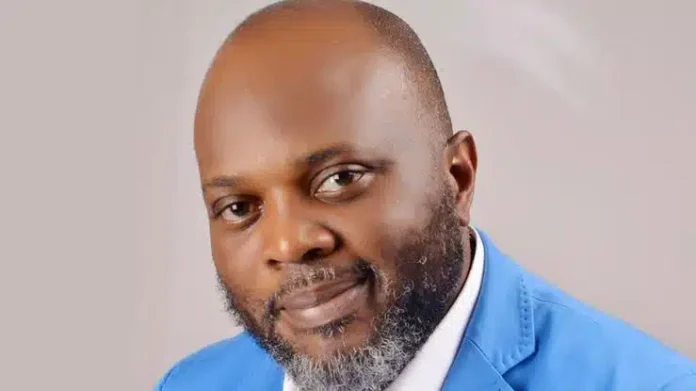
The Special Adviser to President Bola Tinubu on Economic Affairs, Dr. Tope Fasua, has said modern economics has moved beyond traditional neoliberal thinking, arguing that economists must embrace emerging ideas and evolving theories to address today’s economic challenges.
Fasua made the remarks during a podcast conversation with Professor Jideofor Adibe, where he challenged the continued reliance on neoliberal economic principles, stressing that economics, like science, is constantly evolving.
According to him, those who remain committed solely to neoliberalism have failed to keep pace with developments in the discipline.
“I don’t believe in neoliberalism. As a matter of fact, whoever remains at that level of thinking in economics is not an economist because economics is just like science—it keeps innovating,” he said.
The presidential adviser noted that new schools of economic thought have emerged in recent years, requiring economists and policymakers to broaden their perspectives beyond conventional models.
“A lot of new ideas come on board. There are all sorts of new branches of economics right now that people have to get in touch with. Even the people who earned Nobel Prizes in Economics in recent years were those thinking differently, such as in behavioural economics and related fields,” Fasua stated.
He argued that African economies should not be assessed solely through the lens of Western economic doctrines, stressing that the continent’s unique development challenges require innovative and context-specific policy solutions.
Fasua also defended the Federal Government’s decision to remove petrol subsidies, maintaining that sustaining the policy would have placed a significant burden on public finances and limited investment in other critical sectors.
“We are not at the level of the U.S. economy anyway, but I can disagree with you that we could have just maintained it. I don’t think we should maintain the oil subsidy at the risk of others,” he said.
His comments come amid ongoing debates over the Tinubu administration’s economic reforms, particularly the removal of fuel subsidies and exchange rate reforms, which have drawn both praise and criticism.
Fasua maintained that economic policymaking should be guided by innovation, evidence and changing global realities rather than adherence to outdated economic ideologies, insisting that countries must adopt policies that reflect their specific developmental needs.
Watch the full podcast here: https://www.youtube.com/live/RBpNEzl1-Gs?si=4AAWHmOy0ebr4JG4


