

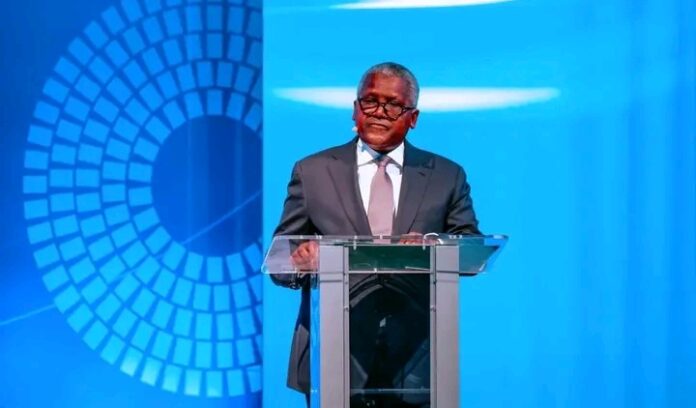
Africa’s richest man, Aliko Dangote, is set to break ground on a $16 billion mega-refinery in Kenya on Wednesday, describing the project as a major step towards Africa’s self-sufficiency in fuel.
Dangote, who owns Africa’s largest oil refinery in Nigeria, said the Kenyan facility would have a refining capacity of 700,000 barrels per day, making it larger than any refinery currently operating in Europe.
The refinery is being developed in Lamu, along Kenya’s Indian Ocean coast, where the government is also developing a major port.
The project has, however, faced opposition from a local community over land rights. A court ruling published on Monday allowed the groundbreaking to proceed, although the legal case remains ongoing.
Environmental groups, including Greenpeace, have also raised concerns about the potential environmental impact of the project.
Dangote dismissed the challenges on Tuesday, telling reporters that such cases were not unusual and suggesting that some people opposed major development projects in Africa.
Tanzania and Kenya’s port city of Mombasa had previously been considered as possible locations for the refinery. However, Dangote said Lamu was a better option because of its cleaner water, solid land and deep-sea location.
He added that the project would include a 1,000-megawatt power plant, with half of the electricity generated expected to be supplied to Kenya’s national grid.
Dangote said the refinery would contribute to reducing Africa’s reliance on imported petroleum products and foreign expertise.
READ ALSO: Group Plans 100 CNG Refuelling Stations Nationwide to Boost Gas Access Across Nigeria
He projected that most African countries would become self-sufficient in fuel by 2030, stressing that petroleum products should be refined within the continent.
The businessman said the refinery would source crude from several locations, including the Middle East and the United States, while remaining prepared to purchase crude from East African countries as their oil production increases.
He said the 700,000-barrel-per-day facility would still represent only a small part of the continent’s projected fuel demand as Africa’s population and economy continue to grow.
“When you talk about 700,000 barrels per day, it’s actually small. For the region, it’s a big refinery, it’s a big investment, but it is a start-up,” he said.


