

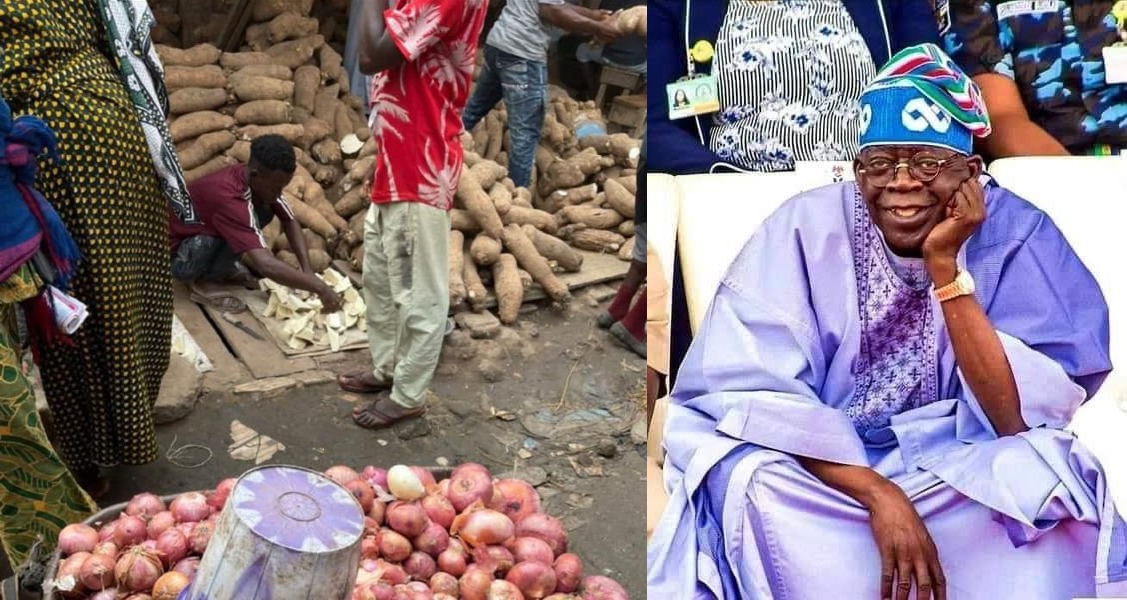
For millions of Nigerians, the rising cost of living has transformed everyday life into a constant struggle.
Food, transportation, rent, electricity, healthcare and education increasingly compete for incomes that many households already find pitiably insufficient.
The latest hike in petrol prices, with the product now selling at N1,500 per litre in parts of the country, has further intensified the pressure on already stretched households.
The increase does not end at the filling station; it feeds directly into transportation, food distribution, small-business operations and the cost of basic goods and services.
For workers whose incomes have not risen at the same pace as living costs, every additional increase in transport fares and household expenses further narrows the space between earning a living and simply surviving.
Against this backdrop, calls for a review of the subsidy policy now seem valid are likely to grow even louder with the Presidential Candidate of the ADC, Atiku Abubakar vowing that if elected president, he plans to immediately take a U-turn to the only viable route that directly impacted the everyday life of the poorest Nigerian.
Whether this is just a mere campaign promise, it has however given a voice to the unprecedented hardship being faced by the poor masses and the only way to find succour.
While the Federal Government maintains that subsidy removal was necessary to protect public finances and correct longstanding economic distortions, the fatal ripple effect of this removal which resulted in the worsening cost-of-living crisis, has invalidated the claims that those palliative measures to cushion the adverse effect of fuel subsidy removal were ever felt by the struggling masses.
This alone should necessited the call to shield the already suffocating Nigerians by urgently restoring subsidy.
Renewed Hope shouldn’t make ordinary hope looks like luxury to Nigerians.
I believe a return to the old universal subsidy appears to be the only lifeline for Nigerians treading on the knife edges of survival.
Even where restoring it carries some significant fiscal concerns as posited by the Centre for the Promotion of Private Enterprise warning that it could impose a substantial burden on government finances, the question is, what then is government without the wellbeing of its citizens?
Fuel subsidy should be restored. And in the interest of the mass population of poor Nigerians daily driven into survival mode by virtue of this reform, the present administration must not be shy to reverse it.
Because behind the economic realities are human stories: parents struggling to feed their children, workers spending a significant portion of their salaries on transportation, young graduates searching endlessly for employment, and small business owners watching their customers cut back because they can no longer afford what they once bought.
In the midst of this hardship lies a difficult moral dilemma: how does a person remain honest when legitimate income is barely enough to survive?
Desperation can make wrongdoing appear attractive. Internet fraud, theft, scams, bribery, drug trafficking and other vices may begin to look like shortcuts out of poverty, particularly when young people see others displaying unexplained wealth and living seemingly comfortable lives.
But economic hardship, however severe, cannot make every response morally acceptable.
A person may be struggling without becoming a criminal. Being poor is not a crime. Losing a job is not a moral failure. Starting with a small business, learning a trade, taking temporary work or asking for legitimate assistance is not shameful.
At the same time, Nigerians have legitimate reasons to ask how the country reached this point and who should bear responsibility.
The present administration inherited serious economic problems, but its policies and decisions have also shaped the conditions Nigerians are experiencing today. Previous governments made choices that contributed to structural weaknesses, including dependence on oil, fiscal pressures, inadequate infrastructure and persistent unemployment. The current government therefore cannot be blamed for every economic difficulty, but neither can it escape responsibility for the consequences of its own policies.
Ultimately, responsibility exists at different levels: government must create conditions in which honest work can provide a decent livelihood; businesses must act responsibly; communities must support vulnerable people; and citizens must resist the temptation to make someone else’s suffering the price of their own survival.
Nigeria needs economic reforms, but it also needs a society that refuses to normalise dishonesty simply because times are hard.
The question is no longer only how Nigerians will survive the economic pressure.
It is also what kind of people we will become while trying to survive it.
We can demand accountability from those in power without abandoning accountability to ourselves.
We can struggle without stealing, remain ambitious without exploiting others, and pursue prosperity without sacrificing our conscience.
Because when the economy eventually improves, the greatest victory will not simply be that we survived the difficult years, but that we survived them without losing our humanity.
Pius Kadon, is a Nigerian journalist.
He can be reached: Pkabido2@gmail.com/ 08068606491


