


China and India have raised concerns over new U.S. sanctions legislation targeting Russia, warning that the measures could affect countries that continue to buy Russian oil and gas.
The legislation, which has passed both chambers of the U.S. Congress, is awaiting President Donald Trump’s signature. It seeks to increase pressure on Russia over its war in Ukraine and includes sanctions on Russian officials and companies, as well as measures targeting the country’s energy exports.
Under the legislation, Trump would have the authority to impose tariffs of up to 100 percent on imports from countries that are among the largest buyers of Russian crude oil or natural gas.
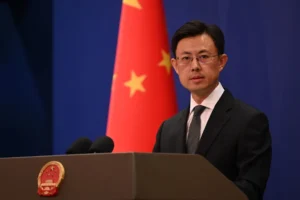
China criticized the measure, with Foreign Ministry spokesman Guo Jiakun saying that Beijing maintains normal economic and trade relations with countries around the world on the basis of equality and mutual benefit.
Guo said such cooperation was not directed at any third party and urged other countries not to interfere or exert pressure.
He also said China opposed the extraterritorial application of national laws without a basis in international law or authorization from the UN Security Council.
The development comes amid sensitive U.S.-China relations, with Chinese President Xi Jinping expected to visit Washington next week.
India, meanwhile, said it had discussed the potential impact of the legislation with senior U.S. officials in recent months.
The Indian Foreign Ministry said New Delhi had clearly communicated the potential implications of the measures for both bilateral relations and the international energy market.
The government also reiterated its commitment to securing energy supplies for its 1.4 billion people, including by diversifying its crude oil sources.
India remains a major buyer of Russian crude, although its imports fell in August. Kpler data showed that Indian purchases of Russian oil dropped 26.3 percent from a record 2.82 million barrels per day in July to 2.08 million barrels per day in August. Russia’s share of India’s crude imports consequently fell from 55.9 percent to 45 percent.
Kpler’s data indicated that the decline reflected market normalization, rather than a structural shift away from Russian crude, according to reports citing the commodity data provider.
READ ALSO: Court Jails South African Woman 25 Years for Trafficking 5.75kg Heroin
The proposed U.S. measures could therefore have implications beyond U.S.-Russia relations, particularly for major importers of Russian energy and the wider global oil market.


