

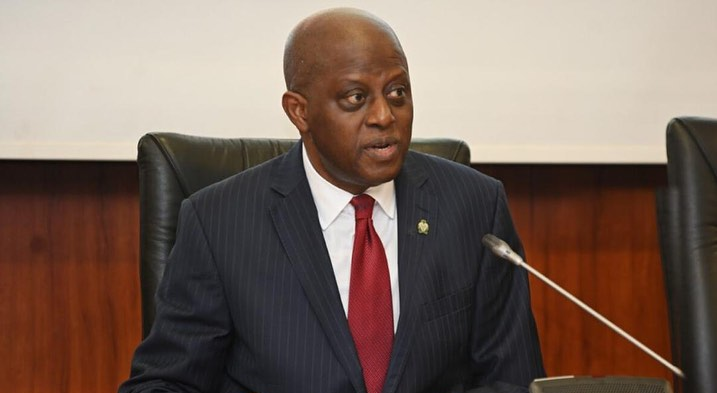
The Governor of the Central Bank of Nigeria (CBN), Yemi Cardoso, has declared that Nigeria’s ongoing economic reforms are beginning to bear visible and measurable fruit.
We gathered that Cardoso made this known in Washington D.C. on Friday at the close of the Annual Meetings of the International Monetary Fund (IMF) and the World Bank. He noted that the reform initiatives were steering the nation toward a path of macroeconomic stability, inclusiveness, and innovation-driven development.
According to him, Nigeria’s strong participation in the week-long meetings reflected a renewed sense of credibility, fiscal discipline, and reform commitment that has boosted the country’s image before international financial institutions and investors.
He explained that the Nigerian delegation’s message of policy coherence and macroeconomic restructuring resonated positively with global investors, development partners, and key financial players.
“This has been an active and forward-looking week for Nigeria. Amidst global uncertainty marked by slowing growth and volatile markets, our engagements here reaffirmed that Nigeria is moving in the right direction, towards macroeconomic stability, fiscal discipline, and inclusive growth,” he said.
The apex bank chief said the various high-level interactions at the meetings projected a new sense of optimism and partnership between Nigeria and the global financial community.
He revealed that there was growing international acknowledgment that Nigeria’s economic reforms were yielding tangible results, adding that inflationary pressures were gradually easing.
“The exchange rate stabilized, and investor confidence is returning,” Cardoso said.
He disclosed that headline inflation had declined for six consecutive months—dropping to 18.02 per cent in September from 20.12 per cent in August—the lowest level the nation had recorded in three years.
According to him, both core and food inflation had moderated within the same period, owing to a blend of sustained monetary tightening, exchange rate harmonisation, and improved transparency in market operations.
Cardoso further stated that Nigeria’s foreign reserves had risen above 43 billion dollars, providing cover for approximately 11 months of imports.
“The naira has continued to strengthen with the gap between official and parallel market exchange rates narrowing to less than two per cent. These outcomes have been supported by sustained capital inflows, increased diaspora remittances and renewed investor participation across multiple asset classes,” he added.


