spot_img
spot_imgspot_img
October 7, 2026 - 10:22 PM

Buhari Cannot Look The Other Way

—

Since we have eyes but cannot see, the Department of State Security (DSS) invited us to look again at the viral video of the invasion of Justice Ijeoma Ojukwu’s courtroom on Friday. Laughable, if it wasn’t a travesty.

The previous day, the judge had given the DSS 24 hours to release the Publisher of Sahara Reporters, Omoyele Sowore, who was arrested on August 3 but detained for 72 days after the first court order for his release, bringing his total detention period to 125 days.

Apart from the ultimatum for Sowore’s release last Thursday, the judge also awarded a cost of N100,000 against the DSS. But as Justice Ojukwu read her ruling, nothing in the ultimatum or fine could convey the judge’s frustration.

You needed to be in court to feel the atmosphere as the judge struggled between consternation and incredulity to restrain her anguish.

The corridors of the Federal High Court 7, her court, were jammed with camera tripods and assorted TV broadcasting flags. The courtroom was full. There were probably just as many people sitting inside as there were people standing or craning in from the crowded doorway.

On that Thursday, at least two armed DSS operatives were standing at the door; the third, a female operative, wearing a vest and intermittently issuing instructions to the armed ones, was one leg in; and a fourth operative was right inside the courtroom at the rear-end. It was tense and odd. Why the court vicinity was crawling with armed operatives, I didn’t know. But they were there, poised.

At the end of the proceedings on that Thursday, it would have been easier to get a camel through the needle’s eye than to make it through the corridor to the courtyard, down the staircase, and out of the court premises.

Lead counsel to Sowore, Mr. Femi Falana (SAN), and Mr. Femi Aborisade, both had a hard time squeezing through the horde to keep Sowore’s supporters at bay and, at the same time, restrain operatives from manhandling him.

It was not just odd and chaotic. It was sickeningly stone-age – and in my view, unnecessary.

But the DSS said it operates by a much higher standard. That it has absolute respect for the courts and that the video that went viral was stage-managed.

I have watched the video until my eyes were watery and it’s obvious that the only lens that absolves the DSS from the invasion is the lens of its own binoculars. The service cannot and should not condone this outrage. And it’s not funny.

If, as the DSS claimed, Sowore’s supporters pinned him to the ground in a choke-hold inside the courtroom, then the operatives around should have been in earnest to save him from his supporters since, as we have been told, he is still a person of interest to the service.

It’s ludicrous to claim that the courtroom was invaded by Sowore’s supporters and yet for the leader of the DSS team to apologize to the judge in chambers, as Falana said. Did the DSS leader apologize on behalf of Sowore’s supporters?

Whatever Sowore said, as the DSS claimed, after he was briefly released on Thursday that was not sufficiently important to report to the court on Friday morning before the judge recessed, could not have been the basis for his re-arrest. Except, of course, if the service read his mind in court and knew what he wanted to think even before he could think it, like Big Brother 2.0.

The thrust of the Presidency’s response that the DSS had the right to arrest Sowore also misses the point completely. It was not the power of the service to arrest that was at issue or whether the service is beholden to the Presidency. It was the manner of the arrest – an outrage that should never happen in any law-abiding country.

But maybe such occurrences are becoming too familiar to be concerning. And that familiarity is a real danger. In Cross Rivers State, Agba Jalingo is facing a charge of terrorism for an article in which he asked Governor Ben Ayade to account for N500m that was supposed to have been used to start a community bank.

Whatever Jalingo’s motive for the article, the governor’s answer cannot be to give the impression that he is misusing his power to settle a personal score with the accused.

And yet between the governor’s sledgehammer and the decision of the court to try the case in secret (with hooded witnesses and yet no electronic recording of even the secret trial), the public is left to wonder what exactly is becoming of vital public institutions, if not the heads of such institutions themselves.

There’s a rash of this nonsense all over now and it’s hard to know if the infection is coming solely from Abuja, or if others are simply victims of horrific self-exposure.

From Taraba State where a first-year student was expelled for criticizing Governor Darius Dariye, to Kaduna, where Governor Nasir El-Rufai has promised hell for Facebook “anarchists”; and from Kano where a singer got a two-year jail term for allegedly defaming Governor Abdullahi Ganduje in a song, to Katsina and Zamfara, there is an undisguised attempt to criminalize speech, in the misgiven name of hate speech.

Universities, which used to be the bastion of freedom, have also been infected. The authorities are behaving like village headmasters, wielding the cudgel and executing students for everything from off-campus video sex to plain disagreements over the state of infrastructure in the schools, student’s welfare or even the treatment of faculty.

Only a fool would deny that some people out there have not exploited the dark side of social media for havoc. But the major platforms, especially Facebook and Google, have come under increasing pressure lately and have been obliged to improve their filtering process and to act more swiftly in taking down malicious or incendiary posts.

Perhaps if national libel laws can also be amended to join the mega-platforms as parties in libel lawsuits in more jurisdictions, they will abandon the current shenanigans that they’re simply disinterested purveyors of content. They are not.

In Nigeria, Section 24 of the Cybercrime Act provides extremely severe penalties for offenses contemplated in the so-called hate speech bill. But those who think a law is incomplete without a taste of blood think the penalty is not severe enough. That is wrong.

The DG of DSS, Yusuf Bichi,  first caught public attention because of the quiet and professional way he approached his job. Coming after Lawal Daura who competed with sister agencies for influence and vied with politicians for spotlight and controversy, Bichi seemed old school. Which was good for him and the service.

But that appears to be changing. The service under him is now making headlines that make the Daura era look like the golden age of silence.

What happened in Court 7 on Friday, the shadow of which has been lengthening across the country, is a dangerous trespass.

President Muhammadu Buhari cannot look the other way because these violations are being carried out in his name and on his watch.

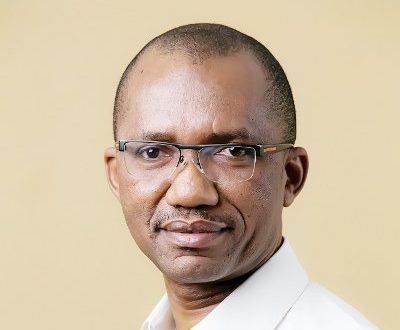
Ishiekwene, MD/Editor-In-Chief of The Interview

0 0 votes
Article Rating
Subscribe
Notify of
0 Comments
Oldest
Newest Most Voted

Share post:

Subscribe

Latest News

More like this
Related

BREAKING: 20 NYSC Prospective Corps Members Freed After Kidnappers Demand N50m Each

Twenty prospective members of the National Youth Service Corps...

Improve welfare of Nigerian Teachers 

I was and I am a teacher. I was a Parents Teachers Association hired teacher at Oba Akinbiyi High School (II), Mokola, Ibadan in 1997. Apart from that stint, I also taught briefly at a private secondary school during my National Youth Service at Asaba, Delta State as well as at another private secondary school at Akowonjo area of Lagos state around 2001 / 2002. My late father, Deacon Isaac Oyeniyi Ojo taught for about 40 years across several primary schools in Oyo and Osun sates and retired as a headmaster in 1995. At present, I don’t just teach but train people across various democratic institutions namely election management bodies (INEC and SIECs), political parties, media, national and state legislative assemblies, police, and civil society organisations. Information gleaned from the website of UNESCO says “World Teachers’ Day is held annually on 5 October to celebrate all teachers around the globe. It commemorates the anniversary of the adoption of the 1966 ILO/UNESCO Recommendation concerning the Status of Teachers, which sets benchmarks regarding the rights and responsibilities of teachers, and standards for their initial preparation and further education, recruitment, employment, and teaching and learning conditions. In 2026, the Day marks the 60th anniversary of the Recommendation concerning the Status of Teachers.” In Nigeria, this year's celebration focused on five interconnected pillars: innovation, mobility, Artificial Intelligence, inclusion, and professional excellence. The Minister of State for Education, Prof. Suwaiba Ahmad, announced that the selection process for the 2026 World Teachers' Day awards was digitised to promote transparency, accountability, and efficiency. The celebration includes a symposium, a march-past featuring state flags and cultural attire, and the recognition of 14 awardees, including the first, second, and third best teachers receiving prestigious car gifts, while the best Federal Unity College received a bus. Other prizes include laptops. In commemoration of the World Teachers Day, Dr. Akin Ayeni and I were guests on a breakfast programme on Ekiti 91.5 FM, Ado Ekiti last Monday where we dissected the plights of Nigerian teachers and proffered solutions to them. The host was Ademola Adeleke. I enumerated some of the plights of Nigerian teachers to include: Low wages, insecurity, quackery, inadequate classrooms, lecture theatres, libraries and laboratories, high turnover of staff especially in private schools, high workloads, disrespects from parents, students and even government. I made a proverb on the programme. Elo ni teacher ngba, ti o ntuto s’owo ka’wo osu (meaning, how much does a teacher earn that he or she needs to use saliva to count salary). This was a random joke even among teachers when they used to collect their salary in cash. This day, they receive their wages via online money transfer. The proverb however is meant to drive home the paltry nature of the salaries and wages of teachers cum lecturers. I recall the sticker produced by Academic Staff Union of Universities many years ago which has the inscription “My take home pay cannot take me home”. That’s very instructive. On issue of insecurity, according to Daily Trust of October 1, 2022, “The registrar of the Teachers Registration Council of Nigeria, Professor Josiah Ajiboye, said attacks on schools by insurgents have claimed the lives of more than 2,295 teachers in the North East between 2009 and 2022.” The PUNCH in its June 5, 2026 online edition reported that “An estimated 603 students and teachers have been kidnapped in seven mass abductions across schools in Nigeria between March 2024 and May 2026 under President Bola Tinubu, despite the N145bn Safe Schools Initiative.” Recall that on May 15, 2026, a total of 46 persons – seven teachers and 39 students – were abducted from Community High School Ahoro-Esinele and Yawota Baptist Nursery and Primary School in Oriire Local Government Area of Oyo State. Thankfully, most of them were rescued though two teachers were murdered by the bandits.  Michael Oyedokun, was reportedly beheaded, while John Olaleye, was shot dead during the attack. It is noteworthy that some university lecturers have also been abducted in the past. The heavy workloads and low wages have resulted into brain drain and high turnover of teaching staff across our academic institutions. Many education graduates don’t want to teach. The lecturers in tertiary institutions are leaving in droves for greener pasters abroad. Many teachers today take the job as a last resort when better options are not available. Many of the private schools recruit untrained teachers. They side step the federal government policy of having every teacher certified by Teachers Registration Council of Nigeria. Recall that the TRCN regulates the teaching profession in Nigeria by setting standards, accrediting teacher education programmes, registering qualified teachers, and enforcing professional ethics.  It establishes national minimum standards for teacher education and monitors teacher training institutions, including Colleges of Education, university faculties, polytechnic schools of education, and the National Teachers Institute. Unlike in the 20th century when teachers in Nigeria were widely respected and seen as mini-God, in contemporary times, there have been situation where pupils and students openly abuse teachers, bully them and even beat them up. Some irresponsible parents have even gone to school to harass and molest teachers for caning or meting out corporal punishments to their wards and children. Thus, many teachers now work in an atmosphere of fear. Mrs. Comfort Fasunwon is a multiple award-winning teacher in Ondo State, here is an excerpt from what she wrote on her Facebook wall in commemoration of the 2026 World Teachers Day “To my fellow teachers, today.  Teaching is not always easy. There are days when the workload is heavy, resources may be limited, and the results of our efforts may not be immediately visible. Yet we continue to show up, teach, encourage, correct, inspire and believe in our students. Sometimes, the greatest reward of a teacher is not a certificate or trophy. It is seeing a child who once struggled begin to understand. It is watching a student grow in confidence. It is meeting a former student years later and hearing the words, “Ma or sir, you made a difference in my life.” My plead to government at all level as well as private schools’ owners is to ensure that their schools are well resourced and staff welfare is made paramount. Professionalism should be their watchwords. Teachers’ rewards shouldn’t be in heaven; a foretaste of that should be here on earth. Best wishes to fellow teachers and nation builders. Remember the popular song that says “Anyone who hates teachers will homeschool his or her  child” I.G: @jideojong  

Over 22,000 Arms Recovered Across Nigeria in 10 Years – NCCSALW

The National Centre for the Control of Small Arms...

NBA Calls for End to Torture, Deaths in Nigeria’s Detention Centres

The Nigerian Bar Association (NBA) has called for tougher...
Join us on
For more updates, columns, opinions, etc.
WhatsApp
0
Would love your thoughts, please comment.x
()
x