

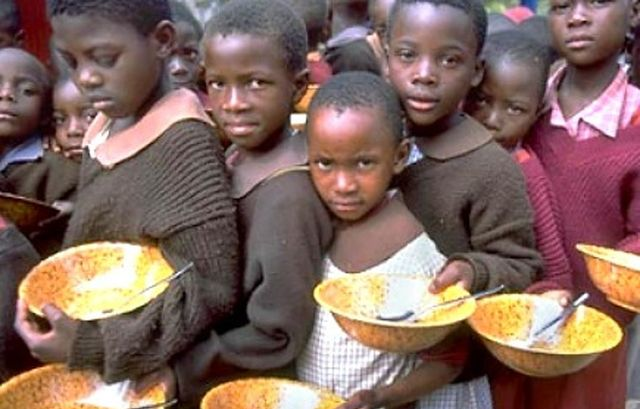
A lethal cocktail of relentless warfare, crippling economic collapses, and slashed humanitarian budgets is systematically driving millions of the world’s most vulnerable populations to the absolute brink of starvation.
The alarming reality was laid bare in the latest Hunger Hotspots Report co-authored by the Food and Agriculture Organization (FAO) and the World Food Programme (WFP).
The joint assessment identifies a baker’s dozen of territories where acute food deprivation is locked onto a dangerous upward trajectory between June and November 2026.
The global hunger map is bleeding red, with Sudan, South Sudan, Yemen, and Palestine holding their ground at the absolute peak of the danger index. Alarmingly, Somalia and northeast Nigeria have now been dragged up into this apex category of maximum peril.
According to the report: “Nigeria has entered the highest-risk category after forecasts showed parts of Borno could face catastrophic hunger,”
The document further clarifies the expansion of these starvation zones: “Sudan, South Sudan, Yemen and Palestine remain the most critical hotspots, while Nigeria and Somalia have moved into the highest-risk category amid growing concerns over famine.”
Bloodletting remains the primary architect of this global catastrophe, pulling the strings in 12 out of the 13 flagged territories. Carl Skau, the WFP’s Acting Executive Director, pointed squarely to violence as the main disruptor of human survival.
The report paints a grim picture of domestic realities under these conditions: “Conflict, shocks, and disasters are forcing families to make impossible decisions about who gets to eat and who goes to bed hungry”.
Compounding the bloodshed is an unprecedented, multi-year drought in global aid. Financial lifelines for emergency agricultural initiatives, food distribution, and malnutrition defense collapsed by roughly 59 percent between 2022 and 2025—marking the most severe funding dry spell witnessed in ten years. This massive resource shortfall leaves an estimated 266 million human beings trapped in the jaws of severe food insecurity across the flagged regions.
FAO Deputy Director-General Beth Bechdol pointed out that the window for intervention is closing fast: “The challenge is whether we act early enough and at the necessary scale.”
To break the cycle of dependency, the FAO is pushing for immediate, boots-on-the-ground support for local farming so communities can feed themselves rather than waiting on evaporating international charity.
However, the margin for error is non-existent as structural collapses and volatile weather systems continue to twist the knife. Jean-Martin Bauer, Director of the WFP’s Food Security and Nutrition Analysis Service, emphasized that these compounding crises leave no room for recovery:
“Economic shocks are compounding food insecurity, and climate change and climate variability are also further intensifying the situation.”


