

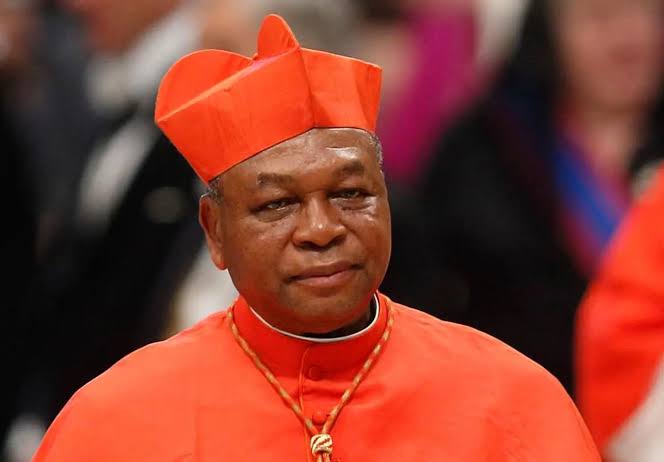
The criticism that has followed the recent comments of Cardinal John Onaiyekan and other Nigerian clerics on the state of the nation raises an important question: Should religious leaders remain silent in the face of bad governance simply because they are clerics?
Some critics insist they should. According to them, bishops, pastors, priests and imams should confine themselves to the pulpit and leave governance entirely to politicians. In their view, once a cleric comments on corruption, insecurity, economic hardship or abuse of power, he has ventured into politics and should keep quiet. That argument is fundamentally flawed.
There is a clear distinction between partisan politics and prophetic witness. Campaigning for political office, endorsing candidates or belonging to political parties is partisan politics. Calling leaders to justice, defending the oppressed, condemning corruption and reminding those in authority of their moral responsibilities is something entirely different. That is not politics; it is a sacred duty rooted in Scripture and reinforced by history.
From Genesis to Revelation, the Bible presents God’s servants not as passive observers of society but as moral voices who confronted rulers whenever power was abused. Far from remaining silent, prophets and priests repeatedly challenged kings whose actions endangered justice and the welfare of the people.
Perhaps the most compelling example is the Prophet Nathan’s confrontation with King David. David was Israel’s most celebrated monarch, yet he abused his authority by committing adultery with Bathsheba and arranging the death of her husband, Uriah. Nathan did not ignore these crimes because the offender occupied the throne. Instead, he courageously appeared before the king and told the famous parable of the rich man who stole a poor man’s only lamb. When David condemned the rich man’s wickedness, Nathan delivered the unforgettable verdict: “You are the man.”
Nathan neither sought political office nor attempted to undermine David’s government. His objective was accountability, not power. His courage led David to repentance and remains one of the greatest demonstrations that no leader is above moral scrutiny. The same pattern runs throughout biblical history.
Zechariah, son of Jehoiada, openly rebuked King Joash and the people of Judah for abandoning God’s commandments. Rather than repent, Joash ordered that Zechariah be stoned to death in the Temple courtyard (2 Chronicles 24:20–22). The prophet paid with his life for speaking the truth, yet Scripture remembers him as faithful while history condemns the king’s cruelty.
The Prophet Ahijah confronted King Jeroboam over idolatry and warned that his dynasty would fall because he had led Israel away from God. Again, the issue was not political rivalry but moral accountability.
Then there was Micaiah, who stood alone against 400 court prophets determined to please King Ahab. While the others predicted victory, Micaiah declared that Ahab would fall in battle. He was imprisoned for refusing to tell the king what he wanted to hear, but events proved him right. His story reminds every generation that truth is not determined by majority opinion.
The New Testament continues this prophetic tradition. John the Baptist publicly rebuked Herod Antipas for unlawfully marrying Herodias, his brother’s wife. He neither organized a political movement nor sought Herod’s throne. He simply insisted that rulers were subject to the same moral standards as everyone else. His reward was imprisonment and eventual execution.
These stories establish an unmistakable biblical principle: God never instructed His servants to remain silent whenever rulers became unjust. On the contrary, He repeatedly sent them into the courts of kings to confront wrongdoing. Ironically, the prophets who remained silent were usually the false prophets, eager to flatter those in power rather than challenge them.
Even Jesus Christ did not avoid confronting abuse of authority. He denounced the hypocrisy of religious leaders, drove exploitative traders from the Temple and consistently defended the poor and marginalized. Although He declared that His kingdom was not of this world, He never suggested that faith should be indifferent to injustice within this world.
History outside the Bible confirms the same principle. German theologian Dietrich Bonhoeffer refused to remain silent as Adolf Hitler turned Germany into a dictatorship. He argued that the Church must not merely comfort victims of injustice but actively resist evil. His opposition cost him his life, but history now celebrates his courage rather than his silence.
Archbishop Oscar Romero of El Salvador similarly condemned state violence and oppression from the pulpit. He famously observed that a church that never disturbs injustice has lost its prophetic purpose. He, too, was assassinated because he refused to be silent.
In South Africa, Archbishop Desmond Tutu became one of apartheid’s strongest critics, insisting that neutrality in the face of injustice amounts to taking the side of the oppressor. His moral leadership helped strengthen the global campaign against racial segregation and demonstrated that religious conviction can become a powerful force for national renewal.
The United States offers another compelling example. Before he became the face of the Civil Rights Movement, Martin Luther King Jr. was a Baptist minister whose sermons challenged racial discrimination and injustice. His famous “Letter from Birmingham Jail” defended the moral obligation to resist unjust laws and remains one of the most influential documents on the relationship between faith and public life.
Nigeria itself has benefited immensely from courageous religious voices. During the years of military dictatorship, many Christian and Muslim leaders condemned arbitrary arrests, suppression of civil liberties and attacks on democracy. The Catholic Bishops’ Conference of Nigeria (CBCN), the Christian Association of Nigeria (CAN) and respected Islamic scholars consistently appealed for justice, peace and national unity.
These interventions were never acts of partisan politics. They were expressions of moral responsibility aimed at protecting society.
Cardinal John Onaiyekan belongs to this long tradition of religious leaders who believe that silence in the face of national challenges is incompatible with genuine spiritual leadership. Whether one agrees with every opinion he expresses is beside the point. The substance of his arguments should be debated on their merits rather than dismissed simply because they come from a cleric.
Those who insist that religious leaders should remain silent also overlook the Nigerian Constitution. Section 39 of the Constitution guarantees every citizen the right to freedom of expression, while Section 38 protects freedom of thought, conscience and religion. Clerics do not lose these constitutional rights because they wear cassocks, clerical collars or flowing robes. They remain citizens with both the freedom and the responsibility to contribute to national discourse.
More importantly, they minister daily to people who bear the consequences of government policies. They counsel families devastated by insecurity, comfort victims of violence, pray with unemployed graduates, encourage struggling entrepreneurs and console pensioners battling inflation. To expect them to ignore these realities from the pulpit is to demand a form of spirituality detached from everyday life. That is not the Christianity taught in Scripture.
Indeed, one of the greatest dangers of demanding clerical silence is that silence often protects those who misuse power. Corruption flourishes when no one speaks against it. Injustice deepens when moral voices retreat. History repeatedly shows that societies decline when conscience is intimidated into silence.
This is why the oft-quoted observation attributed to Edmund Burke remains relevant: “The only thing necessary for the triumph of evil is for good men to do nothing.” Whether or not those were his exact words, the principle captures an enduring truth. Evil advances most easily when those capable of speaking choose instead to remain silent.
This does not mean that clerics should become party spokespersons or political campaigners. Their credibility depends on maintaining independence from partisan interests. The moment a religious leader excuses the failures of one political party while condemning only its opponents, he weakens his moral authority.
The role of the Church, and indeed every faith community, is not to serve as the propaganda arm of government or opposition. It is to praise good governance wherever it exists, criticize injustice wherever it appears and consistently defend truth, justice and human dignity. That is precisely what biblical prophets did. Nathan confronted David. Zechariah confronted Joash. Ahijah confronted Jeroboam. Micaiah confronted Ahab. John the Baptist confronted Herod. None of them sought political office. None of them campaigned for power. They simply reminded rulers that authority is ultimately accountable to God and that leadership carries moral obligations.
Nigeria today faces enormous challenges, from insecurity and corruption to inflation, unemployment and declining living standards. These are not merely political issues; they are moral questions because they affect human lives and dignity. Religious leaders who call attention to these realities are not violating their calling. They are fulfilling it.
A government genuinely committed to democratic ideals should welcome constructive criticism, including that which comes from the pulpit. Democracies flourish when independent voices hold leaders accountable, not when those voices are silenced.
Cardinal John Onaiyekan and other clerics who speak on national issues should therefore not be dismissed as politicians in clerical robes. They should be recognized as custodians of society’s conscience, continuing a tradition that stretches from the prophets of ancient Israel to some of the most respected moral leaders in modern history.
The demand that clerics should “keep off politics” becomes dangerous when it is used to silence legitimate criticism of those in power. Speaking against corruption, injustice, oppression and bad governance is not electioneering. It is the practical expression of faith in a God who demands justice, righteousness and compassion.
History honours societies that listened to their prophets, not those that silenced them. Scripture remembers Nathan, Micaiah, John the Baptist and countless others because they refused to substitute comfort for conviction. Their example remains a challenge to every generation.
Nigeria does not need fewer prophetic voices. It needs more of them. For when the conscience of a nation falls silent, power begins to speak without restraint, and that is when democracy itself is placed at risk.


