

African pharmaceutical company Minapharm Group has secured $16.5 million from the Coalition for Epidemic Preparedness Innovations (CEPI) to advance a vaccine candidate against Bundibugyo ebolavirus into human clinical trials.
According to a statement by CEPI, made available to the News Agency of Nigeria (NAN) on Thursday, the funding will support Minapharm and its Berlin-based subsidiary, ProBioGen, through preclinical development and into an early-stage clinical trial.
The Phase I trial will assess the vaccine’s safety and its ability to trigger an immune response, with the study expected to take place in Africa.
ProBioGen developed the candidate using its proprietary modified vaccinia Ankara (MVA-CR19) vaccine platform, which uses a highly weakened poxvirus vector that cannot replicate in human cells but can deliver vaccine antigens to stimulate immunity.
The candidate is designed to trigger both B-cell and T-cell immune responses, potentially providing broad and longer-lasting protection against Bundibugyo ebolavirus.
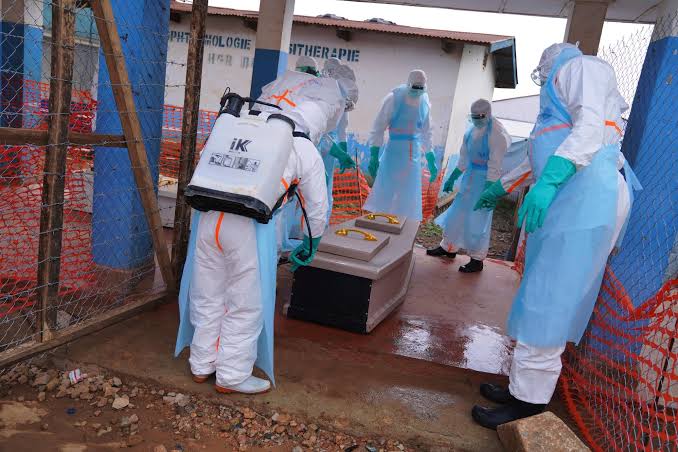
The development comes amid a major Ebola outbreak in the Democratic Republic of the Congo (DRC), driven by the Bundibugyo strain.
CEPI said the Minapharm vaccine was the fifth Bundibugyo-specific candidate to receive its support as part of efforts to accelerate vaccine development against the outbreak and prepare for future epidemics.
The coalition said it aims to advance at least two Bundibugyo vaccine candidates to Emergency Use Authorization and World Health Organization (WHO) prequalification.
CEPI Chief Executive Officer, Dr Richard Hatchett, said the partnership demonstrated the growing capacity for African-led vaccine innovation.
“CEPI funding to Minapharm harnesses the growing strength of African-led innovation to help confront this increasingly severe outbreak and prepare for future threats,” Hatchett said.
He said the rapid spread of Bundibugyo virus in the DRC made it necessary to develop multiple vaccine candidates using different technologies.
According to him, Minapharm’s candidate would expand CEPI’s vaccine portfolio while advancing a platform that could support the future production of filovirus vaccines in Africa.
Dr Wafik Bardissi, Group Chairman and Chief Executive Officer of Minapharm and Chairman of ProBioGen, said the company had more than 25 years of experience in biologics development and manufacturing.
He said the program would combine Minapharm’s manufacturing capacity in Egypt with ProBioGen’s scientific and technological expertise in Germany.
“This program demonstrates the strength of our capabilities across the full biologics continuum, from design and development through to manufacturing, in response to an urgent public-health threat,” Bardissi said.
He added that the company aimed to strengthen Africa’s capacity to develop and manufacture vaccines against diseases affecting the continent.
The Director-General of the Africa Centers for Disease Control and Prevention (Africa CDC), Dr Jean Kaseya, welcomed the initiative, describing it as an important step towards strengthening the continent’s ability to respond to disease outbreaks.
Kaseya said the development of a vaccine candidate by an African company would benefit both the current response and future health emergencies.
Under the program, ProBioGen will produce the recombinant MVA drug substance under Good Manufacturing Practice (GMP) standards at its facility in Germany.
The drug substance will then be shipped to Minapharm’s facility in Cairo, where it will be formulated into the finished vaccine for testing.
Minapharm also plans to transfer drug-substance manufacturing to its biotechnology facilities in Cairo. If completed, the transfer will enable the company to manufacture both the active vaccine component and finished product locally.
The move could strengthen regional vaccine manufacturing capacity and reduce Africa’s reliance on overseas production during future outbreaks.
CEPI said it would work with Minapharm and ProBioGen to support later-stage trials if the Phase I study produces positive results.
The subsequent trials would provide efficacy data required for emergency use authorization and eventual licensure.
The organizations said they were committed to pursuing rapid and affordable vaccine supplies for affected countries if the candidate proves safe and effective.
CEPI’s wider Bundibugyo vaccine program also supports candidates using mRNA, ChAdOx and recombinant vesicular stomatitis virus (rVSV) technologies.
The coalition said the different approaches were designed to increase the chances of developing safe and effective vaccines against the virus.
It has also activated its global network of laboratories, manufacturers and clinical trial partners to support the broader outbreak response, including research into potential treatments and efforts to streamline regulatory pathways.
CEPI is working with affected countries, Africa CDC, WHO, Gavi, UNICEF, the World Bank and other partners to prepare for vaccine procurement, allocation and deployment if an effective vaccine becomes available.
For Africa, the Minapharm program offers an opportunity not only to develop a vaccine against Bundibugyo ebolavirus but also to strengthen local expertise in vaccine research, development and manufacturing.
Bundibugyo virus is one of the Ebola virus species that causes Ebola disease. Unlike Zaire ebolavirus, for which licensed vaccines are available, there is currently no licensed vaccine or specific treatment for Bundibugyo virus.
The current outbreak was first detected in the DRC in May 2026 after cases of a high-mortality illness emerged in the Mongbwalu Health Zone in Ituri Province.
Laboratory tests later confirmed Bundibugyo virus disease, prompting the DRC to declare its 17th Ebola outbreak on May 15.
The outbreak subsequently spread across the border into Uganda, while the WHO declared the epidemic a public health emergency of international concern on May 17.
According to the figures provided in the report, WHO recorded 4,665 confirmed cases and 2,184 deaths in the DRC as of Aug. 12, with transmission reported across 54 health zones in six provinces.
The outbreak has been complicated by insecurity, population movement, difficulties with contact tracing and limited access to affected communities, further highlighting the urgency of developing effective vaccines and treatments.


