

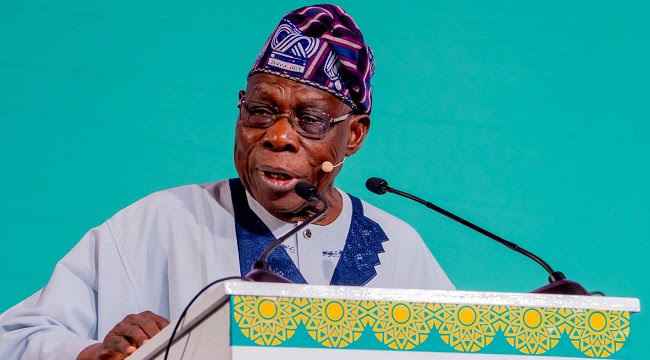
Former Nigerian President Olusegun Obasanjo has criticised the economic reforms introduced by President Bola Ahmed Tinubu’s administration, describing their impact as worsening poverty and increasing economic hardship across the country.
Obasanjo made the remarks on Wednesday at the 2026 Financial Times Africa Summit held in London, United Kingdom.
The former president argued that the sharp depreciation of the naira had placed Nigerians under severe economic pressure, making essential goods and services increasingly difficult for many citizens to afford.
He also expressed concern that Nigeria had become one of the countries facing some of the world’s most severe poverty challenges.
According to Obasanjo, the rapid decline in the value of the naira had significantly weakened the purchasing power of Nigerians and contributed to the worsening economic situation.
“We do not live in isolation as a country. We interact with other countries. But overnight, our currency was devalued by 300 percent. The naira moved from N500 to the dollar to N1,500 to the dollar,” he said.
Obasanjo’s comments highlight ongoing concerns about the consequences of the Tinubu administration’s economic policies, particularly the effects of currency depreciation on inflation, living costs and household incomes.
The Federal Government has introduced major economic reforms aimed at restructuring the economy, including changes to the foreign exchange system. However, the policies have continued to attract criticism over their immediate impact on the living conditions of ordinary Nigerians.


