

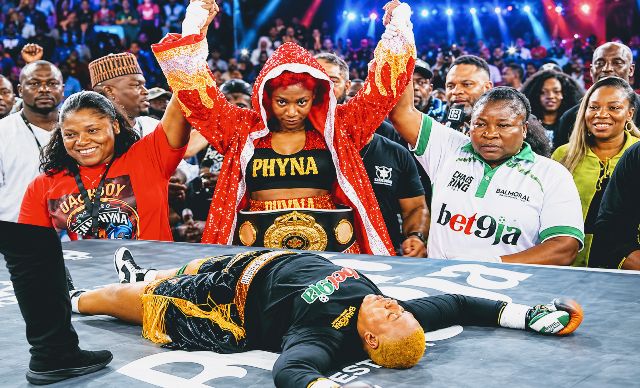
These questions became national conversation again on Independence Day, October 1, when the celebrity boxing bout between BBNaija winner Phyna and Nollywood actress Nkechi Blessing turned entertainment into something much bigger. In the heat of victory, Phyna repeatedly shouted, “I be Benin girl, you no fit mess with me.” For her, Benin was not merely a place on the map; it represented resilience, pride and an unwillingness to back down.
So what does it really mean when a Nigerian woman says, “I be Benin girl,” “I be Delta girl,” “I be Calabar girl,” or even “I be Nupe girl”? When does identity become pride, and when does it become prejudice?
Social psychologists describe part of this through Social Identity Theory, developed by Henri Tajfel and John Turner. People derive part of their self-esteem from the groups to which they belong. In Nigeria, ethnicity, hometown and regional culture can therefore become extensions of personality.
To say “I be Benin girl” is often to invoke a cultural history larger than oneself. It can mean being outspoken, independent, confident and unwilling to tolerate nonsense. My encounters with Benin women, both personally and through social media, have often reinforced the stereotype of bluntness and fearlessness. They can tell you exactly what they think without decorating it.
The Benin identity also draws strength from the historical memory of the Benin Kingdom, which resisted British invasion until 1897. Coral beads, fashion, beauty and cultural heritage further contribute to a strong sense of identity. Whether every stereotype is true is beside the point. The stereotype itself can become social armour.
The Delta girl, particularly the Warri, Sapele or Ughelli girl, carries a somewhat different energy. Growing up around oil-producing communities and the famously vibrant Warri culture has produced a reputation for toughness, humour, street intelligence and confidence. She can argue with you and make you laugh in the same sentence. Her English may move effortlessly between polished grammar and unapologetic pidgin. Linguist William Labov’s concept of “covert prestige” helps explain how a non-standard form of speech can carry authenticity and status within its community.
Delta’s entertainment culture reinforces this identity. From Omawumi to Progress Chukwuyem and countless other performers, the old Bendel axis has continued to produce prominent entertainers. Warri’s famous “no dey carry last” philosophy has become almost a national cultural brand.
But these identity brands are not limited to Edo and Delta.
The Calabar and Akwa Ibom woman is popularly associated with beauty, hospitality, cooking, romance and sweetness. The Owerri girl has developed a reputation for fashion, expensive taste and nightlife. The Anambra girl is stereotyped as industrious, family-oriented and unwilling to settle for less.
The Port Harcourt girl combines big English, pidgin, confidence and an enjoyment-driven lifestyle. The Yoruba woman, especially from Lagos and Ibadan, often carries a brand of sophistication, wit, fashion and cultural elegance. The Plateau girl is popularly portrayed as beautiful, calm, friendly and easy-going, while women from Kogi, including Igala and Okun communities, increasingly project images of homeliness, respect and traditional family values.
These are stereotypes, not scientific descriptions of millions of women. Yet stereotypes become powerful when people consciously perform them. In a country with hundreds of ethnic groups, where you come from can become a personality CV, a shortcut to being understood, remembered or even desired.
The recent conversation about Nupe women provides another interesting example.
After Bashir El-Rufai publicly discussed his divorce and his interest in a woman from Bida, Niger State, he praised Nupe women, saying he had discovered that they treated their husbands “like emperors.” The comment went viral and suddenly projected a national image of the Nupe woman as patient, modest, tolerant, calm and traditionally devoted.
Of course, one man’s experience cannot define an entire ethnic group. But that is precisely how ethnic branding works. One viral statement can reinforce an existing stereotype or create a new one.
And then there is Phyna.
Her boxing victory demonstrated how identity can become part of performance. She was smaller than Nkechi Blessing but relied on speed and stamina, reportedly intending to tire her opponent before finishing the fight. She eventually won by fourth-round technical knockout.
Yet the victory was not simply “Phyna won.” It became, in her own presentation, “a Benin girl won.” Her Edo identity became part of the spectacle. Her subsequent challenge to fellow Edo woman Etinosa Idemudia only extended the narrative.
This is why phrases such as “I be Benin girl,” “I be Warri girl” or “I be Nupe girl” carry more weight than their literal meaning. They are declarations of belonging, personality and expectation. Sometimes they are serious; sometimes they are simply cruise. Sometimes they are genuine cultural pride; sometimes they become tools for stereotyping others.
The important distinction is to recognise the identity without becoming imprisoned by it.
A Benin girl is not automatically tough. A Delta girl is not necessarily loud. A Calabar girl is not guaranteed to be romantic. A Nupe woman is not automatically submissive. And no ethnic label can capture the complexity of an individual human being.
Perhaps the real beauty of Nigeria is that every group has developed its own language of identity. We borrow history, culture, humour and stereotypes to tell the world who we think we are.
Sometimes, when a Nigerian woman says, “I be Benin girl,” she is simply saying: this is where I come from.
But sometimes, she is saying something much louder:
“This is who I am. Treat me accordingly.”
*Bagudu Mohammed* is the founder of Alternative Perspectives, a widely read commentary platform on social media. It offers evidence-based analysis and real-life insights as a credible alternative to groupthink, convenient narratives, and echo chambers. The platform explores a wide range of issues, including politics, society, relationships, governance, and contemporary trends.


