

The National Examinations Council (NECO) says examination malpractice cases dropped by 64.74 per cent during the 2026 Senior School Certificate Examination (SSCE) Internal, following the introduction of stricter measures and increased use of technology.
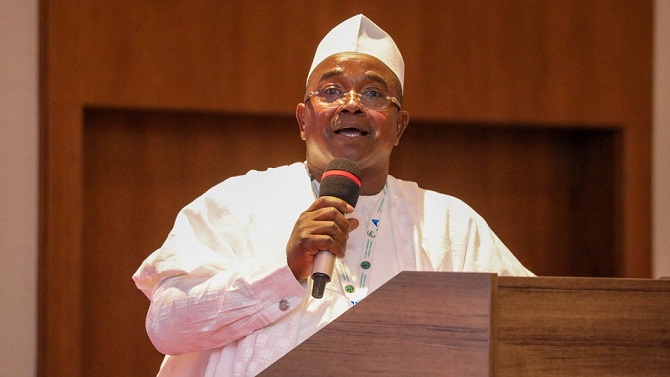
NECO Registrar, Professor Dantani Wushishi, disclosed this while speaking on the council’s efforts to strengthen the integrity of its examinations and tackle malpractice.
According to Wushishi, the number of candidates involved in examination malpractice fell from 3,878 in 2025 to 1,406 in 2026.
He attributed the decline to measures including biometric verification, candidate photo-gating, barcode systems, computer-based testing (CBT), and the randomisation of examination questions.
The registrar said NECO began expanding the use of information and communication technology in examination administration after the current leadership assumed office in 2021.
He explained that technology is now being deployed across various stages of the examination process, including test development, registration, examination conduct and marking.
Wushishi said CBT had become an important tool in reducing malpractice, while question randomisation makes it difficult for candidates sitting close to one another to access identical questions.
“CBT is one good answer to curb that, but it also comes with its own challenges. So, if possible, we will continue to increase our pace in the use of CBT,” he said.
He added that some malpractice cases are detected during the marking of examination scripts by examiners.
The registrar also disclosed that NECO was addressing loopholes associated with continuous assessment, which contributes to candidates’ final results.
He said a committee established by the Minister of Education and comprising heads of examination bodies reviewed the challenges surrounding continuous assessment and recommended reducing its contribution to final scores from 30 per cent to 20 per cent.
The committee also recommended that continuous assessment scores should be submitted term by term instead of as a single cumulative figure.
Wushishi said NECO had developed an electronic continuous assessment portal linked to its main website to allow schools to submit scores online.
According to him, once a school submits its continuous assessment scores, they cannot be altered.
On the controversy surrounding so-called “miracle centres,” Wushishi firmly denied that NECO establishes or operates such centres.
“We have nothing to do with miracle centres. In fact, as a council, we are not even aware of the existence of miracle centres,” he said.
He explained that NECO only accredits schools that meet the required standards to serve as examination centres and conducts periodic reassessments of existing centres.
According to him, accreditation exercises are carried out in February and October to ensure that examination centres continue to meet the required standards.
Wushishi said NECO has mechanisms for identifying centres suspected of facilitating examination malpractice and quietly investigates such centres based on its accreditation records.
He also rejected the classification of a public secondary school in Kogi State as a “miracle centre” following the abduction of a NECO supervisor and other examination personnel at the school during the 2026 examination.
He said the school had been established by the government about 40 years ago and had been accredited by NECO since 2000, with its candidate numbers historically remaining relatively low.
The registrar argued that the responsibility for addressing the proliferation of suspected “miracle centres” should involve state governments, which own public schools and regulate private schools.
Wushishi further disclosed that NECO had introduced a system to verify the qualifications of teachers recruited to mark its examinations through the Teachers Registration Council of Nigeria (TRCN).
He said information provided by schools during accreditation would be cross-checked through an electronic interface between the NECO and TRCN portals before qualified teachers are selected for examination duties.
The registrar said the combined reforms including increased use of technology, question randomisation, tighter accreditation, improved continuous assessment controls and teacher verification were aimed at strengthening the credibility of NECO examinations and reducing examination malpractice.


