


President Bola Tinubu has urged financial institutions to channel their capital into productive investments that will create jobs and drive economic growth and development.
Tinubu made the call on Tuesday at the 19th Chartered Institute of Bankers of Nigeria (CIBN) Annual Banking and Finance Conference in Abuja.
The President, who was represented by the Minister of Finance and Coordinating Minister of the Economy, Taiwo Oyedele, said a resilient financial system could not be achieved if businesses lacked access to affordable credit.
He identified growth facilitation, financial inclusion, technology and long-term capital as key drivers of resilience in the financial sector.
Tinubu also noted that innovations such as artificial intelligence, digital banking and open banking were transforming the financial system.
He assured stakeholders that the Federal Government would continue to create room for increased private-sector credit.
“No economy can be more resilient than its financial system,” he said.
Speaking at the conference, the Governor of the Central Bank of Nigeria, Olayemi Cardoso, said the benefits of the ongoing monetary and fiscal reforms would soon be reflected in the living conditions of Nigerians.
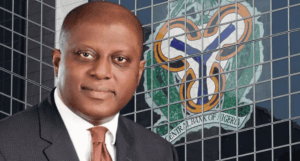
Cardoso, who was represented by the CBN Deputy Governor, Economic Policies, Philip Ikeazor, said the successes recorded by the reforms had been acknowledged across various platforms.
He acknowledged concerns among citizens about the impact of the reforms, assuring that the dividends would gradually translate into improvements in their daily lives.
“The reforms by the CBN were done in conjunction with other stakeholders,” he said.
The Managing Director of the Nigeria Deposit Insurance Corporation, Thompson Sunday, said building resilience in the financial system went beyond the ability to withstand economic shocks.
Sunday, represented by the NDIC Executive Director, Corporate Services, Emily Osuji, said resilience required strong institutions and collective responsibility.
He urged banks to provide the resources needed to support agriculture, businesses and other productive sectors of the economy.
In his keynote address, the World Bank Country Director for Nigeria, Matthew Verghis, commended the Federal Government for implementing reforms that, according to him, had contributed to moderating inflation and boosting investor confidence.
Verghis, represented by the World Bank Lead Private Sector Development Specialist for Nigeria, Bertine Kamphuis, said between three million and four million young Nigerians enter the labour market annually.
He noted that only one in 20 Micro, Small and Medium Enterprises (MSMEs) could access bank credit.
According to him, the challenge facing Nigeria was not necessarily the availability of capital but how it was allocated.
The Chairman of the Body of Banks Chief Executive Officers, Oliver Alawuba, said a resilient economy should be capable of absorbing shocks without transferring their effects to vulnerable citizens.
Alawuba commended the Federal Government and the CBN for their efforts to strengthen economic stability, adding that the banking sector recapitalisation had enhanced banks’ capacity to support economic growth.
He called for greater synergy between fiscal and monetary policies to unlock productivity across the economy.
Similarly, the Chairman of the Senate Committee on Banking, Insurance and Other Financial Institutions, Sen. Mikhail Abiru, urged banks to increase support for the real sector and deepen financial inclusion.
The President and Chairman of Council of CIBN, Dele Alabi, said disruption had become a defining feature of the global economy.
Alabi said geopolitical tensions, including the conflict involving Israel, Iran and the United States, as well as disruptions to energy and shipping through the Strait of Hormuz, had heightened volatility in oil, freight and financial markets.
He noted that Nigeria was not insulated from the effects of such global shocks.
According to him, MSMEs remained central to employment generation, enterprise development and local value creation but continued to face challenges including high operating costs, inadequate infrastructure, limited market access, low productivity, skills gaps and slow digital adoption.
He said the proposed SME hubs nationwide would provide shared infrastructure, business advisory services, capacity building, technology support, market linkages and improved access to finance.
READ ALSO: 2027: INEC, Security Agencies Vow Strict Enforcement of Campaign Rules in Nasarawa
Alabi said recent government policies were beginning to produce positive results but stressed that the next phase of reforms must focus on translating macroeconomic stability into tangible improvements for businesses and households.
“The Institute’s advocacy for scalable SME Hubs nationwide is one practical response,” he said.
He added that the hubs would help reduce operating costs, improve the bankability of businesses, stimulate innovation and connect recapitalised financial institutions more effectively with the real sector.
Alabi said this would enable the gains of economic reforms to translate into stronger businesses, better jobs, higher incomes and more resilient communities.
The conference brought together stakeholders from across Nigeria’s financial services industry to deliberate on ways to strengthen the resilience of the economy and improve the sector’s contribution to national development.


